Dwarka in June: First Rains, Rising Tides and the Temple That Never Closes
June in Dwarka is a month of transition, the punishing summer heat of May begins to ease as the Arabian Sea monsoon arrives mid-month, bringing clouds, humidity and the first heavy rains. Dwarkadhish Temple remains open through all of this. Crowds are moderate compared to the October-February peak season. Bhadkeshwar Mahadev becomes tide-dependent and at times inaccessible. June suits pilgrims who prefer a quieter darshan with fewer queues and do not mind dressing for variable weather.
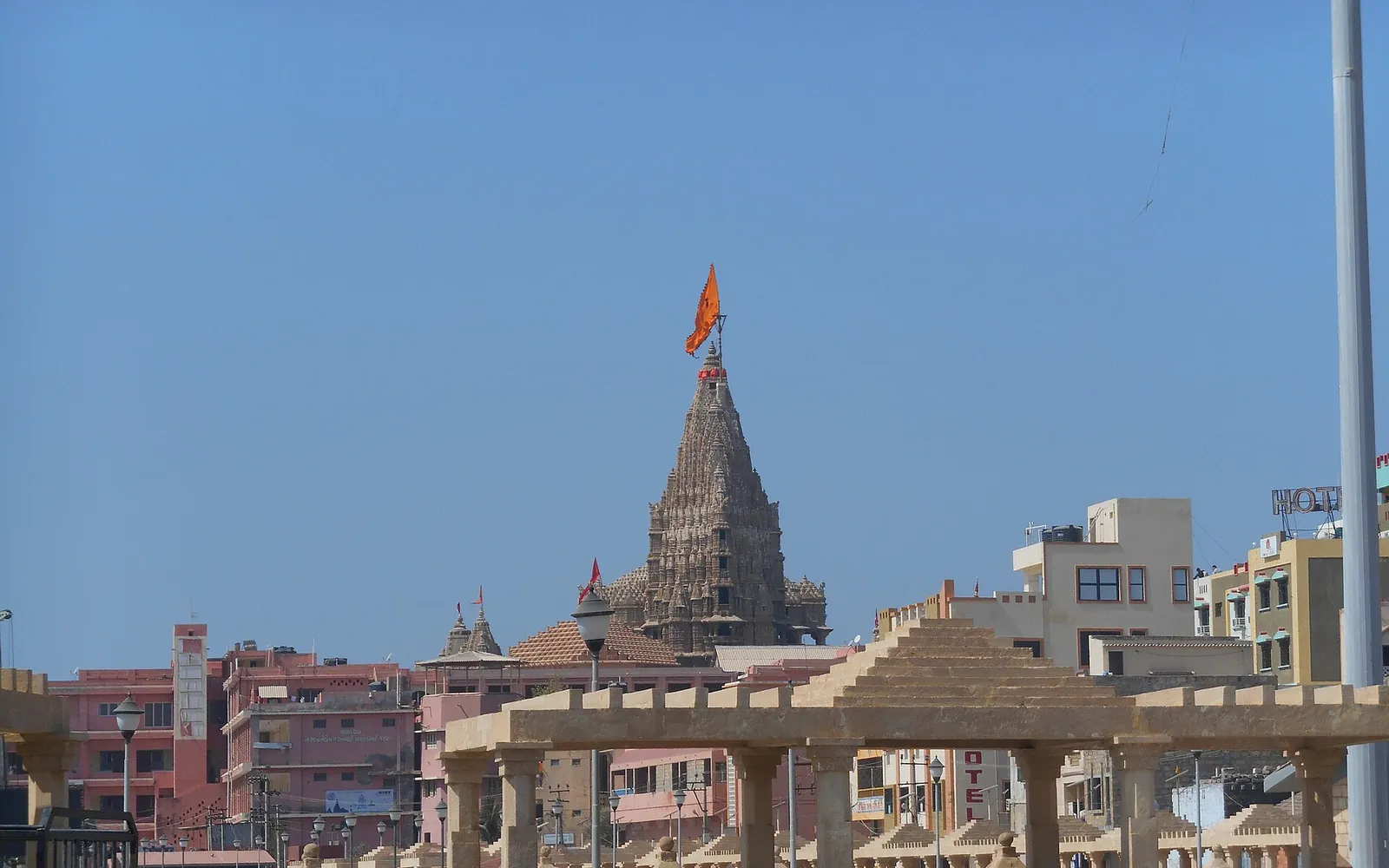
June Weather in Dwarka
June in Dwarka spans two distinct weather phases. The first half of the month is an extension of the summer heat that peaked in May, temperatures sit between 28°C and 38°C, the air is dry and the sun is fierce in the middle hours. This is not comfortable weather for extended outdoor time, and pilgrim numbers drop compared to the October-February peak. The silver lining is that Dwarkadhish Temple is much less crowded and darshan queues are shorter than at any other time of year except July and August.
The second half of June brings the monsoon. The Arabian Sea branch of the Indian monsoon reaches the Gujarat coast typically between June 15 and June 25, though the exact date varies by year. Once the monsoon arrives, the character of Dwarka changes. Temperatures drop a few degrees from their peak, but humidity rises sharply. Rain can come in sudden heavy bursts lasting 30-60 minutes or in long sustained spells. The Gomti River near the Gomti Ghat area swells, the tides on the Arabian Sea become more pronounced, and the Bhadkeshwar Mahadev island, which is already tidal, becomes harder to reach safely.
For pilgrims, the critical point is that Dwarkadhish Temple is unaffected by monsoon rains. The temple complex is covered and the inner sanctum darshan proceeds on its normal schedule regardless of weather outside. The aarti timings do not change for June. What changes is the experience of walking to and from the temple, the lanes around Dwarkadhish can become wet and slippery, and the steps at Gomti Ghat fill with water during heavy rain. Waterproof footwear and an umbrella are practical necessities for June visitors.
28-38°C, dry heat, low crowds, short darshan queues
28-35°C, humid, rain showers, rising tides, atmospheric
Dwarkadhish Temple in June, Darshan and Aarti Schedule
The Dwarkadhish Temple operates on its complete aarti schedule throughout June without modification. Mangala Aarti begins at 6 AM, Shringar Aarti at 7 AM, Gwal at 8:30 AM and Rajbhog at 12 PM. The temple closes between 1 PM and 5 PM for the afternoon break. Uthapan begins at 5 PM, Sandhya aarti takes place around sunset, and Shayan aarti is at 9 PM. The Dhwaja (flag ceremony) happens at 5 AM and again at sunset.
June is one of the best months for experiencing Dwarkadhish in relative calm. The queue on a normal June day is 45 minutes to 1.5 hours, far shorter than the 2-4 hour waits typical of the October-February peak. Dwarkadhish Temple does not run any official paid "VIP darshan" or priority-queue scheme, unlike some other major temples (Tirupati and Siddhivinayak, for example, do offer official paid fast-track passes). Every pilgrim, including elderly and disabled visitors, uses the same single general darshan queue, and general darshan has always been free. If a tout, agent or unofficial website near the temple or online offers you a paid "VIP darshan pass", they are not affiliated with the temple trust, do not pay them. The genuine way to minimise your wait in June is to arrive for the 6 AM Mangala Aarti or the 7 AM Shringar Aarti, when queues are shortest.
The Rajbhog aarti at 12 PM is particularly worth attending in June if you can manage the morning heat. By midday the sun is at its most intense, but inside the temple the marble and stone keep the atmosphere cooler than outside. The Rajbhog is the longest and most elaborate of the day's aratis and in June you can observe it without the crushing crowds that make this difficult during festival seasons. The Shayan aarti at 9 PM is similarly peaceful and allows those staying in Dwarka overnight to end the day with a final darshan before bed.
| Aarti | Time (June) | Notes |
|---|---|---|
| Dhwaja (Flag) | 5:00 AM | Flag hoisting ceremony |
| Mangala Aarti | 6:00 AM | First darshan, cool morning, short queues |
| Shringar Aarti | 7:00 AM | Deity adorned with offerings |
| Gwal Aarti | 8:30 AM | Morning milk ritual |
| Rajbhog Aarti | 12:00 PM | Main midday aarti, temple closes after |
| Afternoon Break | 1:00–5:00 PM | Temple closed to visitors |
| Uthapan Aarti | 5:00 PM | Deity awakening ceremony |
| Sandhya Aarti | Sunset (~6:30-7 PM) | Evening ceremony at dusk |
| Shayan Aarti | 9:00 PM | Final aarti of the day |
Bhadkeshwar Mahadev in June, Tides and Access
Bhadkeshwar Mahadev Temple sits on a small rocky outcrop in the Arabian Sea, reached by a narrow causeway from the Dwarka shoreline. The temple is 2 km from Dwarkadhish and technically open 24 hours, but it is only physically accessible at low tide. During high tide the causeway floods and the route becomes dangerous to impossible. June intensifies this challenge significantly because the Arabian Sea monsoon brings higher-than-normal tides and more frequent tidal surges.
Before visiting Bhadkeshwar in June, checking the local tide table for that specific day is not optional, it is essential. The times of low tide shift by roughly 50 minutes each day. A window that worked yesterday will not work today. Dwarka locals, auto drivers and your hotel front desk can usually tell you the current day's low tide window. The safe visiting window at low tide is typically 2-3 hours. Plan your Bhadkeshwar visit squarely within that window and do not linger past the start of the tide coming in.
On days when monsoon tides make Bhadkeshwar inaccessible, the rocky shoreline near the causeway entrance still provides a powerful visual of the temple rising from a surrounding sea, worth seeing even from the shore. Many pilgrims who cannot cross in June visit the area at sunset when the sky and sea create a dramatic backdrop for the Shiva shrine visible across the water. If Bhadkeshwar access is the primary reason for your June visit, consider flexibility around tidal timing or hold the visit for a non-monsoon month.
Other Temples and Attractions in June
All of Dwarka's major temples, Rukmini Devi, ISKCON, Gomti Ghat, Sudama Setu, remain fully operational in June. Rukmini Devi Temple (2.5 km from Dwarkadhish) keeps its normal hours of 8:30 AM-12:30 PM and 5 PM-8:30 PM. ISKCON Dwarka operates its full darshan and aarti schedule. Nageshwar Jyotirlinga (17 km from Dwarka) is open 5 AM-9 PM throughout June. Bet Dwarka continues its ferry service from Okha, though the Arabian Sea crossing can become choppy after monsoon onset, watch for official service suspension notices on rough-weather days.
Gomti Ghat is one of the most striking places in Dwarka during the monsoon transition. The Gomti River, which meets the sea at the ghat, swells with early monsoon flow and the combined effect of river current and sea tide creates a powerful visual at the confluence. The sacred significance of Gomti Ghat, where pilgrims take ritual dips before entering Dwarkadhish, intensifies in the rainy season. Ghats can be slippery, so use the railings and avoid the lower steps during heavy rain or high tide.
Shivrajpur Beach (12 km from Dwarka) is beautiful in June. The Blue Flag beach sees almost no tourists during monsoon and the pre-monsoon setup means facilities are in place. The sea is too rough for swimming once the monsoon arrives, but the visual of monsoon waves on the Blue Flag shoreline is remarkable. Early June before the monsoon breaks is the last window for a calm beach visit; post-monsoon onset the beach becomes an atmospheric but rough-water experience.
What to Pack and How to Prepare for June in Dwarka
Packing for June requires accounting for both summer heat and monsoon rain, sometimes on the same day. Cotton clothing that covers shoulders and knees is mandatory for temple entry and also the right call for the weather, lightweight cotton breathes in the heat and dries quickly after rain. Carry at least one compact rain jacket or a sturdy foldable umbrella. Waterproof sandals or shoes with grip are strongly recommended because the temple lanes and ghat steps become slippery when wet.
A dry bag or waterproof pouch for your mobile phone and documents is practical rather than optional in June. Sudden heavy showers in the monsoon zone are intense, the kind that drench everything within a minute. Your electronics should be protected. If you plan to do the Bet Dwarka ferry crossing, be aware that open-top boats in choppy post-monsoon-onset sea can splash considerably. Keep valuables in waterproof bags during the crossing.
Hotels in Dwarka are cheaper in June than in peak season (October-February). Room rates drop 20-40% and availability is high, advance booking is not necessary for most of June except around unusual festival dates. The town is noticeably quieter, which suits pilgrims who come specifically for unhurried darshan. The hotel food stalls and restaurants around the temple area remain open; the local cuisine of Gujarati thali and Kathiawari dishes is available throughout the year.
Is June a Good Time to Visit Dwarka?
June occupies an honest middle ground in the Dwarka pilgrimage calendar. It is not the best month, that distinction belongs to October-February when weather is pleasant, festivals are active and the full Saurashtra coast is at its most vibrant. It is also not the worst month, that would be May when the heat is at its most punishing without the compensating drama of the monsoon. June sits between these: hot at the start, dramatically atmospheric at the end, and consistently uncrowded throughout.
For working professionals or families who can only travel in June due to school holidays or work calendars, Dwarka in June is entirely practical. The temple is open, all aratis happen, darshan queues are short, accommodation is affordable and the city is operational. The compromises are the heat (pack accordingly), the tide-dependent status of Bhadkeshwar, and the choppiness of the Bet Dwarka ferry on monsoon-onset days. None of these are deal-breakers for a determined pilgrim.
Pilgrims who specifically enjoy the monsoon aesthetic, the green that comes with rain, the dramatic sky over the Arabian Sea, the sound of rain on temple stones, will find late June in Dwarka genuinely beautiful. The monsoon transforms the dry Saurashtra landscape quickly and the combination of dark monsoon clouds behind the Dwarkadhish shikhara creates a visual that is simply not available in any other month. If you are open to weather uncertainty, late June has a beauty of its own.
Frequently Asked Questions
Also Read
Bet Dwarka
Guide to Bet Dwarka island: ferry from Okha, the Sudarshan Setu bridge, seasonal temple timings, and what to see on the island where Krishna lived.
Read Full GuideBest Time to Visit Dwarka
Month-by-month guide to Dwarka weather, crowd levels and festival calendar, helping you choose the right time for your yatra.
Read MoreBhadkeshwar Mahadev Temple
The tide-dependent Shiva temple on an island in the Arabian Sea, how to visit, when to go and what the tidal access means for your planning.
Read MoreTemple Timings Dwarka
Complete aarti and darshan timings for all major Dwarka temples, Dwarkadhish, ISKCON, Bet Dwarka, Rukmini Devi and Nageshwar.
Read More