Dwarka Solo Trip: Why This Char Dham Is One of India's Safest Solo Destinations
Dwarka is a pilgrimage town first and a tourist destination second. That distinction matters enormously for solo travellers, the town's economy, culture and daily rhythm revolve around a constant flow of pilgrims, most of whom travel alone or in small groups. Solo travel here, including for women, is not adventurous; it is the norm.
Why Dwarka Is Safe for Solo Travellers
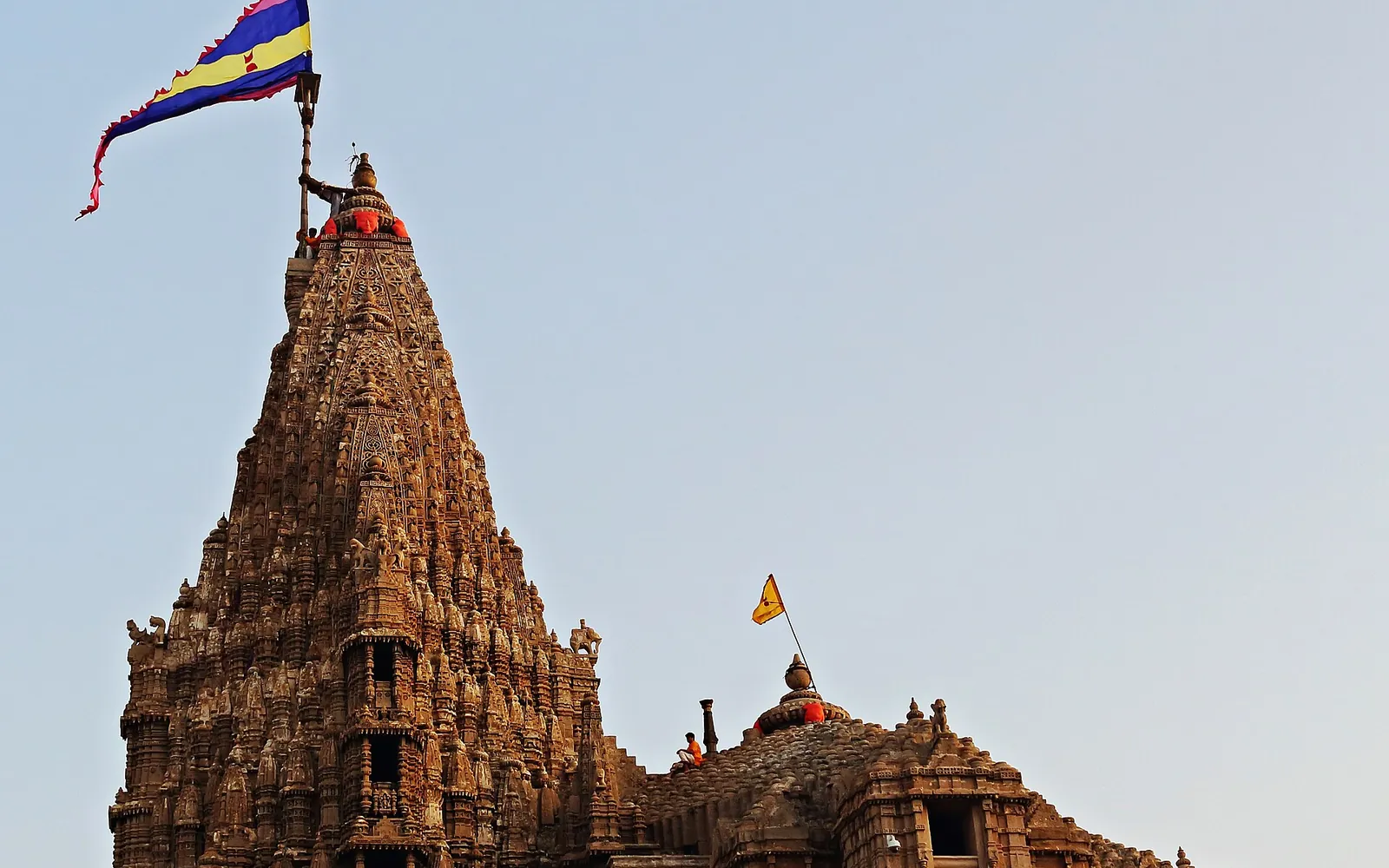
The nature of a pilgrimage town is fundamentally different from a leisure tourist destination. Visitors come with devotional purpose; the locals provide services in that context. The economic and cultural ecosystem that has built up around Dwarkadhish Temple over centuries is oriented toward welcoming pilgrims, not exploiting them. There are touts, there are overpriced souvenir shops, and there are the usual minor nuisances of any crowded religious site. But the kind of organised harassment or crime targeting tourists that exists in some Indian cities simply does not characterise Dwarka.
The area within 500 metres of Dwarkadhish Temple is active at all hours. The temple itself has aartis from 6 AM (Mangla) through 9 PM (Shayan). Between aartis, the lanes leading to Swarga Dwar and Moksha Dwar have persistent foot traffic, vendors, priests, pilgrims, priests guiding families, temple staff. A solo traveller walking through this area at any hour is not conspicuous or vulnerable.
Police presence near the main temple is consistent and visible during peak hours. The Dwarka police station is within close range of the temple complex. Gujarat's overall record on crime against tourists, particularly in pilgrimage zones, is among the better ones in India. Solo travellers should still apply standard judgment, do not display expensive jewellery, keep copies of documents, and know your hotel's address and contact number, but these are baseline travel habits, not Dwarka-specific warnings.
Solo Women Pilgrims in Dwarka
Solo women visiting Dwarka is not an exception, it is a centuries-old tradition. Women travelling alone for darshan of Krishna at his Dwarka temple have done so since this site became one of the Char Dhams. Today the same tradition continues. The temple queues, the ghats, the dharamshalas all regularly include solo women pilgrims, many of them elderly, travelling from Gujarat, Rajasthan, Maharashtra and further afield without male company.
Several dharamshalas in Dwarka maintain women-only floors or sections. Inform the dharamshala management at check-in if you prefer a women-only arrangement, most can accommodate this. The ISKCON temple has a consistently respectful, organised atmosphere and is particularly comfortable for solo women. The temple complex is well-managed, the staff is courteous, and the environment is not typical of more chaotic pilgrimage sites.
Evening safety: the Sandhya Aarti at sunset brings large crowds to the temple and the area is at its most active in the early evening. Walking back from the temple after the aarti, even at 7–8 PM, through the well-lit temple lanes is entirely safe. For outlying areas after dark, the ghat area late at night, the road to Bhadkeshwar after sunset without tide confirmation, standard caution applies. These are not inherently dangerous zones but nighttime solo navigation anywhere requires awareness.
Accommodation Strategy for Solo Travellers
The key decision for solo travellers in Dwarka is location over price. Paying ₹100–200 more per night to be within 300 metres of Dwarkadhish Temple rather than 1–2 km away is worth it for solo itinerary flexibility. When you are attending Mangla Aarti at 6 AM and the Shayan Aarti at 9 PM, being a 5-minute walk from the temple means you can attend both without any transport coordination. At greater distance, you are paying autos twice a day for those two aartis alone.
Single occupancy rooms exist at most Dwarka lodges, though pricing is not always different from double occupancy. Ask explicitly for single occupancy when booking, some properties discount it, others do not. Hostel-style accommodation with dormitory beds is limited in Dwarka (this is not a backpacker circuit), but some dharamshalas do have multi-bed dormitory-style rooms at ₹150–200 per bed.
Online booking platforms (MakeMyTrip, Goibibo, Booking.com) list the major hotels in Dwarka. For dharamshalas, online booking is generally not available, walk-in or phone-in is how it works. Arriving in Dwarka and walking the 300-metre radius from Swarga Dwar to ask at 3–4 dharamshalas takes 20 minutes and gives you a direct sense of availability and room quality. In shoulder season (March–June, July–September), this walk-in approach works without problem. In peak season (October–February), call ahead by at least 3–4 days.
Solo Darshan Strategy: Queues, the "VIP Darshan" Myth and Timing
Solo darshan has one structural advantage over group darshan: you can slip into smaller gaps in the queue and move faster than a large group. In general queue during off-peak season, a solo traveller can complete darshan in 45 minutes from Swarga Dwar. In peak season, even solos face the full 2–3 hour queue, there is no paid pass that lets you skip it.
You may see "VIP darshan" passes advertised by touts near Swarga Dwar or on unofficial websites, promising a ₹200 fee, a separate counter, or a 5:30 AM token queue. None of this is run by the Dwarkadhish Temple Trust, there is no official VIP or priority-darshan scheme here (unlike Tirupati or Siddhivinayak, which do offer paid options), and paying anyone for one gets you nothing but a lighter wallet. The genuinely practical recommendation for solo travellers visiting in October–February or during any festival is timing instead: arrive around 6:00 AM for the Mangla Aarti or within the 6:00–7:00 AM window, when the general queue is at its shortest, then you are free for the rest of the day.
Solo travellers who want the shortest possible wait: target weekday mornings in off-peak season, arrive at Swarga Dwar by 7–8 AM, and join the general queue, it is the only queue and it has always been free. Bring water and something to read or listen to, the queue space is open-air and the wait, while long, is not unpleasant. Do not leave the queue to get food or the bathroom without asking someone to hold your spot, as this is a common practice and generally respected.
Solo Day Trips: Bet Dwarka and Nageshwar Alone
Solo travellers regularly do the Bet Dwarka day trip without joining a group tour. The GSRTC bus from Dwarka to Okha runs multiple times daily and is always occupied by other pilgrims. At Okha jetty, the government ferry runs frequently, you will never be the only person on it. At Bet Dwarka island, the temple complex has a steady stream of visitors and temple staff present throughout opening hours. There is no stretch of the Bet Dwarka trip where a solo traveller is isolated.
For Nageshwar Jyotirlinga (17 km from Dwarka), the best solo option is the shared auto from Dwarka's auto stand. Ask for others going to Nageshwar, you will typically find 1–3 other pilgrims for a shared ride within 15–20 minutes of asking. At the temple itself, solo darshan is straightforward, it is a well-organised temple with clear queue systems and English signage. The giant Shiva statue in the complex provides a natural congregating point where solo visitors can sit, observe and rest without feeling out of place.
Combining Bet Dwarka and Nageshwar on the same solo day trip is possible but tiring. The total logistics, bus to Okha, ferry, 2–3 hours on island, ferry back, auto to Nageshwar, darshan, auto back to Dwarka, mean you are on the move for 10–12 hours. Start by 6:30 AM and you can manage it comfortably. Starting at 9 AM or later makes the day feel rushed at the Nageshwar end.
Frequently Asked Questions
Also Read
Bet Dwarka
Guide to Bet Dwarka island: ferry from Okha, the Sudarshan Setu bridge, seasonal temple timings, and what to see on the island where Krishna lived.
Read Full GuideDwarka on a Budget
Free darshan, ₹20 meals, dharamshalas from ₹200, the Char Dham that costs less than most pilgrims expect.
Read MoreVisiting Dwarka for the First Time
Eight things nobody warns you about before your first trip to Dwarka, temple closures, tide rules and queue realities.
Read MoreHow to Reach Dwarka
Train, bus and road options from all major cities, with actual journey times and ticket costs.
Read More