Dwarka Weather & Best Time to Visit (2026 Complete Guide)
Because Dwarka is located on the extreme western tip of the Saurashtra peninsula, right where the Gomti River meets the Arabian Sea, its climate is heavily influenced by the ocean. Understanding the local weather is absolutely critical for a comfortable pilgrimage. The marble floors of the temples can get scorching hot in the summer, and the ferry rides to Bet Dwarka can be suspended during heavy monsoons. This guide breaks down the weather month-by-month so you can plan the perfect trip.
Quick Answer: When to Visit Dwarka
If you are planning your itinerary, here is the fastest summary of Dwarka's climate:
- Best Time to Visit: October to March (Winter)
- Peak Festival Time: August/September (Janmashtami)
- Avoid Traveling: May and June (Extreme Summer Heat)
- Ideal Duration: 2 Full Days
Winter in Dwarka (October to February) - The Peak Season
Winter is universally recognized as the absolute best time to visit Dwarka. Because it is a coastal town in Gujarat, Dwarka does not experience severe, biting winters like North India. Instead, the climate transforms into a pleasant, cool, and highly comfortable environment.
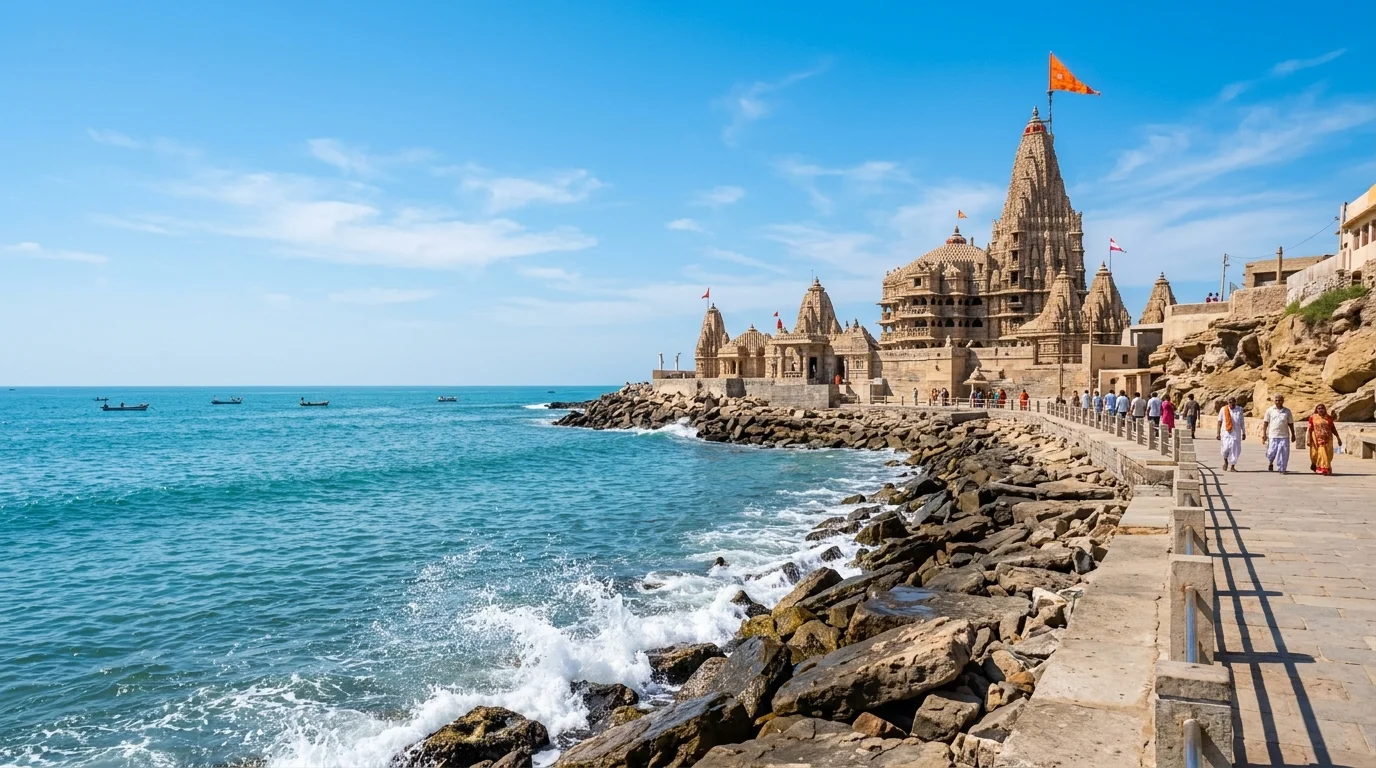
- Temperature Range: Daytime temperatures hover around a very comfortable 24°C to 28°C (75°F to 82°F). Nighttime temperatures can drop to a pleasant 15°C to 20°C (59°F to 68°F).
- The Experience: This is the perfect weather for exploring the massive Dwarkadhish Temple complex barefoot. The stone floors remain cool throughout the day. It is also the ideal time to take the 30-minute ferry ride to Bet Dwarka, as the Arabian Sea is generally calm and the skies are a brilliant, unclouded blue.
- Events: The festival of Diwali usually falls in late October or November. The entire temple is illuminated with thousands of diyas (oil lamps), creating a deeply spiritual and visually stunning atmosphere.
Season-by-Season Comparison Table
Here is a quick reference guide to help you choose the right season based on your tolerance for heat, crowds, and rain:
| Season | Months | Avg Temp | Pros & Cons |
|---|---|---|---|
| Winter (Peak) | Oct - Feb | 20°C - 28°C | Pros: Perfect weather, cool temple floors, calm sea. Cons: Highest hotel rates, maximum crowds. |
| Summer (Off-Peak) | Mar - Jun | 30°C - 40°C | Pros: Cheap accommodation, shorter Darshan queues. Cons: Exhausting humidity, burning hot temple floors. |
| Monsoon (Festival) | Jul - Sep | 25°C - 32°C | Pros: Lush green scenery, Janmashtami celebrations. Cons: Unpredictable rain, ferry to Bet Dwarka may halt. |
Summer in Dwarka (March to June) - The Challenging Season
Summers in the Saurashtra region are notoriously harsh. If you are planning a trip during these months, you must be prepared for extreme heat and high coastal humidity.
What to Expect
As March progresses into April, the daytime temperatures steadily climb past 35°C (95°F) and can occasionally touch 40°C (104°F) in May. Because Dwarka is right on the ocean, the humidity makes the "feels-like" temperature significantly higher.
- Temple Logistics: Walking barefoot inside the temple premises between 11:00 AM and 4:00 PM becomes extremely difficult. The temple administration lays down jute mats (coir runners) and sprays water on them, but the heat radiating from the stone is still intense.
- Sightseeing Strategy: If you must visit in summer, split your day. Wake up at 5:30 AM, attend the Mangla Aarti, and finish your outdoor sightseeing (like Nageshwar Jyotirlinga) before 10:30 AM. Return to your AC hotel room for the afternoon, and step out again only after 5:30 PM to enjoy the sunset at Bhadkeshwar Mahadev.
- The Silver Lining: Summer is the off-season. You will get excellent discounts on premium hotels, and the queues for Darshan inside the Dwarkadhish temple will be significantly shorter.
Monsoon & Janmashtami (July to September)
Monsoon in Dwarka is a season of contrasts. It brings much-needed relief from the scorching summer heat, transforming the arid brown landscape surrounding the city into a vibrant, lush green.
The Janmashtami Phenomenon
The monsoon season hosts the most important event in Dwarka's calendar: Krishna Janmashtami (the birth of Lord Krishna), which usually falls in August or early September. During this week, the city transforms into a massive, vibrant carnival. Hundreds of thousands of pilgrims pour into the small town. The temple is decorated with millions of flowers, and the midnight Aarti is a sight of unparalleled devotion.
However, traveling during the monsoon requires caution:
- Ferry Disruptions: The Arabian Sea can get extremely rough during heavy downpours. The passenger ferry service from Okha to Bet Dwarka is strictly regulated by the port authorities and is frequently suspended for safety reasons during high tide or storm warnings.
- Rain Gear: Umbrellas are not allowed inside the main temple for security reasons. Pack a high-quality, lightweight raincoat or poncho that you can easily fold into your pocket.
- Pre-booking is Mandatory: If you plan to visit during Janmashtami, you must book your train tickets (120 days in advance) and hotels at least 3-4 months prior. The city literally runs out of rooms during this festival.
In Short
The absolute best time to visit Dwarka is during the winter months, from October to March, when the weather is cool (20°C to 28°C) and the sea is calm for the Bet Dwarka ferry ride. Avoid the extreme heat of May and June unless you are on a strict budget. If you wish to experience the grand Janmashtami festival, travel in August/September, but be prepared for massive crowds and potential rain disruptions.