ISKCON Dwarka Prasadam Timings: High-Quality Krishna Prasad, Everyone Welcome
ISKCON Dwarka serves prasadam twice daily, a full sattvic lunch from 12:00 PM to 1:30 PM right after the Rajbhog aarti, and a lighter dinner from 7:30 PM to 9:00 PM following the Sandhya Aarti. No onion, no garlic, no compromise on quality. Suggested donation ₹50-100 per person. Open to all regardless of religion, caste, or nationality.
ISKCON Dwarka Prasadam Timings at a Glance
| Meal / Event | Time | Notes |
|---|---|---|
| Rajbhog Aarti (midday) | 12:00 PM | Noon food offering to the deity, prasadam follows immediately |
| Prasadam Lunch | 12:00 – 1:30 PM | Rice, dal, sabzi, chapati, halwa, sweet |
| Prasadam Hall Closes | 1:30 PM | Temple closes at 1 PM; hall clears by 1:30 PM |
| Sandhya Aarti | 7:00 PM | Evening aarti, prasadam dinner follows |
| Prasadam Dinner | 7:30 – 9:00 PM | Lighter spread than lunch; calmer seating |
| Ekadashi Special Menu | Both sessions | No rice, no wheat, sabudana, fruit, milk items, sendha namak |
| Suggested Donation | - | ₹50–100 per person; not mandatory |
Useful References
ISKCON Dwarka Full Daily Schedule, Context for Prasadam Timing
Understanding when prasadam is served makes more sense when you see the full ISKCON Dwarka day. The temple runs on a tight devotional schedule from before dawn to late evening, and prasadam is not a standalone canteen service, it is directly tied to the ritual offering cycle. Lunch prasadam at 12 PM follows the Rajbhog aarti, which is the major noon food offering to the deity. Dinner prasadam at 7:30 PM follows the Sandhya Aarti at 7 PM.
| Program | Time |
|---|---|
| Mangala Aarti | 4:30 AM |
| Morning Darshan Opens | 7:15 AM |
| Rajbhog Aarti | 12:00 PM |
| Prasadam Lunch | 12:00 – 1:30 PM |
| Afternoon Closure | 1:00 – 4:30 PM |
| Evening Darshan Opens | 4:30 PM |
| Sandhya Aarti | 7:00 PM |
| Prasadam Dinner | 7:30 – 9:00 PM |
| Shayan Aarti | 8:00 PM |
The ideal pilgrimage flow: finish Dwarkadhish morning darshan at the main temple, then take an auto to ISKCON Dwarka to attend the morning temple program. Stay for prasadam lunch at 12 PM, timed perfectly around the Rajbhog-Darshan window, and then return to Dwarkadhish for the afternoon Uthapan darshan when the main temple reopens.
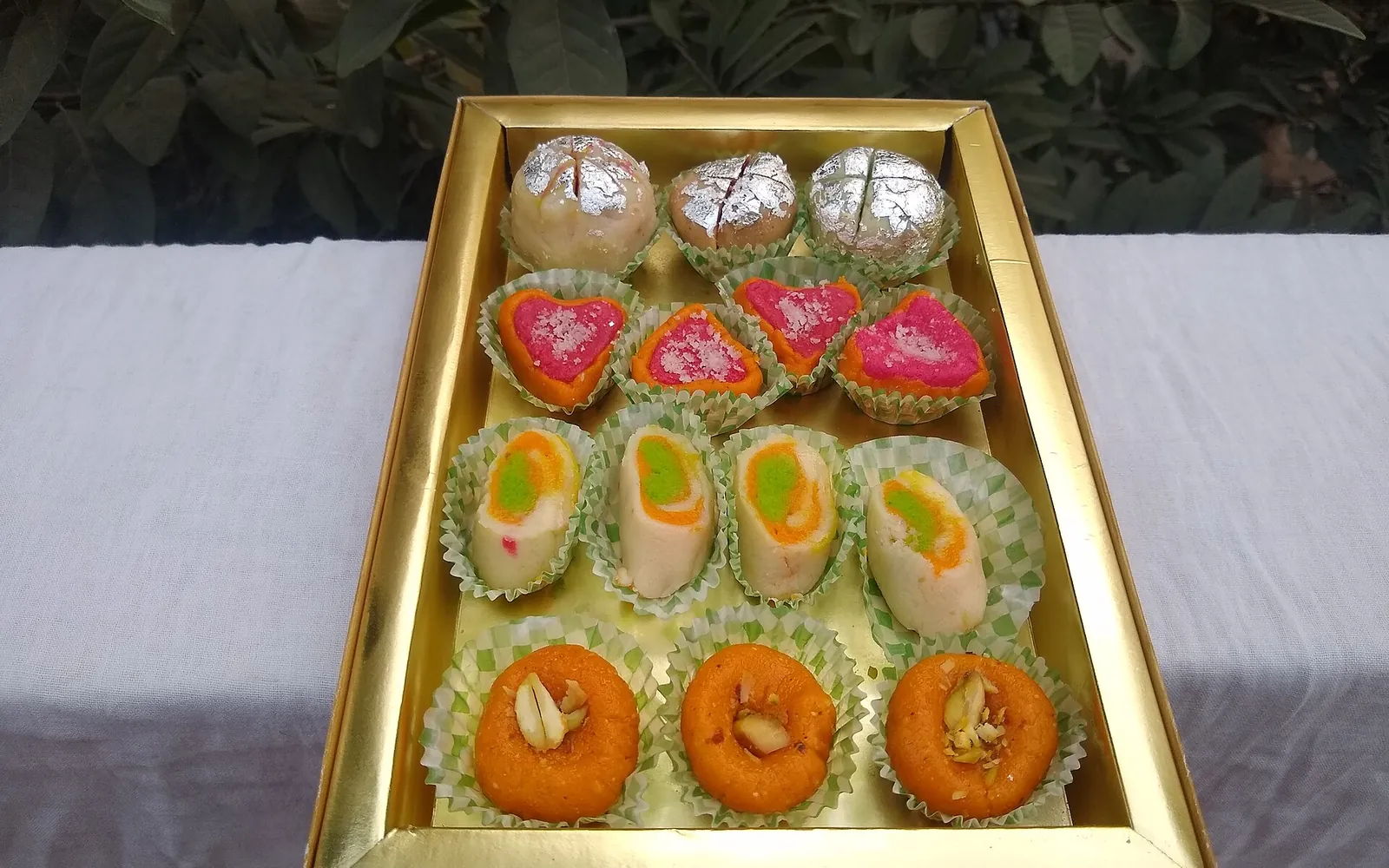
Prasadam Lunch: 12:00 PM to 1:30 PM
Lunch prasadam at ISKCON Dwarka is the larger and busier of the two daily meals. It begins immediately after the Rajbhog aarti, the formal midday offering of food to the deities. Once the deities have received their offering, the prasadam is brought to the hall and served to visiting pilgrims. The logic is sequential: the deity eats first, and whatever remains becomes prasad, food sanctified by divine contact.
Arriving by 11:50 AM ensures you are in the hall when service begins. The prasadam hall at ISKCON Dwarka can seat 50 to 100 people at a time, and service is done by volunteers, devotees who consider the act of serving prasadam itself a form of worship. Sit on the floor or at tables depending on the hall layout; do not begin eating until the serving round is complete and a short prayer is offered.
The lunch menu is substantial: steamed rice, chapati, dal (typically a moong or arhar preparation with ghee), at least two or three vegetable dishes (sabzis), a sweet preparation like halwa or kheer, and sometimes a pickle or chutney on the side. Everything is cooked with cumin, coriander, asafoetida (hing), and ginger for flavour, the absence of onion and garlic does not mean bland food. Experienced visitors to ISKCON prasadam halls consistently note that the quality rivals or exceeds what dedicated restaurants in Dwarka serve. The cooking is done by trained devotees following consistent recipes, and the motivation behind the cooking is different from a commercial kitchen.
On high-attendance days, weekends, festival days, and during peak pilgrimage seasons like Janmashtami, Navratri, or the winter months of November through February, the hall fills extremely quickly after the aarti ends. On such days, positioning yourself near the hall entrance by 11:45 AM is advisable.
Prasadam Dinner: 7:30 PM to 9:00 PM
Dinner prasadam follows the Sandhya Aarti at 7:00 PM. Many pilgrims intentionally time their ISKCON visit in the evening to attend the Sandhya Aarti, one of the most beautiful devotional programs in Dwarka, and then proceed directly to the prasadam hall for dinner. The crowd is lighter at dinner compared to lunch, which means more relaxed seating, unhurried service, and a calmer atmosphere overall.
The dinner menu is typically a lighter version of the lunch spread. Rice and chapati remain, but the number of sabzi preparations may be smaller. The sweet dish is often present, and the dal or a light soup may accompany the meal. For pilgrims who have had a full day of temple visits and walking, the dinner prasadam at ISKCON offers both nourishment and a gentle spiritual closure to the day.
A practical tip: if you want to attend the Sandhya Aarti and have dinner without rushing, arrive at the temple by 6:45 PM. This gives you time to remove footwear, find a place in the prayer hall, and participate in the full aarti from the beginning. The aarti runs approximately 30-40 minutes. When it ends, move toward the prasadam hall by 7:25 PM, the queue forms quickly once devotees begin flowing out of the main prayer hall, and arriving early ensures a comfortable seat.
Dinner is particularly pleasant on clear evenings when the outdoor areas of the ISKCON complex are accessible. The temperature in Dwarka drops agreeably in the evenings, and eating prasadam in this setting, after the sounds of the aarti have just filled the temple, is an experience that many repeat visitors to Dwarka return to deliberately.
Ekadashi Prasadam: The Grain-Free Special Menu
On Ekadashi, the 11th day (ekadashi = eleven) of each lunar fortnight, occurring twice a month, ISKCON Dwarka serves a completely different menu. Grains are entirely absent: no rice, no wheat, no chapati. This is not a hardship menu. Ekadashi fasting is a significant observance in Vaishnava tradition, and ISKCON kitchens have developed a rich repertoire of grain-free preparations that make the Ekadashi meal both satisfying and distinctive.
- Sabudana khichdi, cooked sago pearls with peanuts, cumin, green chilli, and sendha namak
- Fresh seasonal fruit and fruit salad
- Milk-based preparations, kheer, lassi, or sweet dahi
- Roasted or fried potato dishes cooked in sendha namak (rock salt), regular iodised salt is avoided on Ekadashi
- Coconut-based preparations in some seasonal variations
- Water chestnut (singhara) flour dishes when available
The theological reason behind Ekadashi grain abstinence is connected to the Vedic understanding of the body's relationship to grains. According to this tradition, on Ekadashi the sins of past actions take refuge in grains, and consuming them on that day would mean consuming those accumulated karmas. Avoiding grains keeps the mind lighter and more open to spiritual practice. This is also consistent with Ayurvedic understanding of lighter digestion and clearer mental states on fasting days.
For pilgrims who are not observing a full Ekadashi fast but happen to visit ISKCON on that day, the Ekadashi prasadam is worth trying on its own terms. The sabudana khichdi in particular is a beloved preparation that many visitors encounter for the first time at ISKCON and remember long after the trip. Ekadashi falls on specific dates each month based on the Hindu lunar calendar, if your Dwarka trip falls on one of these days, plan your ISKCON visit accordingly.
What is Sattvic Food and Why It Matters for Pilgrims
ISKCON prasadam follows the Vaishnava principle of sattvic cooking, food that is pure, fresh, and free of ingredients considered tamasic (dulling or darkening) or rajasic (overstimulating). Onion and garlic are the two most prominent exclusions. In Vedic and Ayurvedic tradition, these are classified as rajasic and tamasic respectively, they stimulate agitation and lethargy in the mind rather than clarity and calm. For a pilgrim who has just come from darshan at Dwarkadhish Temple, eating food that is considered mentally clarifying rather than stimulating is seen as an extension of the same purification.
The practical effect of this philosophy is a style of cooking that relies heavily on asafoetida (hing), which provides a pungent depth of flavour similar to what garlic contributes in other cuisines, and on ginger, cumin, coriander, turmeric, and mustard seeds as the flavour foundation. Far from being bland, ISKCON cooking tends to be richly aromatic precisely because more thought goes into spicing than in kitchens that reach for onion and garlic as default bases. Visitors accustomed to restaurant food sometimes expect ISKCON prasadam to be tasteless, they are consistently surprised.
The cooking at ISKCON Dwarka is also done with ghee, clarified butter, rather than refined oils. This is consistent with both Ayurvedic recommendations for digestive health and the traditional Vaishnava practice of offering the best-quality ingredients to the deity. The combination of ghee-cooked preparations, fresh ingredients, and sattvic spicing produces a meal that is nourishing without being heavy, and which many pilgrims describe as leaving them feeling clearer-headed rather than lethargic after eating.
Completing the spiritual circuit of Dwarka yatra through prasadam is a concept mentioned in many pilgrimage traditions. Darshan opens the connection; prasadam, as food that the deity has already received, closes it in a tangible, physical way. Eating ISKCON prasadam immediately after the Rajbhog aarti, where you have just witnessed the same food being offered to Radha Damodar, makes the experience particularly direct.
Donation System: ₹50-100 and the Philosophy Behind It
ISKCON Dwarka operates its prasadam service on a suggested donation basis of ₹50-100 per person. This is not a ticket price. There is no turnstile, no mandatory payment counter, and no one is turned away because they cannot pay. The philosophy is foundational to how ISKCON operates: prasad is Krishna's mercy, and mercy cannot be charged for. At the same time, running a kitchen that feeds hundreds of pilgrims daily has real costs, ingredients, cooking fuel, maintenance of the hall, and voluntary donations keep the service sustainable.
In practice, most visitors who can afford to donate do so, and those who cannot are welcomed just the same. The donation box or collection is typically near the hall entrance. ₹50-100 is a genuinely reasonable amount relative to what any meal in Dwarka's restaurants would cost, comparable establishments charging for similar quality and quantity of food would be priced considerably higher. The fact that this is available as a donation-based meal means pilgrims on tight budgets, solo travellers, and large family groups can all eat without financial strain.
Groups of pilgrims, particularly those arriving by bus from Gujarat, Rajasthan, or Maharashtra, often factor ISKCON prasadam into their budget planning specifically because of this structure. For a bus of 40 pilgrims, knowing that a quality sattvic lunch is available for ₹50 per head is a significant logistical simplification.
ISKCON Prasadam vs. Trust Bhojnalaya: Which Should You Choose?
Dwarka has two main options for free or donation-based prasadam: the ISKCON Dwarka prasadam hall and the Dwarkadhish Trust Bhojnalaya at the main temple complex. Both serve pilgrims. Both are vegetarian. Both are open to all. But they are meaningfully different experiences.
If your itinerary allows it, trying both across a two-day Dwarka visit gives you a complete picture of prasadam culture in the temple town. Many experienced pilgrims rotate between the two depending on the day's schedule.
Who Can Eat at ISKCON Dwarka: Open to Everyone
ISKCON's universality is one of its most distinctive features among religious organisations. Founded on the principle that Krishna consciousness is available to every living being regardless of birth, caste, nationality, or religion, ISKCON temples worldwide are genuinely open in a way that some traditional Hindu temples are not. At ISKCON Dwarka, this means the prasadam hall seats pilgrims from all communities side by side.
Visitors who have encountered restrictions at other Indian temples, whether related to caste, non-Hindu identity, or regional origin, are often surprised by the complete absence of such barriers at ISKCON. Foreign tourists, Jain pilgrims, Sikh visitors, and non-practising Hindus all eat alongside dedicated Vaishnava devotees without any friction. The common denominator is the prasadam itself, food that has been offered to Krishna and carries the same value for everyone who receives it, regardless of their theological position on what that means.
Children are welcome. Senior citizens are typically given additional consideration in seating. There is no dress code specifically for the prasadam hall, though it is connected to the temple complex, modest dress is appropriate, and footwear removed at the temple entrance stays outside. The volunteers serving prasadam chant Krishna's names as they serve, which may be unfamiliar to first-time visitors but is entirely non-compulsory from the eater's side. You are not required to chant or participate beyond receiving the food with both hands as a mark of respect.
Getting to ISKCON Dwarka from the Main Temple
The most practical way to include ISKCON prasadam in a Dwarka day trip is to plan around the lunch window. Finish Dwarkadhish morning darshan by 11:30 AM, take an auto to ISKCON, and arrive by 11:50 AM. Attend the Rajbhog aarti inside the temple if the queue permits, and then proceed to the prasadam hall when it opens at noon. This gives you a two-hour window before the temple reopens for afternoon programs and before you need to plan onward travel.
For the evening, the reverse direction: take an auto from your hotel or from Dwarkadhish to ISKCON by 6:45 PM, attend the Sandhya Aarti, and stay for dinner. The return journey to the town centre takes 10 minutes and can be arranged by the same auto driver or easily hailed from outside the complex.
Frequently Asked Questions
Also Read
ISKCON Dwarka Timings
Check ISKCON Dwarka Aarti and darshan timings, including Mangala Aarti at 4:30 AM, evening Aarti, prasadam lunch and dinner hours.
Read Full GuideBet Dwarka Temple Timings
Bet Dwarka temple opens at 6:00 AM (summer) or 6:30 AM (winter).
Read Full GuideISKCON Temple Dwarka
Full guide to ISKCON Dwarka, history, deities, daily programs, how to reach, and what makes it different from the main Dwarkadhish temple complex.
Read MoreDwarka Food Guide
Where to eat in Dwarka, from temple trust bhojnalayas to ISKCON prasadam to the best vegetarian thali restaurants near the main temple.
Read MoreDwarkadhish Temple Timings
All six daily aartis at Dwarkadhish, Mangala at 6 AM through Shayan at 9 PM, with the Rajbhog closure and Dhwaja ceremony explained.
Read More