Mumbai to Dwarka Train Guide 2026: Time Table, Distance & Complete Pilgrim Tips
Traveling from the bustling metropolis of Mumbai to the sacred, golden city of Dwarka is a deeply spiritual journey undertaken by millions of devotees every year. As the westernmost Char Dham, Dwarka holds immense significance in Hindu mythology. While flights and buses exist, the most traditional, comfortable, and budget-friendly mode of transport is the Indian Railways. This guide covers everything you need to know about the Mumbai to Dwarka train route, including updated timetables, ticket prices, boarding stations, and expert travel advice.
Quick Answer: Mumbai to Dwarka by Train
If you are planning a trip from Mumbai to Dwarka, here is the essential summary:
- Distance: 920 km
- Time: 16 Hours
- Fare: ₹480–₹3300
- Best Train: Saurashtra Mail (22945)
Why the Train is the Best Way to Reach Dwarka
While modern infrastructure has made it possible to fly into Jamnagar airport or take overnight luxury sleeper buses from Mumbai, the railway journey remains the undisputed favorite for pilgrims. The route spans over 900 kilometers, tracing the picturesque western coastline of India, and offers an experience that is deeply interwoven with the pilgrimage itself.
When you board a train from Mumbai, you join a community of devotees. The compartments are often filled with families sharing meals, singing bhajans (devotional songs), and discussing the mythology of Lord Krishna. Unlike the cramped seating of a bus, trains offer the ability to walk around, use clean onboard washrooms, and sleep horizontally in comfortable berths. For elderly travelers and young children, this level of comfort is non-negotiable.
Furthermore, flying involves a multi-modal transport headache. A flight from Mumbai (BOM) lands at Jamnagar (JGA). From Jamnagar, you still face a grueling 140-kilometer, 3-hour road journey via taxi to reach Dwarka. In contrast, the train drops you directly at Dwarka Railway Station, merely 10 minutes away from the main Dwarkadhish Temple. You can always check official routes via the Gujarat Tourism portal.
Direct Trains: Mumbai to Dwarka Time Table
Indian Railways provides excellent direct connectivity between Mumbai and the Devbhoomi Dwarka district. The trains originate from various terminals in Mumbai and invariably terminate at Okha Port, halting at Dwarka (DWK) along the way. Below is the most reliable, up-to-date schedule for planning your pilgrimage. For live running status, always consult the NTES Enquiry System.
| Train No. & Name | Departs (Mumbai) | Arrives (Dwarka) | Travel Time | Operating Days |
|---|---|---|---|---|
| 22945 Saurashtra Mail | 21:05 (MMCT) | 13:20 (DWK) | 16h 15m | Daily |
| 15045 Okha Express Gorakhpur - Okha (Via Mumbai) |
14:10 (BVI) | 05:40 (DWK) | 15h 30m | Thursdays Only |
| 19567 Vivek Express Tuticorin - Okha (Via Vasai) |
07:55 (BSR) | 02:00 (DWK) | 18h 05m | Mondays Only |
Spotlight: The Legendary Saurashtra Mail (22945)
The Saurashtra Mail is an institution in itself. Running daily, this Superfast Express train is the lifeline connecting Mumbai to the Saurashtra region of Gujarat. It departs from Mumbai Central (MMCT) at a highly convenient time of 9:05 PM, allowing working professionals to board the train after office hours. After a comfortable overnight sleep, you wake up in Gujarat, crossing major junctions like Ahmedabad and Rajkot. It arrives in Dwarka at 1:20 PM the following day, perfectly timing your arrival to check into your hotel, rest, and attend the glorious evening Sandhya Aarti at the temple.
Alternative: The Okha Express (15045)
While the Saurashtra Mail originates in Mumbai, the Okha Express is a long-distance train originating from Gorakhpur that passes through the western suburbs of Mumbai. It halts at Borivali (BVI) at 2:10 PM. This train is incredibly useful if you prefer traveling during the day and arriving in Dwarka early in the morning (5:40 AM), allowing you to attend the Mangla Aarti.
Ticket Fares and Classes Explained
The cost of traveling from Mumbai to Dwarka by train is highly dynamic. Fares depend on the class of travel, the specific train (Superfast trains charge a slight premium over regular Express trains), and the time of booking. Indian Railways operates a 120-day advance reservation period (ARP), and booking early via the IRCTC official portal is the only way to secure a confirmed berth.
Sleeper Class (SL)
Approx. Fare: ₹480 - ₹550
The most economical option. Sleeper class consists of non-air-conditioned coaches with open, barred windows. Each bay has 6 berths (Lower, Middle, Upper) and 2 side berths. While budget-friendly, be prepared for dust and heat, especially when the train crosses the arid plains of Saurashtra during the daytime.
AC 3-Tier (3A)
Approx. Fare: ₹1,250 - ₹1,400
The sweet spot between budget and luxury. The layout is identical to Sleeper class, but the coaches are fully air-conditioned with tinted, sealed windows. IRCTC provides clean bedding (sheets, blanket, pillow) for the overnight journey. Highly recommended for families.
AC 2-Tier (2A)
Approx. Fare: ₹1,800 - ₹2,000
Designed for premium comfort. AC 2-Tier coaches have only 4 berths per main bay (Lower and Upper) and 2 side berths, meaning more headroom and space. Each berth has an individual reading light and privacy curtains. Perfect for senior citizens requiring peace.
AC First Class (1A)
Approx. Fare: ₹3,100 - ₹3,300
The epitome of luxury on Indian Railways. 1A consists of private cabins (4 berths) and coupes (2 berths) with sliding, lockable doors. It features the widest berths, plush interiors, carpeted floors, and a highly personalized attendant service.
Boarding Stations in Mumbai: A Strategic Choice
Mumbai is a massive, sprawling metropolitan city. Traveling to the wrong railway station can add hours of exhausting road traffic to your journey before you even board the train. Indian Railways intelligently routes trains through the western corridor, providing multiple boarding options.
-
Mumbai Central (MMCT):
Located in South Mumbai, this is the originating station for the Saurashtra Mail. Boarding here guarantees you access to the train well before departure, allowing you to settle your luggage peacefully. Best for residents of South Mumbai, Worli, and Dadar.
-
Bandra Terminus (BDTS):
A major hub for western railway trains heading to Gujarat and Rajasthan. Several weekly trains to Okha originate here. Ideal for travelers residing in Bandra, Khar, Santacruz, and the BKC area.
-
Borivali (BVI):
Virtually every train heading north towards Gujarat will make a scheduled 3 to 5-minute halt at Borivali. For the millions residing in Mumbai's western suburbs (Andheri, Malad, Kandivali) and even Thane (via Ghodbunder road), boarding at Borivali is the most strategic choice. It saves the nightmare of traveling south to Mumbai Central during evening rush hour.
-
Vasai Road (BSR):
Trains that bypass the main Mumbai city limits (like the Vivek Express originating from South India) halt at Vasai Road. This is highly convenient for pilgrims traveling from the far northern suburbs, Virar, or Palghar districts.
Comparison: Train vs. Flight vs. Bus
Wondering which mode of transport is best for your pilgrimage? Here is a quick comparison summarizing travel times, costs, and convenience factors:
| Transport Mode | Total Travel Time | Approx. Cost (Per Pax) | Pros & Cons |
|---|---|---|---|
| Train (Direct) | 16 - 17 Hours | ₹480 - ₹2,000 | Pros: Direct drop at Dwarka, overnight sleep, cheapest. Cons: Takes a full night and half a day. |
| Flight (Via Jamnagar) | 4 - 5 Hours (Total door-to-door) | ₹4,000 - ₹8,000+ | Pros: Fastest way to arrive. Cons: Expensive, requires 3-hour road taxi from Jamnagar. |
| Sleeper Bus | 18 - 20 Hours | ₹1,200 - ₹2,500 | Pros: Good last-minute availability, multiple boarding points. Cons: Uncomfortable over 18 hours, limited washroom access. |
The Journey Experience: Route, Scenery, and Food
The 920-kilometer railway route from Mumbai to Dwarka is an incredible cross-section of western India's geography and culture. As the train pulls out of the urban jungle of Mumbai, it crosses the mighty Vaitarna river and speeds towards the industrial hubs of Vapi, Valsad, and Surat. By midnight, you cross the golden bridge over the Narmada river at Bharuch.
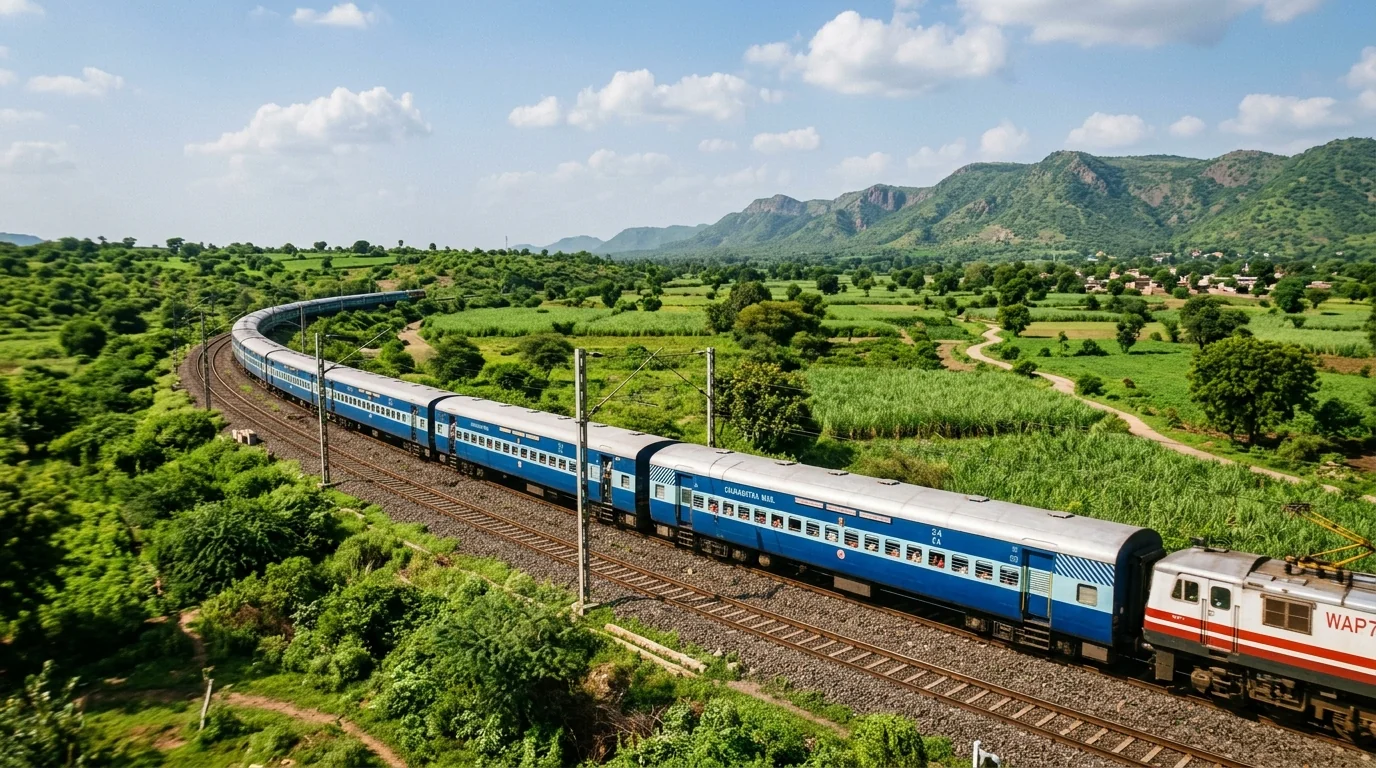
When you wake up, the landscape has dramatically shifted. The train navigates the vast, flat, and arid plains of the Saurashtra peninsula. You will pass through major Gujarati cultural capitals like Ahmedabad, Surendranagar, Rajkot, and Jamnagar. As the train crosses Jamnagar, the scenery changes again, the soil becomes redder, windmill farms dot the horizon, and you can sense the proximity of the Arabian Sea as the salty breeze filters through the compartments.
Food and E-Catering Options
Food is a vital part of any long-distance Indian train journey, and this route will not disappoint culinary enthusiasts. While trains like the Saurashtra Mail are equipped with dedicated pantry cars serving standard vegetarian thalis, dal-chawal, and snacks, the real joy lies in regional delicacies.
- Surat Station: Although you cross it late at night, some vendors may sell the famous Surati Locho or cold cocoa.
- Vadodara (BRC) & Ahmedabad (ADI): In the morning, order via IRCTC's E-Catering app to have fresh, hot Fafda, Jalebi, and Khaman Dhokla delivered right to your seat.
- Rajkot Junction: Famous for its spicy Kathiyawadi thalis. Pre-book your lunch so it arrives piping hot when the train pulls into Rajkot around 10:00 AM.
- Pantry Car: Constant streams of vendors will walk the aisles selling hot tea (chai), coffee, packaged water, tomato soup, and bread-cutlets.
Connecting Options: Traveling via Ahmedabad or Rajkot
What if the direct trains from Mumbai to Dwarka are fully booked? This happens frequently during the festival of Janmashtami or the Diwali holidays. Do not panic. The railway network offers brilliant connecting options.
Option 1: Break Journey at Ahmedabad (ADI)
Mumbai to Ahmedabad is one of the busiest rail corridors in the country, serviced by dozens of trains daily including the Vande Bharat Express, Shatabdi, and Tejas Express. You can take an evening high-speed train to Ahmedabad (taking 5-6 hours), and from Ahmedabad, board an overnight connecting train to Dwarka, such as the Somnath Express or the Ahmedabad-Okha Passenger. This effectively guarantees a seat even during peak season.
Option 2: Break Journey at Rajkot (RJT)
Similarly, you can book a ticket on any train heading towards Rajkot (like the Saurashtra Janta Express). Rajkot is a major junction in Saurashtra. From Rajkot, Dwarka is just 220 kilometers away. If connecting trains are delayed, you can easily exit the Rajkot railway station and take a GSRTC luxury Volvo bus or hire a private taxi, which will drop you at Dwarka in about 4 hours.
Arrival at Dwarka: Station to Temple
After a 900-kilometer journey, your train will finally pull into Dwarka Railway Station (Station Code: DWK). It is a beautiful, relatively small, and highly spiritual station. The architecture of the station building itself mirrors traditional Hindu temple design, welcoming pilgrims with an aura of devotion.
Crucial Note: Do not fall asleep and miss the Dwarka stop! Most trains, including the Saurashtra Mail, do not terminate at Dwarka. They halt for about 5 minutes and then proceed another 30 kilometers to their final destination, Okha Port. If you miss the Dwarka station, you will end up in Okha, and you will have to take a bus or auto back, wasting over an hour of your precious time.
Luggage and Packing Tips for Pilgrims
Packing intelligently for a long-distance Indian train journey will significantly elevate your comfort level. Keep these specific tips in mind for the Mumbai to Dwarka route:
- Secure Chains: Bring a combination lock and chain. Indian train berths have metal hooks specifically for securing your luggage underneath the lower berths, ensuring you sleep peacefully.
- Warm Clothing (Winter): If traveling between November and February, the Saurashtra region gets surprisingly chilly at night and early morning. Even if you book Sleeper Class (non-AC), carry a thick blanket or jacket.
- Temple Dress Code: Pack traditional, modest clothing in your easily accessible day-bag. The Dwarkadhish Temple strictly enforces a dress code (no shorts, no sleeveless tops).
- Power Banks: While modern LHB coaches have charging sockets near every berth, voltage fluctuations are common. Carry a fully charged power bank for your mobile phone.
- Hygiene Kits: Hand sanitizer, wet wipes, and a small roll of toilet paper are essential for the 16-hour journey.
In Short
If you're traveling from Mumbai to Dwarka, the Saurashtra Mail (22945) is highly recommended because it offers a comfortable overnight journey, departing Mumbai after work hours (9:05 PM) and arriving in Dwarka by 1:20 PM. It is significantly cheaper than flying to Jamnagar and much more comfortable than a 20-hour bus ride. Book your AC 3-Tier tickets 120 days in advance via IRCTC for the best, most stress-free pilgrimage experience.