Okha Near Dwarka: The Ferry Town That Is the Gateway to Bet Dwarka
Okha is 36 km from Dwarka by road, a fishing harbour and industrial port town that most pilgrims visit for one reason only: the ferry to Bet Dwarka. Okha Jetty is where government and private boats depart for the 3.5 km crossing to Bet Dwarka island. The town itself has little pilgrim infrastructure, but understanding how to reach and use Okha is essential for anyone doing the full Dwarka darshan circuit.
Useful References
What Okha Is and Why Pilgrims Go There
Okha sits at the tip of the Okhamandal peninsula, the westernmost point of Gujarat's Saurashtra coast. It is an industrial and fishing town, the Kandla-Okha coastal industrial corridor passes through here, and the Okha Port handles commercial traffic. The atmosphere is distinctly different from the devotional quiet of Dwarka town, 36 km to the southeast. If you arrive in Okha expecting a pilgrim town with temples and dharamshalas lining the streets, you will find something quite different: fish drying nets, cargo vessels, and the functional infrastructure of a working port.
The reason every Dwarka pilgrim eventually passes through Okha is simple: there is no other way to reach Bet Dwarka (Shankhodhar) by water. The island of Bet Dwarka, where Lord Krishna's actual residential palace is believed to have stood, as distinct from the Dwarkadhish Temple at the administrative and religious center, sits 3.5 km offshore from Okha Jetty. The ferry is the only way to cross. There is no bridge connecting Bet Dwarka island to the mainland, though a bridge project has been discussed for many years.
For pilgrims doing the Panch Dwarka (five Dwarkas) circuit, Okha is the mandatory transit point for reaching Bet Dwarka, which is one of the five. Even for pilgrims not doing the full Panch Dwarka, the Bet Dwarka temple is considered a significant darshan that complements the Dwarkadhish Temple darshan, Lord Krishna is believed to have lived on Bet Dwarka island while the main city of Dwarka was on the peninsula. Understanding this geography helps explain why the town of Okha, unremarkable in itself, is visited by hundreds of thousands of pilgrims each year.
Okha Jetty: How the Ferry Works
Okha Jetty is on the eastern side of Okha town, facing the channel between the mainland and Bet Dwarka island. The jetty has a small ticketing area and a waiting space. On busy days, weekends, festival periods, and particularly Janmashtami, the jetty area is crowded with pilgrims waiting for boats. The boats themselves range from government-operated vessels that carry a larger number of passengers to smaller private boats that charge slightly higher fares but may depart more frequently.
| Ferry Type | Fare | Duration | Frequency |
|---|---|---|---|
| Government Ferry | ₹40-50 per person each way | 20-30 min | Regular departures, confirm at jetty |
| Private Boat | ₹60-100 per person | 20-25 min | On demand, more flexible |
| Sudarshan Setu (by road) | No boat ticket needed | A few minutes | Open 24x7, unaffected by sea conditions |
Sudarshan Setu, the road bridge connecting Okha to Bet Dwarka, is the option most pilgrims now use, and it is particularly welcome for elderly devotees and anyone uncomfortable with an open boat crossing in rough sea. The bridge is 2.32 km long, is India's longest cable-stayed bridge and opened on 25 February 2024. Its 2.5 metre footpath on each side is inscribed with verses from the Bhagavad Gita and images of Lord Krishna, so walking across is worth doing at least once. On rough sea days, when boats may be temporarily suspended, the bridge is unaffected.
The return journey from Bet Dwarka back to Okha uses the same ferry or the same bridge. Plan to be back at Bet Dwarka Jetty (on the island side) well before the last evening ferry departure, the exact last departure time varies by season and day and should be confirmed at Okha Jetty when you take the first crossing. Missing the last ferry means either finding overnight accommodation on the island (very limited) or arranging a private boat, which is possible but adds significant cost and complexity to the trip.
How to Reach Okha from Dwarka
By Auto-Rickshaw
Shared autos run between Dwarka bus stand and Okha throughout the day. Fare approximately ₹50-80 per person. Journey time 45-50 minutes. Most pilgrims use shared autos for this route. Private auto for the full Dwarka-Nageshwar-Okha-Bet Dwarka circuit costs ₹600-900 for the day.
By Private Vehicle / Taxi
Taxis from Dwarka to Okha charge ₹400-600 for one way, more for a full-day return circuit. If combining Nageshwar with the Bet Dwarka ferry trip, hiring a vehicle for the day (₹800-1200) is the most efficient option. The route passes Nageshwar at 22 km on the way to Okha.
By GSRTC Bus
Gujarat State Road Transport buses run between Dwarka and Okha. Frequency is limited compared to auto-rickshaws. Check the Dwarka bus stand for current schedule. Fare is ₹30-50. Buses are slower than autos on this route due to stops.
By Train (Okha Railway Station)
Okha has its own railway station, the terminus of the Okha Branch Line from Rajkot. Trains from Rajkot to Okha take approximately 4 hours. If arriving in Gujarat by train specifically for Bet Dwarka, the Okha station removes the need to go through Dwarka town first.
The Recommended Day Trip Route: Dwarka → Nageshwar → Okha → Bet Dwarka
The most efficient way to cover Nageshwar Jyotirlinga and Bet Dwarka in a single day from Dwarka is to follow a logical geographic sequence. Nageshwar is 17 km from Dwarka on the road toward Okha, it sits between the two. Stopping at Nageshwar first, then continuing 14 km to Okha for the ferry to Bet Dwarka, means you cover all three sites in one linear journey rather than backtracking.
Leave early to reach Nageshwar for the morning darshan. Nageshwar opens at 5 AM and the morning Rudrabhishek (special puja) runs 6-8 AM, arriving by 8-8:30 AM for regular darshan is comfortable.
17 km from Dwarka, 35-40 minute drive. Darshan at Nageshwar, one of 12 Jyotirlingas, takes 45-90 minutes depending on queue. Nageshwar is generally less crowded than Dwarkadhish and darshan is typically smooth.
14 km from Nageshwar to Okha, 20-25 minute drive. Arrive at Okha and either take the government ferry from the jetty or drive across Sudarshan Setu to Bet Dwarka. Morning crossings are generally smooth, avoid the hottest midday hours if possible.
Bet Dwarka temple is open 6 AM-12:30 PM and 3 PM-8 PM (summer) / 6:30 AM-12:30 PM and 2:30-7:30 PM (winter). Plan to be at the temple by 10:30-11:00 AM at the latest for the morning session.
Take the afternoon ferry back to Okha Jetty after the morning temple session closes at 12:30 PM. Drive back to Dwarka, total return journey 45-50 minutes. Back in Dwarka by early afternoon for rest before the Dwarkadhish evening aarti.
This circuit, Dwarka to Nageshwar to Okha to Bet Dwarka and back, is the standard day trip that experienced pilgrim guides recommend. It requires an early start but is very manageable within a single day. Hiring a private auto or taxi for the full circuit (rather than using shared autos for each segment) makes the scheduling much easier since you can move at your own pace rather than waiting for departures.
What to See in Okha Town (If You Have Time)
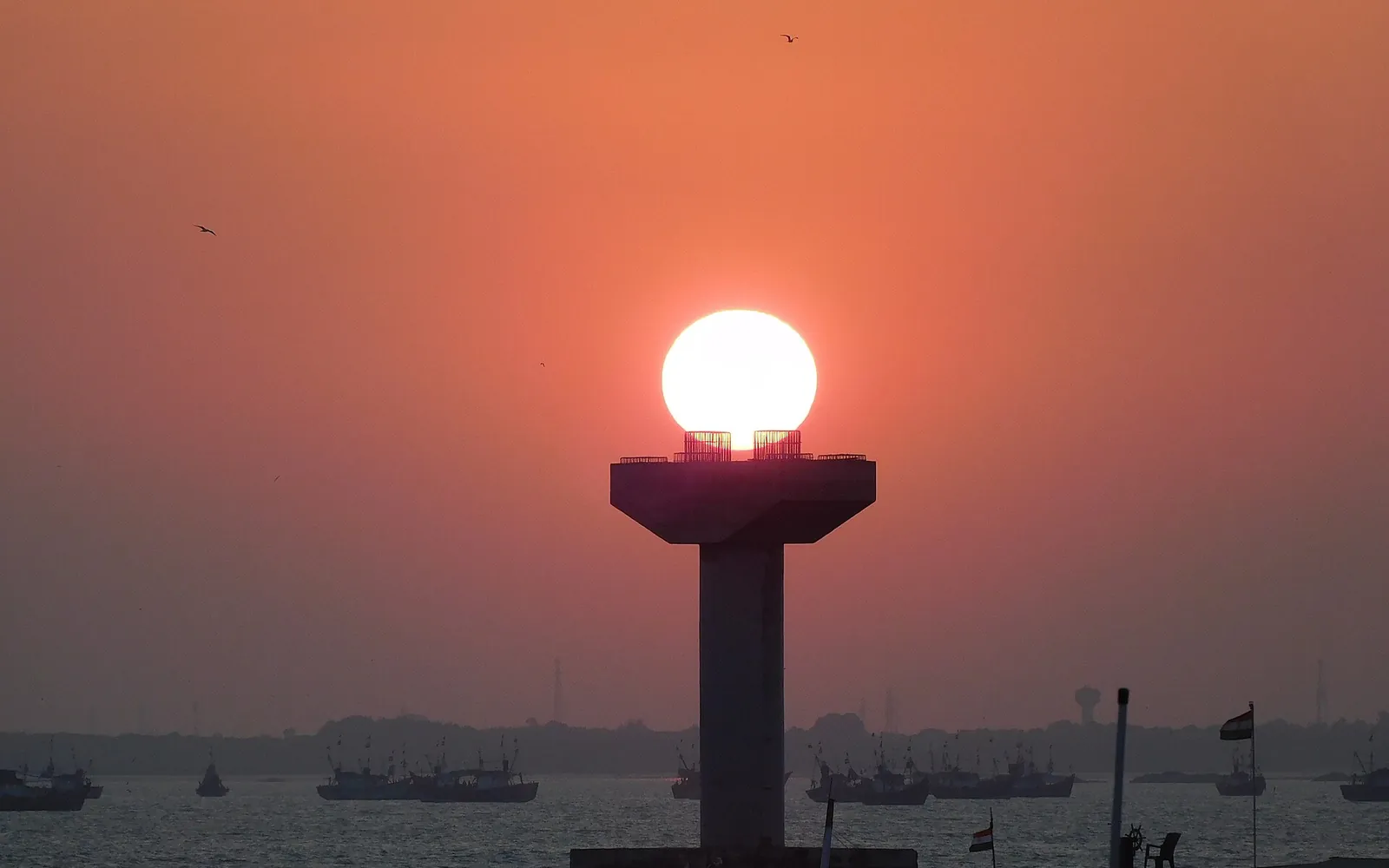
Most pilgrims arrive in Okha, walk to the jetty, take the ferry, return, and leave. If your schedule allows, Okha has a few things worth a brief look. The Okha Lighthouse stands near the harbour area and is one of Gujarat's active coastal lighthouses. The structure itself is not open for climbing but the surrounding area gives a clear view of the harbour, the channel toward Bet Dwarka, and on clear days the distant outline of the island. The lighthouse and harbour view take perhaps 20-30 minutes to appreciate properly.
The fish market near Okha Jetty is active in the early morning, roughly 6-8 AM, when fishing boats return with overnight catches. If you are making an early start from Dwarka to catch the first ferry, the fish market is alive and visually interesting as you pass. The variety of catch unloaded at an active Gujarat fishing harbour, pomfret, kingfish, prawns, crabs, is a reminder that Okha functions primarily as a working port town rather than a pilgrimage destination. This contrast between Okha's industrial character and the sacred purpose of the ferry crossing is part of what makes the Bet Dwarka journey feel like a genuine transition from the ordinary world to an island apart.
There are no significant temples or historical monuments within Okha town itself that warrant a dedicated visit. The town's primary contribution to the Dwarka pilgrimage is geographical, it is the closest mainland point to Bet Dwarka island, and the ferry service that departs from here is the essential link in the complete Dwarka darshan circuit. Pilgrims who treat Okha purely as a transit point are not missing anything of devotional substance; those with time and curiosity may find the harbour atmosphere briefly interesting.
Frequently Asked Questions
Also Read
Okha to Bet Dwarka Ferry
Okha to Bet Dwarka ferry runs every 30-45 minutes from 6 AM to 6 PM.
Read Full GuideBet Dwarka Temple
Everything about the island temple at Bet Dwarka, darshan timings, what to see, and the full crossing experience from Okha Jetty.
Read MoreNageshwar Jyotirlinga
The Jyotirlinga temple 17 km from Dwarka, history, darshan timings, and how to combine it with your Bet Dwarka trip.
Read MoreDwarka Darshan Itinerary
Day-wise itinerary covering Dwarkadhish, Nageshwar, Bet Dwarka and all key sites in 1-3 days.
Read More