Char Dham Yatra Guide: Complete Pilgrimage to All Four Sacred Dhams
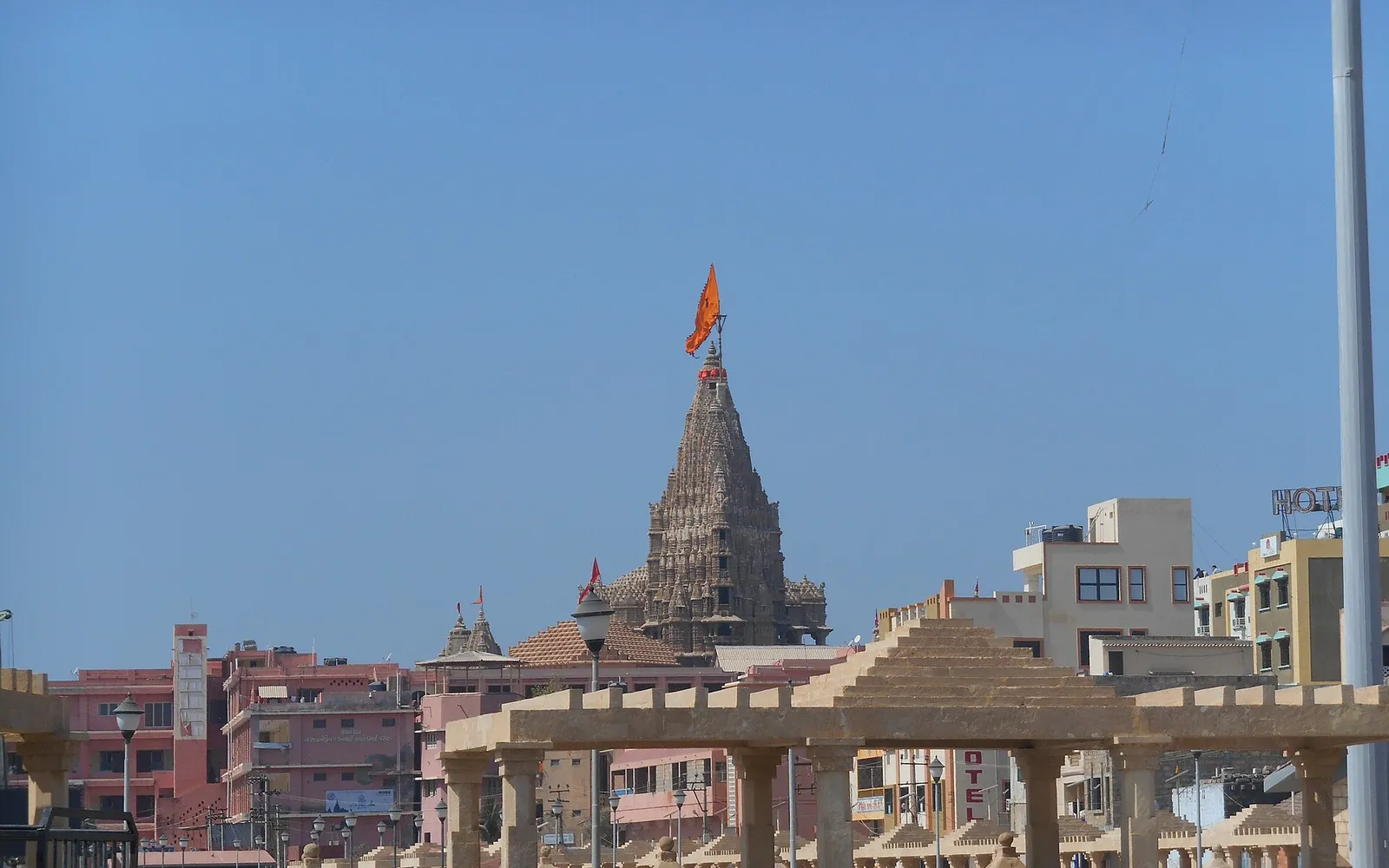
The Char Dham Yatra is the most sacred pilgrimage in Hinduism, covering four holy sites at the four corners of India. Dwarka in Gujarat is the western Dham, one of four sites that together form a divine circuit believed to grant moksha to every sincere pilgrim who completes it.
What is Char Dham Yatra?
The Char Dham Yatra is the most revered pilgrimage circuit in Hinduism, encompassing four supremely sacred shrines positioned at the four cardinal corners of the Indian subcontinent. The tradition was established, or more precisely, systematised and promoted, by Adi Shankaracharya, the towering 8th-century CE philosopher, theologian and reformer from Kerala. During his remarkable all-India pilgrimage to revive Sanatana Dharma, Shankaracharya established four monastic centres known as Mathas at each of the four Dhams, the Sringeri Matha in the south, the Dwarka Matha in the west, the Govardhan Matha in the east and the Jyotir Matha in the north. These four Mathas continue to function as the principal centres of the Advaita Vedanta tradition to this day, and each oversees the rituals and administration of the Dham temple in its zone. Shankaracharya's great vision was to unite the Hindu world through a shared sacred geography, connecting north, south, east and west into one living pilgrimage circuit that would foster religious unity across the vast and diverse country.
The spiritual significance of completing the Char Dham Yatra is immeasurable in Hindu belief. Each of the four Dhams is associated with one of the four directions, one of the four Vedas and one of the four great cosmic deities, Lord Vishnu presides over Badrinath and Puri, Lord Krishna (a full avatar of Vishnu) over Dwarka, and Lord Shiva over Rameshwaram. Together, the four Dhams represent the totality of the divine and of the Indian subcontinent itself. The Bhagavata Purana and various Puranic texts affirm that a devotee who completes the Char Dham pilgrimage with sincere devotion and a pure heart earns liberation from the endless cycle of birth and death, what Hinduism calls moksha or mukti. Even visiting a single Dham is considered enormously meritorious, but the completion of all four, ideally in the traditional clockwise order, is considered the fullest expression of this sacred journey. For millions of devout Hindus, completing the Char Dham Yatra is a lifelong ambition and a supreme act of faith.
The Four Sacred Dhams, A Complete Guide
Badrinath, The Northern Dham
Badrinath is the northern Char Dham, located in the Chamoli district of Uttarakhand in the high Himalayas at an altitude of 3,133 metres above sea level. The temple is dedicated to Lord Vishnu in his form as Badrinath (or Badrinarayan), seated in meditative posture. It is one of the 108 Divya Desams, the sacred Vishnu shrines celebrated in the Nalayira Divya Prabandham of the Alvars. Badrinath Temple is open only from May to November each year; the extreme Himalayan winters force its closure for the remaining months, and the deity is ceremonially moved to Joshimath for the winter. The presiding deity is a one-metre-tall black stone (shaligrama) idol of Lord Vishnu, and the Alakananda River flows beside the temple, where devotees bathe at the Tapt Kund hot spring before darshan.
Dwarka, The Western Dham
Dwarka is the western Char Dham, located on the coast of the Arabian Sea in the Devbhumi Dwarka district of Gujarat. The temple, Dwarkadhish Temple, also known as Jagat Mandir, is dedicated to Lord Krishna in his royal form as Dwarkadhish, the King of Dwarka. Dwarka is open year-round, making it among the most accessible of the four Dhams, with the ideal visiting season being October to March when the coastal climate is pleasantly cool. Beyond its Char Dham status, Dwarka holds additional sacred distinction as one of the seven Saptapuri, the Moksha-giving cities of India. Underwater archaeological explorations have discovered submerged city structures off the Dwarka coast, believed by many to be the remains of Krishna's legendary capital Dwaravati mentioned in the Mahabharata.
Puri, The Eastern Dham
Puri is the eastern Char Dham, located on the coast of the Bay of Bengal in Odisha. The Jagannath Temple at Puri, one of the largest Hindu temples in the world, is dedicated to Lord Jagannath, a unique form of Lord Vishnu or Krishna worshipped with his siblings Balabhadra and Subhadra. Puri Temple is famous worldwide for its annual Rath Yatra chariot festival, during which the deities are placed on massive wooden chariots and pulled through the city streets by hundreds of thousands of devotees, a procession that has inspired the English word "juggernaut." The temple is open year-round and is notable for serving the famous Mahaprasad, cooked daily in the world's largest temple kitchen. Non-Hindus are not permitted inside the main temple; the Raghunandan Library opposite provides viewing access.
Rameshwaram, The Southern Dham
Rameshwaram is the southern Char Dham, located on Pamban Island in the Gulf of Mannar off the coast of Tamil Nadu, connected to the mainland by the famous Pamban Bridge. The Ramanathaswamy Temple here is dedicated to Lord Shiva and is one of the twelve Jyotirlingas, the supreme manifestations of Shiva venerated across India. Rameshwaram is deeply embedded in the Ramayana narrative: it is here that Lord Rama worshipped Shiva and built the legendary Rama Setu (Adam's Bridge) to Lanka to rescue Sita. The temple is renowned for its extraordinary corridors, the longest in any Hindu temple, extending for over 1,200 metres, and for its 22 sacred theerthams (tanks) in which pilgrims ritually bathe before darshan. The temple is open year-round, with October to March being the most pleasant time to visit.
Dwarka, The Western Char Dham
Among the four Char Dhams, Dwarka occupies a place of extraordinary depth and complexity in Hindu sacred tradition. It is the only Dham directly associated with the life and reign of Lord Krishna, the most beloved avatar of Lord Vishnu in the Vaishnava tradition. According to the Mahabharata, the Bhagavata Purana and other Puranic texts, Lord Krishna established Dwaravati (Dwarka) as his capital after leading the Yadava clan from Mathura to escape the repeated attacks of Jarasandha, the powerful king of Magadha. In Dwarka, Krishna ruled as king for many decades, and the city was said to be a magnificent golden capital with hundreds of palaces, surrounded by a great ocean wall. The Dwarkadhish Temple stands at the spot identified in tradition as the site of Krishna's personal palace (Hari Griha), and the sacred Gomti River flows nearby before meeting the Arabian Sea at Gomti Ghat, a confluence considered divinely auspicious. Beyond its connection to Krishna's earthly life, Dwarka's spiritual power is amplified by its status as a Saptapuri, one of only seven cities in all of India that are believed to grant moksha to those who breathe their last breath within their sacred limits.
The antiquity of Dwarka's sacred significance is supported not only by scripture but by remarkable archaeological evidence. In the 1980s and 1990s, underwater explorations conducted by the National Institute of Ocean Technology (NIOT) and the Marine Archaeology Centre discovered submerged city ruins in the Gulf of Khambhat off the Dwarka coast. Stone anchors, pottery shards, structural remains and other artefacts were recovered from depths of several metres, with some material dated to more than 3,500 years ago, broadly consistent with the Mahabharata's timeframe. While academic debate about these findings continues, for millions of devotees they confirm what the scriptures have always taught: that the legendary golden city of Dwaravati was real, that it was submerged by the sea after Krishna's departure from the mortal world as the Purana recounts, and that present-day Dwarka stands as its living spiritual successor. The pilgrimage experience at Dwarka is rich and multi-layered, encompassing not only the main Dwarkadhish Temple but also Bet Dwarka island, Nageshwar Jyotirlinga, the Rukmini Devi Temple, Bhadkeshwar Mahadev, Sudama Setu and the evening Gomti Ghat aarti, together making Dwarka one of the most complete sacred destinations in India.
How to Plan the Char Dham Yatra
The traditional approach to the Char Dham Yatra follows a clockwise direction starting from the eastern Dham and moving around India in the sequence: Puri (east), Rameshwaram (south), Dwarka (west), Badrinath (north). This sequence is considered auspicious and is prescribed in the Puranic texts as the correct order for the circuit. For those planning a single continuous journey covering all four Dhams, the typical duration is 30 to 45 days, covering approximately 7,500 kilometres across the country. It is essential to plan this journey carefully around Badrinath's seasonal closure (November to May), which effectively makes April-November the window within which a continuous circuit must be completed. The journey involves significant travel across India's diverse terrain, from the humid Odishan coast to the tropical Tamil Nadu tip, the arid Gujarat shoreline and the extreme high-altitude Himalayas, so health, fitness and acclimatisation planning are especially important for Badrinath, where altitude sickness is a real risk for those ascending too quickly.
Many pilgrims wisely choose to complete the Char Dham Yatra over multiple trips across several years, visiting one or two Dhams per journey. There is no religious injunction requiring the four Dhams to be visited in a single journey or within a specific time period, what matters is the sincerity of devotion, not the logistics of travel. This approach is particularly recommended for elderly pilgrims or those with health concerns, as it allows each Dham to be visited at the most suitable time and without the physical strain of rushing across 7,500 kilometres. Budget planning is equally important: accommodation at all four Dhams ranges from basic dharamshalas (free or very low-cost pilgrim lodges) to mid-range and luxury hotels, and the total cost of a single-circuit journey varies from approximately ₹30,000 for a budget pilgrim travelling by train and bus to ₹1.5 lakh or more for a comfortable group tour. Several tour operators offer organised Char Dham packages that handle transport, accommodation and local guides, which can be particularly useful for first-time pilgrims navigating unfamiliar terrain.
Best Time to Do Char Dham Yatra
- Badrinath Open May to November only, closed due to extreme Himalayan winters from November to April. Best visited May–June or September–October to avoid the monsoon peak of July–August when landslides can disrupt roads.
- Dwarka Open year-round. Best season is October to March when the Arabian Sea coastal climate is cool and pleasant. Avoid April to June when temperatures can exceed 38°C. Monsoon (July–September) brings heavy rains but fewer crowds.
- Puri Open year-round. Best visited October to February when the Bay of Bengal coastal weather is mild. Avoid the intense summer heat of April–June. The famous Rath Yatra festival in June–July draws enormous crowds if that is your aim.
- Rameshwaram Open year-round. October to March is the most comfortable period with cooler temperatures. Avoid the scorching summer months. The island location keeps temperatures moderated by sea breezes compared to the Tamil Nadu mainland interior.
For a combined Char Dham Yatra circuit in a single journey, the golden window is October and early November. At this time, Badrinath Temple is still open (it typically closes in the second week of November) and the weather at Puri, Dwarka and Rameshwaram is entering its most pleasant phase. Pilgrims should track the exact Badrinath closing date each year, which is announced by the temple committee based on the Vedic calendar, and plan backward from that date to ensure they can complete the circuit in time. Beginning the journey at Puri in early October and concluding at Badrinath by late October or early November is the ideal strategy for most pilgrims aiming to complete all four Dhams in a single trip. Those who prefer to split the journey can plan Puri and Rameshwaram in the January–March window and Dwarka in the same period, reserving Badrinath for a separate Himalayan trip in May–June or September–October.
Dwarka Darshan Guide for Char Dham Pilgrims
For Char Dham pilgrims arriving at Dwarka, the western Dham offers a rich and layered pilgrimage experience that extends well beyond a single temple visit. The centrepiece is of course Dwarkadhish Temple (Jagat Mandir), the ancient five-storey shrine dedicated to Lord Krishna as the King of Dwarka, open for morning darshan from 6:00 AM to 1:00 PM and evening darshan from 5:00 PM to 9:00 PM, with six daily aartis. But the complete Dwarka pilgrimage includes Gomti Ghat, the auspicious confluence of the Gomti River and the Arabian Sea where pilgrims take a ritual bath before proceeding to the main temple. A visit to Bet Dwarka, the sacred island about 36 kilometres from Dwarka town accessible by ferry from Okha Ghat, is considered essential: this is where Krishna is believed to have had his personal residence, and the main temple there houses an idol of Krishna with his consort Rukmini in an intimacy distinct from the royal Dwarkadhish form. The Nageshwar Jyotirlinga, one of India's 12 Jyotirlingas, lies about 17 kilometres from Dwarka and is a must-visit for pilgrims seeking the complete blessing of visiting both a Char Dham and a Jyotirlinga on a single trip. The Sudama Setu, a modern suspension bridge over the Gomti, and the Bhadkeshwar Mahadev Temple on a rocky island in the sea at the edge of town round out the Dwarka pilgrimage circuit.
Pilgrims are strongly advised to allocate a minimum of two full days for Dwarka to do justice to the complete pilgrimage circuit. The first day can be devoted to Dwarkadhish Temple darshan (attending the Mangala Aarti at 6:00 AM and the Sandhya Aarti in the evening is especially rewarding), the Gomti Ghat ritual bath and the Sudama Setu walk. The second day can be used for the Bet Dwarka island trip and the Nageshwar Jyotirlinga visit. Those with more time can also visit the Rukmini Devi Temple (dedicated to Krishna's principal queen) about 2 kilometres from the main temple, and Bhadkeshwar Mahadev on the rocky ocean outcrop, a serene Shiva shrine surrounded by the Arabian Sea on three sides. Special rituals that Char Dham pilgrims typically perform at Dwarka include the Gomti Snan (sacred bath in the Gomti), offering prayers at all 56 sacred spots (Chappan Bhog sites) within the temple complex, sponsoring the Dhwaja Rohan (flag-changing ceremony) at the main temple, and purchasing the sacred shell bangles that Dwarka is famous for as a pilgrim token to carry home.
Frequently Asked Questions
Also Explore Dwarka
Why Dwarka Is Char Dham
Dwarka is one of the Char Dham because Adi Shankaracharya designated four sacred corners of India in the 8th century.
Read Full GuideDwarka–Somnath Guide
Plan your Dwarka to Somnath trip with the road distance, travel time, best route and stops at Porbandar and Veraval, plus Somnath temple timings.
Read Full GuideDwarka Food Guide
Complete Dwarka food guide for pilgrims: best pure vegetarian restaurants, sattvic prasad, temple food, and local Gujarati thali.
Read Full GuideDwarkadhish Temple Guide
Your complete guide to the western Char Dham, the 2500-year-old Jagat Mandir dedicated to Lord Krishna in Dwarka, Gujarat. Timings, history and darshan guide.
Read Full GuideDwarka History & Significance
Discover the ancient story of Dwarka, Krishna's legendary submerged golden city, archaeological discoveries and why this city is considered one of the most sacred places on earth.
Read Dwarka HistoryBest Time to Visit Dwarka
Plan your Char Dham visit to Dwarka, season guide, festival dates, weather, crowd levels and the best months for a peaceful pilgrimage experience.
Plan Your VisitHow to Reach Dwarka
Complete travel guide to reaching Dwarka by train, road and flight. Station details, nearest airports, bus routes and local transport options for pilgrims.
Travel Guide