Why Dwarka Is Char Dham: The 8th Century Decision That Changed Hindu Pilgrimage
Dwarka is the western Char Dham because Adi Shankaracharya chose it in the 8th century CE as one of four sacred corners of India, the only site where a complete avatar of Vishnu, Lord Krishna, personally built, ruled, and left behind a city.
Why is Dwarka one of the Char Dham?
Adi Shankaracharya designated Dwarka as the western Char Dham in the 8th century CE. It also represents the legendary capital city of Lord Krishna.
Useful References
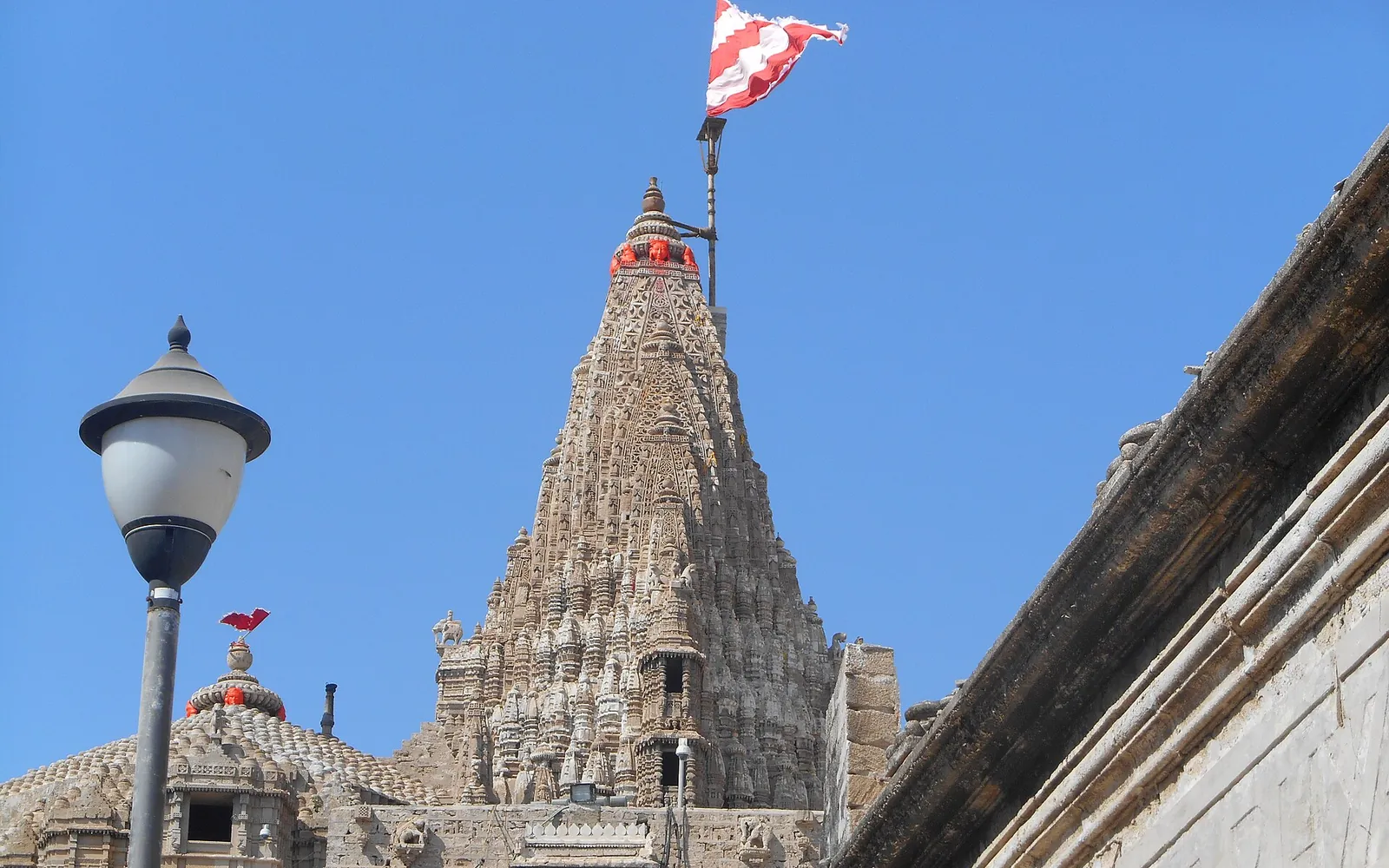
Adi Shankaracharya and the Char Dham: The 8th-Century Vision
Adi Shankaracharya was born in 788 CE in Kalady, Kerala, and died at the age of approximately 32, a life so short it seems impossible given the scale of his work. In those three decades, he walked the length and breadth of India multiple times, established four monasteries (mathas), defeated the leading philosophers of rival traditions in public debate, and wrote commentaries on the Brahmasutras, the Upanishads, and the Bhagavad Gita that remain foundational to Advaita Vedanta philosophy.
It was during one of his pan-India journeys that Shankaracharya conceived, or formalized, the Char Dham pilgrimage circuit. His intention was to create a geographic framework that would require Hindu pilgrims to travel across the entirety of India, thereby experiencing the spiritual and cultural unity of the subcontinent. By placing one sacred site at each of the four cardinal directions, north, south, east, west, he mapped divinity onto the landscape of India itself. The act of completing the Char Dham circuit was the act of circumambulating the sacred land of Bharata in its fullness.
Shankaracharya also established a math (monastery) at each of the four Char Dham sites, staffed by his disciples and successors. The Dwaraka Peeth at Dwarka is one of these four, and it functions to this day, the Shankaracharya of Dwaraka Peeth is a living institution, a spiritual seat that has continued unbroken from the 8th century. This institutional continuity is part of what makes Dwarka's Char Dham status not merely historical but actively maintained.
The Four Char Dham: Positions, Deities and Significance
Each of the four Char Dham sites represents a different tradition within the broad Vaishnava-Shaiva spectrum of Hinduism, and each faces a different direction, creating a ritual mandala across the subcontinent. Together they encompass both Vaishnava and Shaiva traditions, both the Himalayan north and the tropical south, both the Arabian Sea west and the Bay of Bengal east.
The four sites are also associated with four of Shankaracharya's principal disciples: Padmapada (Puri), Hastamalakacharya (Sringeri), Totakacharya (Badrinath), and Sureshvaracharya (Dwarka). This lineage of disciples ensured that the philosophical and ritual traditions of each site were carried forward by trained successors rather than being left to chance.
Notably, Rameshwaram is dedicated to Lord Shiva rather than Vishnu, which reflects Shankaracharya's Advaita philosophy, which sees no fundamental division between Shiva and Vishnu as expressions of the same Brahman. The Char Dham circuit thus implicitly asks pilgrims to move beyond sectarian distinctions and experience the divine in its various forms across the breadth of India.
Why Dwarka Specifically? Krishna's City at the Western Edge
Of all the sacred sites in western India, why did Shankaracharya choose Dwarka? The answer has both religious and geographic logic. Geographically, Dwarka sits at the extreme western tip of the Saurashtra peninsula, further west than any other major sacred site in India except for remote coastal points. As the westernmost Char Dham, it faces the setting sun over the Arabian Sea, giving it a natural cosmic symbolism: the place where the day ends, where the light goes, where Krishna, who himself departed the world after his earthly life, is worshipped.
Religiously, Dwarka's choice was almost inevitable. This is the city Lord Krishna built from scratch, on land reclaimed from the sea. He moved his entire people here from Mathura to protect them. He ruled here as Dwarkadhish, King of Dwarka, for over a hundred years. After his death and departure from the world, the sea submerged the city as he had foretold. No other site in Hinduism carries the complete arc of Krishna's life and kingship the way Dwarka does. Mathura has his birth, Vrindavan has his childhood, Kurukshetra has the Gita, but Dwarka has his mature life, his rule, his city, and ultimately his farewell to the world.
Shankaracharya's Advaita Vedanta system is fundamentally about the non-difference of the individual self and the ultimate reality (Brahman). By placing Dwarka in his pilgrimage circuit, a site associated with Krishna's human-divine kingship and his eventual merging back into the infinite, he embedded a teaching within the geography itself. The pilgrim who completes the Char Dham has, symbolically, moved from the Himalayan heights of Badrinath to the oceanic depths of Dwarka, from the forest groves of Puri to the sandy shore of Rameshwaram, from the highest to the westernmost, from the eastern sea to the southern tip.
Char Dham vs Chota Char Dham: Not the Same Circuit
Many pilgrims confuse the original Char Dham with the Chota Char Dham (Small Char Dham). These are two entirely different circuits. The original Char Dham, established by Adi Shankaracharya, spans all of India and includes Badrinath, Puri, Rameshwaram, and Dwarka. This is the circuit that Shankaracharya intended as a full circumambulation of sacred India.
The Chota Char Dham is a 20th-century pilgrimage circuit entirely within the Garhwal Himalayas of Uttarakhand. It consists of Badrinath, Kedarnath, Gangotri, and Yamunotri. While Badrinath appears in both circuits, Kedarnath, Gangotri, and Yamunotri have no connection to Shankaracharya's original Char Dham. The Chota Char Dham circuit became popular in the modern era partly because all four sites are reachable in a single Himalayan journey, logistically convenient compared to crossing all of India for the original circuit.
Dwarka belongs exclusively to the original pan-India Char Dham. Pilgrims who have done the Chota Char Dham have not done the Char Dham that includes Dwarka. Completing the original Char Dham, Badrinath in the north, Puri in the east, Rameshwaram in the south, Dwarka in the west, remains a distinct and complete spiritual undertaking that spans the full geography of the Indian subcontinent.
Dwaraka Peeth: Shankaracharya's Living Legacy in Dwarka
When Adi Shankaracharya established the four mathas, he was not creating museums or commemorative sites, he was creating living institutions that would carry forward the philosophical and ritual traditions of Advaita Vedanta across generations. The Dwaraka Peeth (also spelled Dwaraka Math or Sharada Peeth) is the western matha, and it has operated continuously from the 8th century to the present day.
The Dwaraka Peeth is located near the Dwarkadhish Temple complex in Dwarka town. The presiding head of the Peeth carries the title Shankaracharya of Dwarka and serves as one of the four living Shankaracharyas in India. These four heads, one at each of the four mathas, are among the most senior religious authorities in Hinduism. On important Hindu occasions, their pronouncements on religious and social matters are widely followed. The Shankaracharya of Dwarka's seat is particularly significant because Dwarka is also the westernmost of the four, the direction associated with the ocean, dissolution, and the setting of the sun.
Pilgrims visiting Dwarka can visit the Dwaraka Peeth as part of their yatra. The math is open to devotees and often conducts discourses and public ceremonies connected to the Shankaracharya tradition. While the main temple of Dwarkadhish draws the largest crowds, the Peeth represents the intellectual and philosophical continuity of what Shankaracharya established here over twelve centuries ago, a living proof that Dwarka's status as a Char Dham is not just historical but actively maintained.
Frequently Asked Questions
Also Read
Char Dham Yatra Guide
Plan the Char Dham Yatra covering Badrinath, Dwarka, Puri and Rameshwaram.
Read Full GuideDwarka History
From Krishna's founding of the city to Adi Shankaracharya's visit, the Portuguese raids, and the modern archaeological discoveries in the sea.
Read MoreKrishna and Dwarka
Why Krishna moved from Mathura to Dwarka, what Vishwakarma built, how long Krishna ruled here and what happened when he left.
Read MoreDwarkadhish Temple
Everything about Jagat Mandir, the main shrine of the western Char Dham, its aarti timings, darshan and the experience of visiting.
Read More