Dwarka in February: Pleasant Weather and the Month That Balances Everything
February in Dwarka is the month where weather, crowd levels, temple schedules, and accommodation availability all align in the pilgrim's favour simultaneously. The temperature is 15-29°C, cool enough for comfortable darshan, warm enough for the ferry to Bet Dwarka to feel like a pleasure rather than a cold ordeal. The January crowds have begun to thin, and the prices have not yet risen to the December-January peaks.
Why Experienced Pilgrims Choose February
Among pilgrims who have visited Dwarka multiple times, February has a quiet reputation as the optimal month, not the most dramatic, not the most festive, but the one that lets you actually experience the temple without logistical strain. The shift from January to February is noticeable: hotel rates drop, the auto-rickshaws near the station are not all pre-engaged, and the lane approaching Swarga Dwar in the morning is busy but not impassable.
The mornings in February still carry the winter coolness, 15-17°C at 5:30 AM when the queue forms for Mangla Aarti. This is just warm enough to stand comfortably in a shawl without the January chill that some find difficult. By 10 AM the sun has fully asserted itself and the daytime warmth of 26-29°C makes the afternoon hours between temple sessions suitable for exploring Gomti Ghat, Sudama Setu, or making the trip to Nageshwar Jyotirlinga.
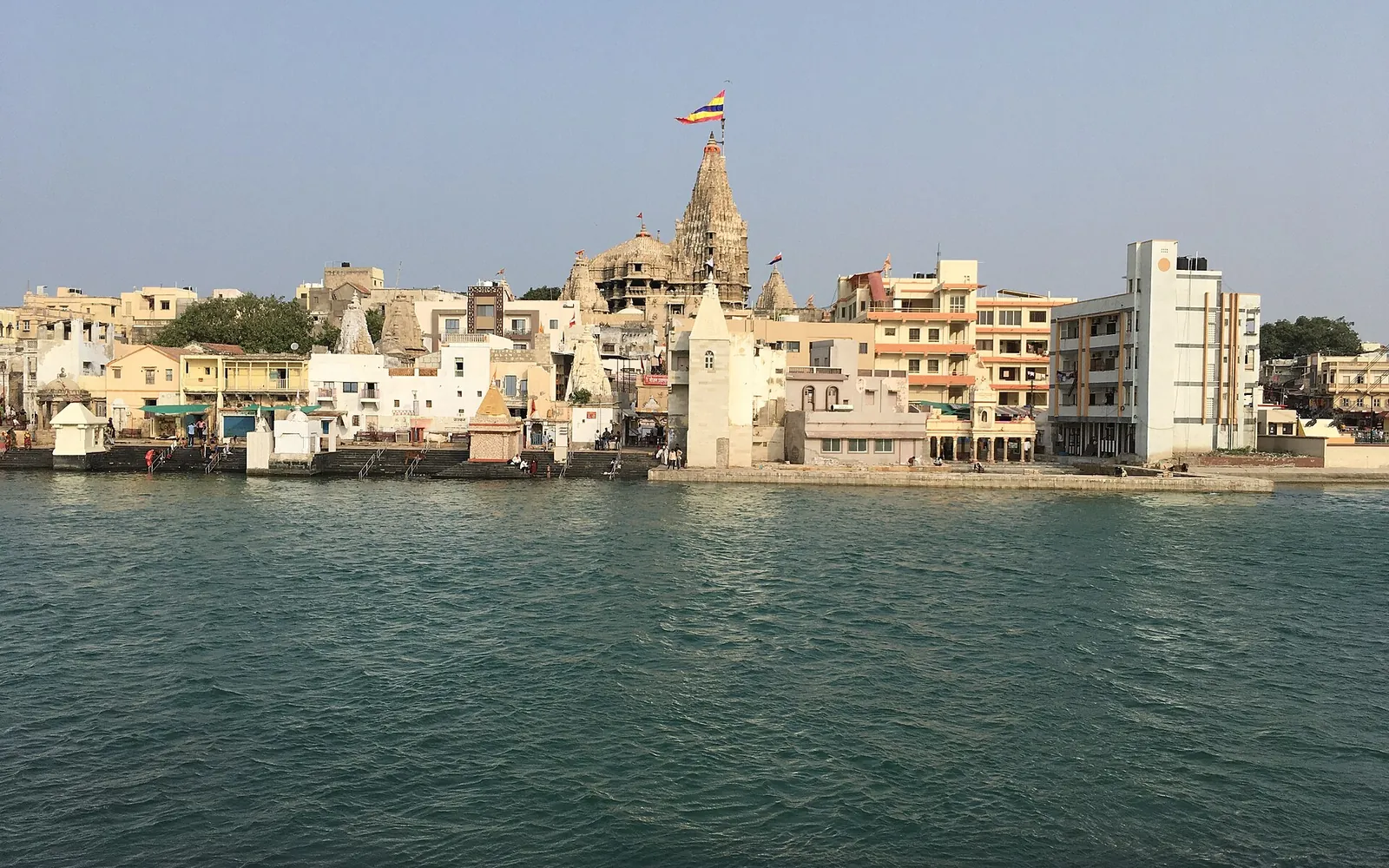
The Sandhya Aarti at Dwarkadhish in February occurs around 6:30–6:45 PM as sunset comes slightly later than in December. The evening light at Gomti Ghat in February has a warm amber quality that photographers and devotees both find extraordinary. The crowd at the ghat Aarti is substantial but not unmanageable, arriving at 6:00 PM for a 6:30 PM aarti gives you reasonable positioning.
Maha Shivaratri: When February and Nageshwar Align
Maha Shivaratri, the great night of Lord Shiva, falls on the 14th night of the dark fortnight of Phalguna month in the Hindu calendar. This typically places it in late February or early March in the Gregorian calendar. When it falls in February, the effect on Dwarka is significant because Nageshwar Jyotirlinga, one of the twelve Jyotirlingas and a 17 km drive from Dwarka, becomes the primary destination for tens of thousands of Shiva devotees.
At Nageshwar, Shivaratri involves an all-night vigil. The Rudrabhishek ceremony, normally held from 6-8 AM, is extended through the night on Shivaratri. Special Shiva pujas are conducted at each of the four prahars (watches) of the night, 6 PM, midnight, 3 AM, and dawn. The temple's atmosphere during these night prahars is unlike anything it presents on a regular day. Pilgrims who plan a February Dwarka visit when Shivaratri falls in that month are strongly advised to include an overnight Nageshwar visit.
Bhadkeshwar Mahadev, the Shiva temple on a tidal island 2 km from Dwarkadhish, also sees significant Shivaratri observance. Access to Bhadkeshwar is always tide-dependent (visit only at low tide), but on Shivaratri night, local devotees manage the low-tide visit by timing it precisely. If your Shivaratri visit to Dwarka includes a nighttime low tide, the Bhadkeshwar visit by torchlight is a rare and profound experience.
Temple Timings and the February Schedule
All temples in and around Dwarka operate on their standard schedules throughout February. No closures are anticipated. The Dwarkadhish Temple full daily schedule applies, Mangla at 6 AM through to Shayan Aarti at 9 PM. Rukmini Devi Temple (8:30 AM-12:30 PM and 5-8:30 PM) is particularly worth visiting in February when the queue allows for a more unhurried experience of the unique temple architecture and the Rukmini idol.
| Temple / Site | Morning | Afternoon / Evening |
|---|---|---|
| Dwarkadhish Temple | 6:00 AM – 1:00 PM | 5:00 PM – 9:00 PM |
| Rukmini Devi Temple | 8:30 AM – 12:30 PM | 5:00 PM – 8:30 PM |
| Nageshwar Jyotirlinga | 5:00 AM – 12:00 PM | 12:00 PM – 9:00 PM |
| ISKCON Dwarka | 4:30 AM – 1:00 PM | 4:30 PM – 8:30 PM |
| Bet Dwarka Temple | 6:00 AM – 12:30 PM | 3:00 PM – 8:00 PM |
| Bhadkeshwar Mahadev | Low tide only | Low tide only |
The ISKCON Temple in Dwarka, 3 km from Dwarkadhish, reachable by auto at ₹60-80, runs its full program in February including the 4:30 AM Mangala Aarti, Sandhya Aarti at 7 PM, and the lunch prasadam from 12-1:30 PM. In February, the ISKCON prasadam lunch line moves quickly. The ISKCON Temple is a distinctly different spiritual atmosphere from the Dwarkadhish main temple, more structured, with kirtans and bhajan programs throughout the day, and worth including in a February Dwarka visit.
The Full February Itinerary
A three-day February visit structured around darshan, satellite temples, and coastal sites covers everything Dwarka offers without the pressure of peak-season timing:
February's moderate crowd levels mean that each of these segments can be completed without the rushed, compressed timing that January necessitates. There is space to sit at Gomti Ghat for thirty minutes watching the river meet the sea, to browse the prasad stalls at Swarga Dwar without being pushed along, and to speak briefly with temple guides and pandas who are less pressed than in peak season.
Getting to Dwarka in February
February train and bus bookings are easier than December-January. The Dwarka Express from Ahmedabad and the Saurashtra Mail from Mumbai have better seat availability. Booking 2 weeks in advance is typically sufficient for February travel, though Maha Shivaratri week (if it falls in February) requires earlier booking due to the pilgrimage surge to Nageshwar.
Frequently Asked Questions
Also Read
Bet Dwarka
Guide to Bet Dwarka island: ferry from Okha, the Sudarshan Setu bridge, seasonal temple timings, and what to see on the island where Krishna lived.
Read Full GuideNageshwar Jyotirlinga
One of the twelve Jyotirlingas of India, 17 km from Dwarka, the site that becomes the focus of all Dwarka pilgrimages on Maha Shivaratri.
Read MoreBest Time to Visit Dwarka
Month-by-month weather, crowd, and festival guide to help you choose the right time for your pilgrimage to Dwarkadhish.
Read MoreRukmini Devi Temple Dwarka
The only surviving temple of Goddess Rukmini, 2.5 km from Dwarkadhish, the legend, the architecture, and the darshan experience.
Read More