Dwarka in Winter (November to February): The Season Every Pilgrim Remembers
Winter in Dwarka, November through February, is when the temple city shows its most complete face. Temperatures between 13°C and 30°C, no rain, clear Arabian Sea horizon, the Gomti Ghat Sandhya Aarti in amber winter light, and all temples running full schedules. This is why every experienced pilgrim, when asked what time to visit, says simply: go in winter.
The Four Winter Months: What Each Offers
Winter in Dwarka is not a uniform block. Each of the four months has a different character in terms of crowd, temperature, and festival calendar. Understanding the distinctions helps you choose the right window within the season.
20-30°C. Crowds below peak. Kartik Purnima possible. Accommodation rates lowest of the winter season. Best for unhurried darshan without December pressure.
15-27°C. Peak crowds especially last two weeks. Mangla Aarti in cold air is electric. Book 3-4 weeks ahead. New Year weekend is maximum occupancy.
13-27°C. Coldest and busiest. Makar Sankranti Jan 14. Republic Day long weekend. Arrive by 6 AM for shortest queues. Book 6-8 weeks ahead for festival dates.
15-29°C. Crowds thinning from January peak. Maha Shivaratri possible. Most balanced month, good weather, manageable queues, reasonable prices.
The crowd arc across winter is important to understand: November starts the season at moderate levels, December builds sharply toward peak, January holds at maximum, and February declines steadily back toward moderate. If you have flexibility on dates, the best windows within winter are: early November (pre-Kartik Purnima), the first week of December (pre-holiday rush), and the second half of February (post-January peak decline).
The Gomti Ghat Sandhya Aarti in Winter: Why It Is Different
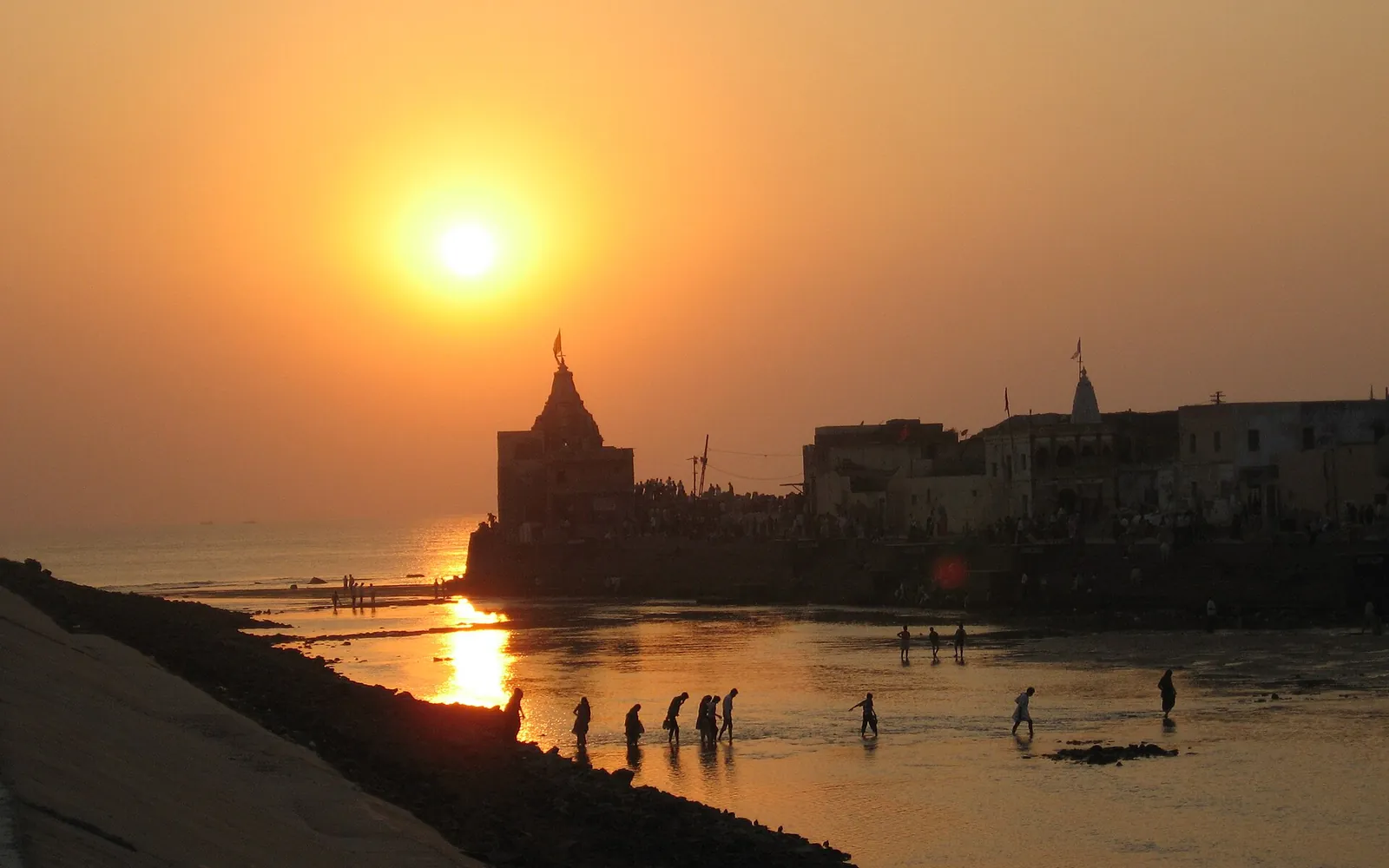
The Sandhya Aarti at Gomti Ghat occurs at sunset every day of the year, but the winter version is consistently described by those who have attended it in multiple seasons as the most visually and atmospherically complete. The reason is the combination of timing, light quality, and temperature.
In winter, sunset over the Arabian Sea at Dwarka happens between 6:00 PM (December-January) and 6:45 PM (November-February ends). This means the Sandhya Aarti, which is keyed to the sunset, happens in the early evening when the natural light is still present but golden. The lamps at the ghat burn against a sky that moves through orange, amber, and purple over the 20-30 minutes of the ceremony. In summer, the later sunset means the aarti often finishes in full darkness. In monsoon, cloud cover eliminates the sky colour. Winter is the only season when lamps, golden sky, and the river-sea confluence all exist simultaneously.
The temperature adds to this. Standing at the ghat in December at 6:00 PM when the temperature is 20°C and a light sea breeze is blowing, after a day of darshan and pilgrimage walking, creates a physical comfort that makes the 20-30 minutes of aarti effortless to attend fully. In summer, the same location at sunset is 35-38°C and the aarti, while spiritually unchanged, is physically taxing to stand through. Winter strips away the physical resistance and allows full attention to the ceremony.
Winter Darshan Strategy: Month-by-Month Queue Notes
Queue management at Dwarkadhish Temple changes significantly across the four winter months. Dwarkadhish Temple has no official VIP darshan or paid priority-queue scheme, every pilgrim, including elderly and disabled visitors, joins the same single general darshan line, and darshan has always been free. The most reliable way to cut your wait is arrival timing: reaching the temple by 6:00 AM for the Mangla Aarti keeps queues shortest, and weekday mornings move noticeably faster than weekend mornings. What changes month to month is how long the general queue runs and how early you need to arrive to beat it.
| Month | General Queue (Weekday) | General Queue (Weekend) | Best Arrival Time for Shortest Queue |
|---|---|---|---|
| November | 45 min – 1.5 hrs | 1.5 – 2 hrs | By 8-9 AM |
| December | 1.5 – 2 hrs | 2 – 4 hrs | By 6:30-7 AM |
| January | 2 – 3 hrs | 3 – 5 hrs | By 6 AM on peak days |
| February | 45 min – 1.5 hrs | 1.5 – 2.5 hrs | By 8 AM |
The Shayan Aarti at 9 PM is consistently the most accessible aarti in all four winter months. Even in peak January, the 9 PM crowd is a fraction of the morning rush. For devotees staying in Dwarka for multiple nights, making the Shayan Aarti the focal point of one evening, rather than the morning Mangla, offers a completely different but equally valid darshan experience that most visitors overlook in favour of the pre-dawn start.
The Complete Winter Pilgrimage Circuit
Winter is the only season when the complete Dwarka pilgrimage circuit is reliably accessible without weather-related disruptions. Every element, from Bhadkeshwar Mahadev's tidal path to the Bet Dwarka ferry to Nageshwar's early morning Rudrabhishek, is predictably available. This makes winter the recommended season for first-time visitors who want to experience all of Dwarka in one trip.
Accommodation and Practical Planning for Winter
Accommodation in Dwarka spans the full range from free dharamshalas managed by the temple trust to budget guesthouses to mid-range hotels. In winter, the free or low-cost dharamshalas near Swarga Dwar fill first. The trust-managed Bhojnalaya provides free or ₹20 meals through winter. For pilgrims on a budget, a winter Dwarka visit, outside the extreme peak dates, remains surprisingly affordable despite the season's popularity.
Hotels within 500 metres of the Dwarkadhish Temple command a premium in winter and fill earliest. Properties near the railway station (1 km from the temple) have better availability and lower rates but require an auto for each temple visit (₹30-50 each way). For a three-day visit, the convenience cost of staying temple-adjacent is worth it.
The standard booking advice: November, book 1-2 weeks ahead. December (before Dec 20), 3-4 weeks. December 20 to January 5, 6-8 weeks minimum. January (regular dates), 4-6 weeks. Makar Sankranti week, 6-8 weeks. February, 2 weeks except Maha Shivaratri week. These timelines apply to the better-located properties; there is always some accommodation available even on short notice if you are willing to stay farther from the temple.
Frequently Asked Questions
Also Read
Bet Dwarka
Guide to Bet Dwarka island: ferry from Okha, the Sudarshan Setu bridge, seasonal temple timings, and what to see on the island where Krishna lived.
Read Full GuideNearby Attractions
Places near Dwarka: Somnath Temple (235 km), Porbandar (100 km), Shivrajpur Blue Flag Beach (12 km) and the lighthouse.
Read Full GuideDwarka in November
The quiet start to winter season, cool weather, low crowds, all temples open, and Kartik Purnima. The pilgrim's insider favourite.
Read MoreGomti Ghat Dwarka
The sacred riverfront, the Sandhya Aarti, and the holy bath at dawn, complete guide to Dwarka's most atmospheric site.
Read MoreDwarka Darshan Itinerary
A day-by-day plan covering all major temples and sites in Dwarka, structured for a winter pilgrimage visit.
Read More