Dwarkadhish Shringar Darshan at 12 PM: Seeing the Lord in His Most Magnificent Form
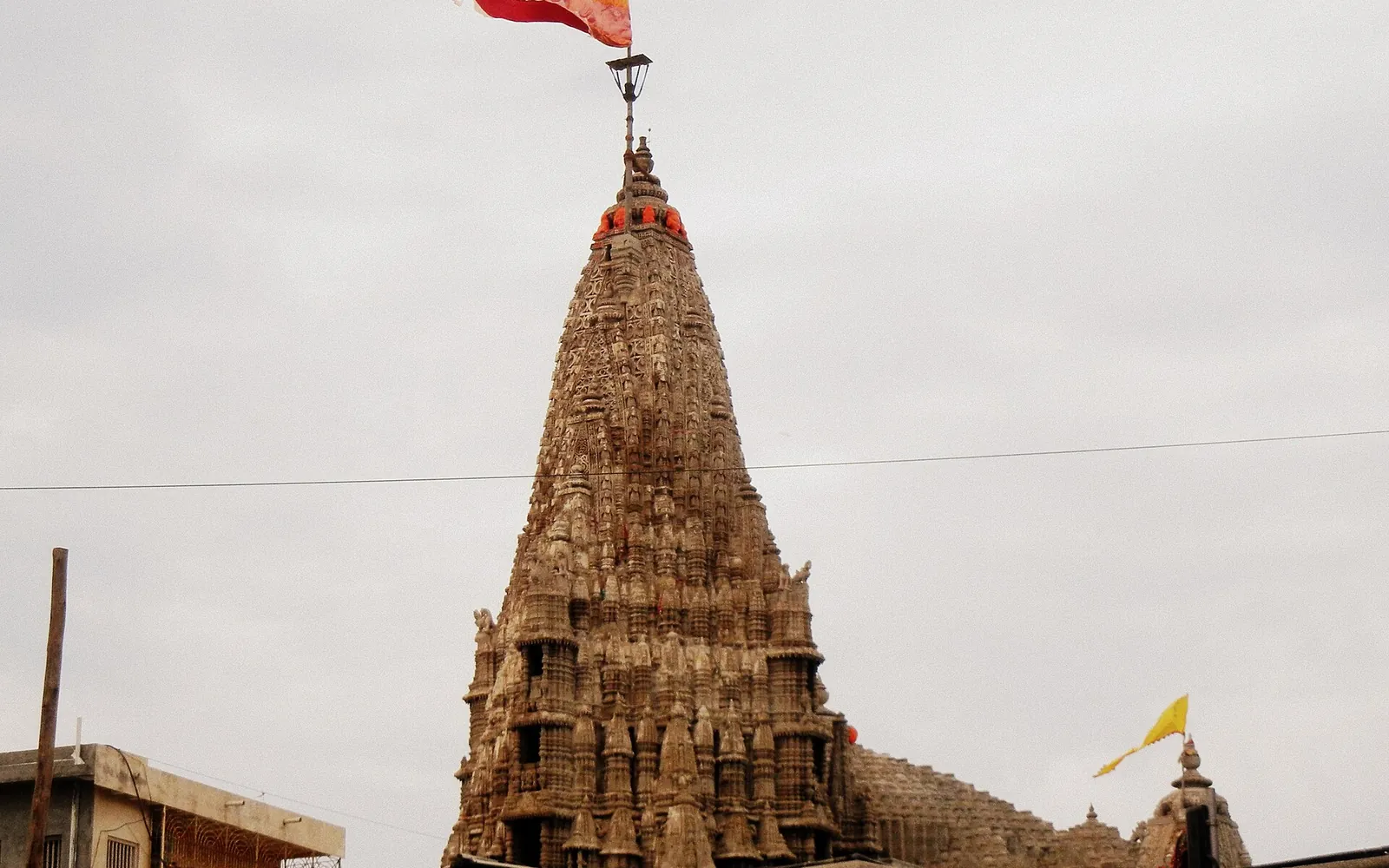
The Rajbhog Shringar darshan at Dwarkadhish Temple, at 12:00 PM, is when the Lord of Dwarka appears in his fullest royal decoration: crown, gold and gem ornaments, elaborate flower arrangements, and the finest embroidered garments. The temple closes at 1 PM immediately after. To attend, arrive by 11:30 AM. This is the most visually splendid darshan of the day and draws the largest midday crowds.
Understanding Rajbhog: More Than a Midday Darshan
Rajbhog, literally "the royal offering", is one of the eight daily seva (service) rituals performed for the deity at Dwarkadhish Temple. The daily life of the Lord at Dwarkadhish is structured around these eight sittings, following a schedule that mirrors the daily rhythms of a royal household: waking, bathing, dressing, meals, rest, and evening court. Rajbhog is the noon meal offering, the grandest and most elaborate of the day's food offerings, presented at the height of the working day when a king would receive his most important visitors.
This context explains why the Rajbhog darshan involves the Lord in the most elaborate shringar of the daily cycle. When the Rajbhog bhog (food offering) is presented, the Lord is dressed to receive it as a king at court, not in the simple, intimate attire of the early Mangla darshan when he has just awakened, or the more relaxed dress of the Uthapan session when he rises from the afternoon rest. The Rajbhog shringar represents the full ceremonial glory of Dwarkadhish as the ruler of Dwarka, and the visual impression on devotees entering at this hour reflects exactly that intention.
The word "Shringar" means adornment or ornamentation. The 7 AM aarti is also called Shringar aarti because that is when the deity is first dressed for the day. But experienced Dwarkadhish pilgrims use "Shringar darshan" in casual conversation to refer specifically to the Rajbhog session, the 12 PM darshan, because this is when the shringar is most complete. The morning Shringar aarti is the dressing process; the Rajbhog darshan is the fully dressed form, amplified by the food offering and the midday ceremonial context.
What the Lord Wears During Rajbhog Darshan
The ornamentation of Dwarkadhish during Rajbhog follows a sequence established by the temple tradition and coordinated by the head priest. The outer garments, dhoti and uttariya (upper cloth), are typically made of fine silk or brocade, with specific colors that change according to the lunar calendar and the season. Festival periods like Janmashtami, Navratri, and Holi bring special occasion garments that are kept in the temple treasury and used only on those days. Regular Rajbhog darshan uses daily rotation garments that are nonetheless of exceptional quality.
The ornaments placed on the deity during Rajbhog include the Mukut (crown), one of the most visually striking elements, typically made of gold and set with gems, rising significantly above the head and giving the Lord a commanding height. Necklaces of multiple types are arranged in a specific sequence from the throat downward, including the Vaijayanti Mala (garland of victory flowers) referenced in the Bhagavata Purana. Armlets, wrist ornaments, a waist ornament (Kati-bandha), and anklets complete the set. The total weight of the ornaments worn by the deity during Rajbhog is considerable, this is not decorative jewelry but ceremonial royal regalia.
Flowers are arranged around and behind the deity in a backdrop arrangement specific to each day and season. The temple has florists who work specifically for the deity's decoration and whose knowledge of appropriate flower combinations, which varieties go together, which are sacred for which occasions, which colors suit which lunar days, is itself a form of specialized ritual knowledge passed down within families. What pilgrims see at Rajbhog darshan is therefore the product of coordinated expertise across garment weavers, goldsmiths, florists, and priests, a collective act of devotion expressed as beauty.
The Full Daily Darshan Schedule at Dwarkadhish
To understand where Rajbhog fits, it helps to see the complete daily aarti sequence. Each of these sessions offers a different quality of darshan, different decoration of the deity, different crowd levels, and different spiritual mood.
| Aarti / Seva | Time | Character | Queue |
|---|---|---|---|
| Mangla Aarti | 6:00 AM | Morning awakening darshan, simple, intimate attire | Shortest (45 min) |
| Shringar Aarti | 7:00 AM | Dressing of the deity, early ornamental form | Short to moderate |
| Gwal Seva | 8:30 AM | Morning snack offering, the Lord as cowherd | Moderate |
| Rajbhog / Shringar Darshan | 12:00 PM | Noon meal, full royal ornamentation, peak magnificence | Longest (1.5-3 hrs) |
| Afternoon Closure | 1:00-5:00 PM | Temple closed, Lord's rest period | N/A |
| Uthapan Aarti | 5:00 PM | Afternoon awakening, relaxed, post-rest attire | Moderate |
| Sandhya Aarti | Sunset (~6-7 PM) | Evening aarti, lamp ceremony, atmospheric | Moderate to long |
| Shayan Aarti | 9:00 PM | Night retirement, most intimate, devotional | Short to moderate |
The Dhwaja (flag) changing ceremony happens twice daily, at 5 AM and at sunset, and is visible from the ground level outside the temple. The 56-step climb to the temple entrance means that queue management is an important part of planning. Pilgrims who are physically not comfortable with the climb should inform the temple staff who manage accessibility at the entrance.
How to Plan Your Visit for Rajbhog Darshan
The single most important practical point about Rajbhog darshan is the 1 PM closure. The temple does not give warnings or gradual slowdowns, when 1 PM arrives, the queue stops. Pilgrims who are still in the outer areas of the temple at 1 PM will be turned away and will have to return at 5 PM for Uthapan aarti. This makes timing critical in a way that morning aarti visits do not require, the Mangla and Shringar morning aartis have flexible darshan continuing after the aarti itself, but Rajbhog has a hard cut.
For regular non-festival days, arriving at the main entrance by 10:00-10:30 AM gives enough buffer. The queue moves steadily and a 1.5-2 hour wait will have you inside by 12 PM. On busy days, weekends, Poonam, Ekadashi, or any festival period, arrive by 9:30 AM or earlier. On Janmashtami, Navratri Ashtami, and similar peak festival days, even 8 AM arrival may not guarantee Rajbhog entry.
Rajbhog Seva Sponsorship: Participating Directly
One of the most meaningful ways to deepen a Dwarkadhish visit is to sponsor a seva, a specific ritual offering performed on your behalf and in the name of your family or in memory of a departed relative. Rajbhog Seva sponsorship is one of the most significant of these opportunities. When you sponsor the Rajbhog Seva, the food offering to the Lord during that midday session is made with provisions paid for by your donation, and the priests perform the ritual mentioning your family name or the name of whomever you have dedicated the offering to.
The Rajbhog Seva sponsorship can be arranged through the temple trust office at Dwarkadhish. Dates need to be booked in advance, popular dates, especially during festivals and on auspicious days like Poonam and Ekadashi, fill well ahead of time. The sponsorship fee varies by date and type of offering. The trust provides a receipt and, in many cases, a portion of the Rajbhog prasad is given to the sponsoring family at the end of the aarti, this direct prasad from the Rajbhog offering is considered exceptionally sacred by devotees.
Even without formal sponsorship, attending Rajbhog darshan and being present when the food offering is made to the Lord carries devotional significance in the Vaishnav tradition. The act of witnessing the bhog offering, the moment when the aarti lamp circles before the food placed before the deity, and the priest chants the offering prayers, is itself a form of participation. Pilgrims who have experienced this describe the moment as qualitatively different from simply viewing a beautifully decorated idol: it is the domestic intimacy of serving a meal to the Lord of the universe, and being present at that meal.
Comparing the Different Darshan Sessions
First-time visitors to Dwarkadhish often ask which aarti to attend, each has a distinct character and each is suited to different temperaments and schedules. The Mangla aarti at 6 AM offers intimacy, the quietest, most personal darshan of the day, the Lord in simple attire just awakened. The crowd is smallest and the atmosphere most contemplative. The temple at 6 AM has a quality of stillness that is absent later in the day. For those who value quiet over spectacle, Mangla is the highest recommendation.
The Rajbhog Shringar darshan at 12 PM offers spectacle, the most elaborate decoration, the most formal ceremonial setting, the bhog offering that completes the midday ritual cycle. The crowd is largest and the wait is longest, but the visual magnificence of the Lord in full Rajbhog shringar is genuinely unlike anything in the other sessions. The emotional quality of the experience is more public and collective, you are not alone with the Lord but part of a large community all focused on the same point simultaneously. This collective energy has its own devotional power.
The Shayan aarti at 9 PM is a third option that many pilgrims overlook. The night retirement of the Lord carries a tender, intimate quality, the day is ending, the crowd has thinned, and the aarti lamp in the quieted temple creates an atmosphere that many devotees consider the most emotionally moving of the day. If you have the energy for a 9 PM visit, the Shayan aarti offers an experience distinctly different from both morning and midday sessions.
Frequently Asked Questions
Also Read
How Long Darshan Takes
Dwarkadhish darshan takes 45 minutes off-peak and 2-4 hours in peak season, October to February.
Read Full GuidePoonam Darshan
Dwarkadhish on Poonam (full moon): special extended darshan, extra deity decoration, larger crowds.
Read Full GuideDwarkadhish Temple Timings
Full daily aarti schedule from Mangla at 6 AM to Shayan at 9 PM, with festival timing changes.
Read MoreDwarkadhish Temple Complete Guide
History, architecture, entry rules, dress code, VIP darshan, and everything first-time visitors need to know.
Read MoreDwarka Darshan Itinerary
Day-wise itinerary covering Dwarkadhish, Bet Dwarka, Nageshwar, Gomti Ghat and more in 1-3 days.
Read More