Dwarkadhish Temple on Poonam: When the Full Moon Makes Every Darshan Sacred
On Poonam, the full moon day of each lunar month, Dwarkadhish Temple sees extended darshan hours, additional decoration of the deity with special garments and flower arrangements, and significantly larger pilgrim crowds. Poonam and Ekadashi are the two most sacred recurring days in the Vaishnav calendar, and Dwarkadhish observes both with heightened ritual attention.
The Significance of Poonam in the Vaishnav Tradition
The Vaishnav tradition, to which Dwarkadhish Temple belongs, has always regarded Poonam as a particularly auspicious time for worship. The full moon is associated with completion, abundance, and heightened spiritual receptivity. In Gaudiya Vaishnavism and the Pushti Marg traditions both influential at Dwarkadhish, the full moon holds specific devotional significance tied to Krishna's nocturnal pastimes, especially the Maharas that is said to have taken place on Sharad Poonam. Each monthly Poonam is a reminder of that sacred night.
At Dwarkadhish specifically, the tradition of special Poonam observance is not a modern addition, it is woven into the daily administration of the temple. The priests who manage the deity's dress and decoration follow a lunar calendar that specifies different shringar (adornment) for different tithis (lunar days). Poonam Shringar uses specific flowers, specific fabric colors, and specific ornamental arrangements that differ from weekday Shringar. Devotees who visit regularly learn to distinguish the visual difference between a Poonam darshan and an ordinary day, the Lord appears more resplendent, more festive, as if he too is aware of the significance of the day.
For pilgrims planning a first visit to Dwarkadhish, deliberately timing arrival on a Poonam adds a layer of experience that a regular weekday visit cannot offer. Yes, it comes with more crowd and longer queues, but the collective devotion of thousands of pilgrims gathered on the same auspicious day creates an atmosphere that has its own spiritual force. Many experienced Vaishnavs specifically travel to Dwarkadhish only on Poonam or Ekadashi tithis, believing that darshan on these days carries multiplied merit.
What Changes at Dwarkadhish on Poonam Day
The core daily aarti schedule, Mangla at 6 AM, Shringar at 7 AM, Gwal at 8:30 AM, Rajbhog at 12 PM (with closure at 1 PM), Uthapan at 5 PM, Sandhya aarti at sunset, and Shayan at 9 PM, remains in place on Poonam. What changes is the richness of each aarti, the decoration between aartis, and the duration of darshan windows. Each aarti on Poonam runs slightly longer because the priest performs additional prayers specific to the Purnima tithi before concluding the standard sequence.
| Aspect | Regular Day | Poonam Day |
|---|---|---|
| Mangla Aarti | 6:00 AM, standard duration | 6:00 AM, extended with Purnima prayers |
| Shringar | Regular daily outfit | Special Poonam outfit + extra ornaments |
| Rajbhog / Closure | 12 PM darshan, closes 1 PM | Same timing, larger crowd |
| Evening Aarti | Sunset, standard | Extended, additional bhajans |
| Darshan Queue | 45 min to 1.5 hrs | 2 to 3 hrs or more |
| VIP Darshan | No official scheme, one queue for all | Same, no separate line even on Poonam |
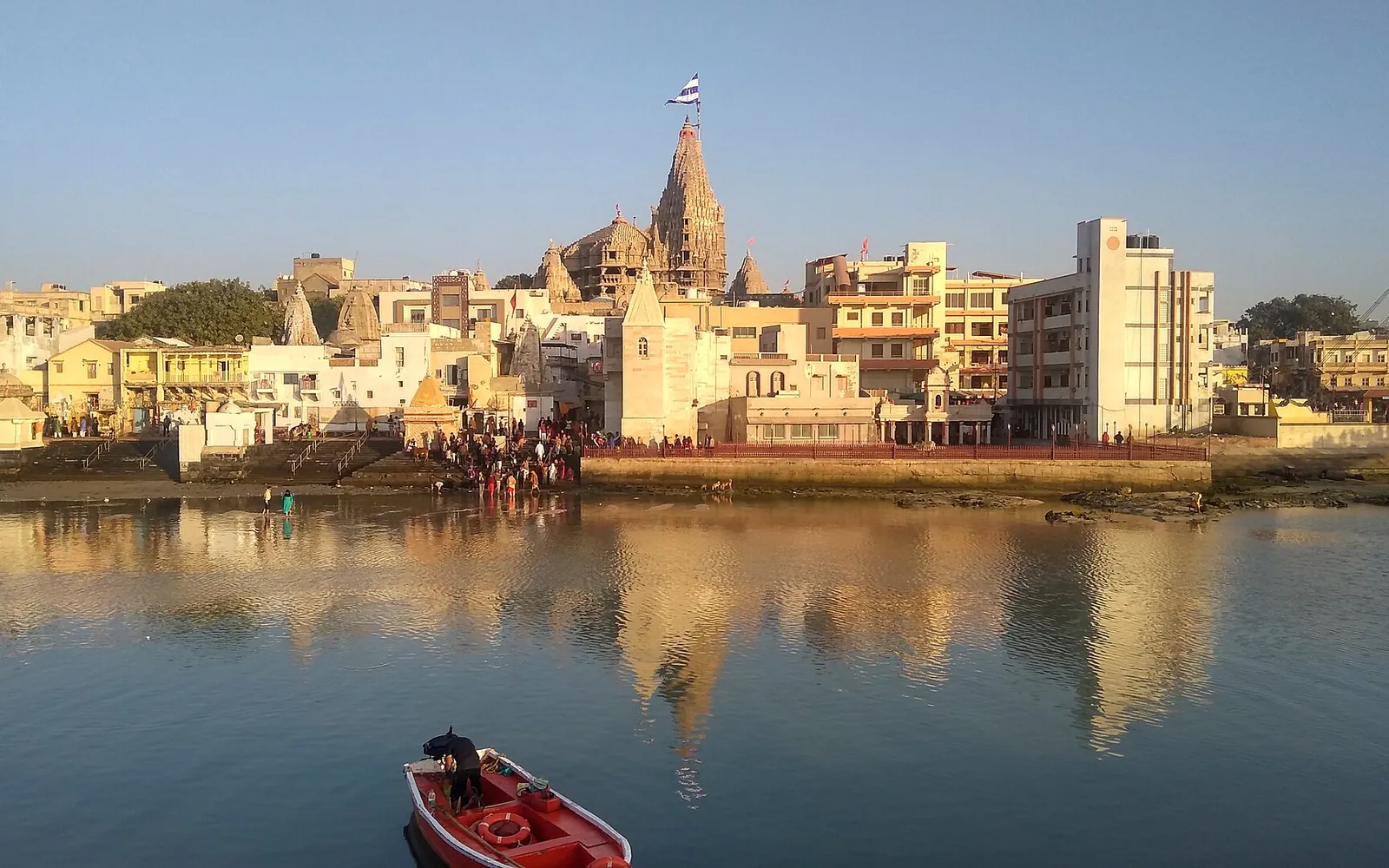
The evening of Poonam at Dwarkadhish carries a particular quality. As the full moon rises over the Gulf of Kutch and the Gomti River, the ghat areas around the temple glow with natural light. Pilgrims who have completed darshan during the day gather at Gomti Ghat for evening prayers, diyas (oil lamps) are floated on the water, and the combined sight of moonlight on the river, temple spires lit up, and hundreds of floating diyas creates one of the most visually memorable scenes the entire pilgrimage town offers. Experiencing this ghat atmosphere on Poonam evening requires no queuing at the temple, it is available to everyone who simply walks to the waterfront.
The Most Important Poonams of the Year
Not all twelve monthly Poonams are equal in significance at Dwarkadhish. The lunar calendar assigns different themes and deities to each Purnima, and the temple's celebration reflects this hierarchy. The most significant Poonams for pilgrims to Dwarkadhish are as follows:
The most sacred Poonam for Krishna devotees. This is the night associated with the Maharas, the divine dance between Krishna and the gopis. At Dwarkadhish, Sharad Poonam sees the largest crowd of any non-festival Poonam. The temple is specially decorated and the evening aarti is particularly elaborate. Pilgrims who can attend only one Poonam at Dwarkadhish in a year should choose Sharad Poonam.
Kartik is the most sacred month in the Vaishnav calendar. Kartik Poonam (also called Dev Diwali) marks the culmination of this month. At Dwarkadhish, the entire month of Kartik involves daily deepdaan (lamp offerings) at the ghat and the Poonam is its climax. Temple trust organizes special events and the ghat is lit with thousands of lamps.
Guru Poonam at Dwarkadhish connects to the temple's tradition of honoring the Acharyas of the Pushti Marg and Gaudiya Vaishnav lineages. The head priest receives special reverence on this day and a specific offering is made in the name of all gurus of the tradition.
The full moon of Phalguna is Holi Poonam. At Dwarkadhish, the Holika Dahan (bonfire) on this night is a significant community event and the next day's Dhuleti (color) celebrations involve the temple courtyard. This Poonam is particularly lively and attended heavily by local Gujarati pilgrims.
Ekadashi at Dwarkadhish: The Other Sacred Monthly Day
While Poonam receives the most attention from pilgrims, the truly devout Vaishnav community regards Ekadashi, the 11th day of each lunar fortnight, as at least equally significant. Ekadashi occurs twice per month: once in the Shukla Paksha (bright fortnight) and once in the Krishna Paksha (dark fortnight). Both are observed at Dwarkadhish, but the Shukla Paksha Ekadashi, which falls just four days before Poonam, is the one that brings the largest crowds.
On Ekadashi, traditional Vaishnavs fast for the full day, consuming only fruits and milk. This fast is believed to please Lord Vishnu, of whom Krishna is considered an avatar, and is described in the Padma Purana and other texts as the most meritorious of all fasts. At Dwarkadhish, the Ekadashi Abhishek (ritual bathing of the deity) is a special ceremony not performed on regular days. Devotees who arrive for the morning aartis on Ekadashi are more likely to witness this additional ritual.
The combination of Ekadashi followed by Poonam four days later gives pilgrims who stay in Dwarka for at least a week the opportunity to experience both sacred days in a single visit. If you can arrange your itinerary so that you arrive in Dwarka on or just before Ekadashi and stay through Poonam, you will see the temple at two of its most elevated moments within one continuous stay. The week between Ekadashi and Poonam is also a pleasant time to visit the surrounding sites, Bet Dwarka, Nageshwar, Gomti Ghat, without the extreme Janmashtami or Navratri festival crowds.
How to Make the Most of a Poonam Visit
Visiting Dwarkadhish on Poonam requires different planning than a regular weekday visit. The most important adjustment is timing. The Mangla aarti at 6 AM on Poonam is the single best darshan opportunity of the day, the crowd, while larger than a regular weekday morning, has not yet reached its midday and afternoon peak. Pilgrims who arrive at the temple before 5:30 AM and join the Mangla queue can take darshan during or just after the morning aarti with a queue time of 45 minutes to 1 hour rather than the 2-3 hours typical of the Shringar and Rajbhog windows.
After Mangla darshan, spend the morning at Gomti Ghat or walk to Bhadkeshwar Mahadev Temple (2 km away), tides permitting. Return to Dwarkadhish in the evening, not for a second darshan attempt through the long queue, but to experience the Sandhya aarti crowd and the Poonam moonrise over the Gomti. This two-part structure, early morning darshan plus evening ghat time, gives you both the sacred Poonam darshan and the atmospheric moonrise without fighting the longest afternoon queues.
Frequently Asked Questions
Also Read
How Long Darshan Takes
Dwarkadhish darshan takes 45 minutes off-peak and 2-4 hours in peak season, October to February.
Read Full GuideDwarkadhish Temple
Dwarkadhish Temple, the Jagat Mandir and Char Dham site in Dwarka.
Read Full GuideDwarkadhish Temple Timings
Complete daily aarti and darshan schedule, Mangla to Shayan, with festival timing changes.
Read MoreDwarkadhish Shringar Darshan
The 12 PM Rajbhog Shringar darshan, seeing the Lord at his most magnificently dressed form.
Read MoreDwarka Festivals Calendar
All major festivals at Dwarkadhish through the year with dates and what happens at each.
Read More