Dwarkadhish Temple Prasad: From Free Panchamrit to the Famous Peda
Every prasad at Dwarkadhish Temple carries a different kind of grace. Panchamrit flows freely during aarti into devotees' cupped hands. Charnamrit, the water that has touched the Lord's feet, is given after darshan and is considered by most pilgrims to be the most sacred thing they will taste in Dwarka. And then there is the Peda: the soft, saffron-tinged khoya sweet sold in small boxes at the gates, which Gujarati families have carried home as a blessing from Dwarka for generations. This guide covers all of it, what each prasad is, when and where to collect it, what it costs, and its spiritual significance in Vaishnavism.
Useful References
Panchamrit: The Five Sacred Nectars
The word Panchamrit joins two Sanskrit roots: pancha (five) and amrit (nectar or immortal substance). Together they name the five sacred ingredients that are mixed together and poured over the deity during ritual worship at Dwarkadhish Temple, and then distributed to devotees as one of the most spiritually potent prasads a pilgrim can receive in Dwarka.
The five ingredients and their symbolism in Vaishnavism are:
- Milk (Dugdha) Represents purity of mind and body. Milk is the first food given to a newborn and symbolises innocence, nourishment, and the sustaining grace of the divine.
- Curd (Dadhi) Represents prosperity and transformation. Curd is milk that has undergone a positive change, in the same way, the devotee is transformed through devotion into a spiritually enriched being.
- Ghee (Ghrita) Represents victory and fortitude. Ghee is associated with the fire sacrifice in Vedic tradition, it is the fuel that sustains the sacred flame and symbolises the inner strength of a devoted soul.
- Honey (Madhu) Represents sweetness of speech and thought. Honey is gathered with effort from many flowers, symbolising that a devotee must gather wisdom from many sources and distil it into the sweetness of devotion.
- Sugar (Sharkara) Represents happiness and divine bliss. The sweetness of sugar is analogous to the ananda (bliss) that suffuses a devotee who has realised the presence of the Lord within all things.
At Dwarkadhish Temple, Panchamrit is prepared fresh before each aarti and used to bathe the deity during the abhishek (ritual anointing). After the abhishek, the Panchamrit that has touched the deity's form is considered charged with divine energy and is distributed to all present. Priests and temple sevaks walk along the queue of waiting devotees during the Mangla aarti (the first and most sacred aarti of the day, held before sunrise) and pour a small measure of Panchamrit into the cupped hands of each pilgrim. The same distribution takes place, though sometimes in smaller quantities, during the Shringar, Rajbhog, Sandhya, and other daily aartis.
To receive Panchamrit correctly: stand with both palms cupped together, fingers closed, forming a small bowl. Hold your hands at chest height, slightly inclined. When the priest approaches with the ladle or vessel, do not move forward aggressively, let the Panchamrit be poured gently into your hands. Once received, lift your palms to your lips and consume the Panchamrit immediately. Do not save it, transfer it to a bottle, or let it drip on the ground. Most pilgrims also touch the remaining drops to their forehead and crown of the head as a final act of blessing. The entire exchange takes only a few seconds but carries enormous spiritual weight in Vaishnava practice.
"Panchamrit poured during the Mangla aarti at Dwarkadhish is freely distributed to every devotee present, no ticket, no payment, no appointment required. Arriving for the pre-sunrise Mangla aarti is the single most powerful prasad experience Dwarka offers."
Charnamrit: The Water That Touched the Lord's Feet
If Panchamrit is the prasad of the aarti, Charnamrit is the prasad of the darshan itself, and for many seasoned pilgrims, it is the single most sacred thing they will receive during their Dwarka yatra. The word Charnamrit is composed of charan (feet) and amrit (divine nectar), meaning literally "the nectar of the divine feet." It refers to the liquid, water or a diluted mixture of Panchamrit and water, that has been used to ritually bathe the feet of Lord Dwarkadhish's idol during the morning seva and puja.
In Vaishnava theology, the feet of the Lord are the highest point a devotee can aspire to reach. The feet of Vishnu are described in the Bhagavata Purana as the source of the sacred Ganga river: the deity's feet are so pure that water washing over them becomes instantly sanctified and capable of purifying the devotee who drinks it. At Dwarkadhish Temple, this ancient theological principle is put into direct, tangible practice every day. After the morning rituals conclude and the temple opens for general darshan, temple sevaks distribute Charnamrit to each devotee as they exit past the inner sanctum.
The Charnamrit is given in a very small quantity, typically a single small cup, or just enough to fill the cupped palm once. To receive it: cup both hands together as you would for Panchamrit, bow your head slightly as a gesture of humility and surrender, and the server will ladle or pour the Charnamrit into your palms. Consume it immediately by raising your hands to your mouth. As with Panchamrit, many devotees also touch a few drops to their eyes and forehead. It is considered deeply disrespectful to refuse Charnamrit once it has been offered, or to let it spill on the floor. If for any reason you are fasting strictly and cannot consume liquids, touch the Charnamrit lightly to your lips and then to your forehead rather than drinking it, this gesture is accepted.
Most pilgrims report that receiving the Charnamrit at Dwarkadhish is the emotional and spiritual peak of their Dwarka visit. The combination of completing the darshan of the main deity, standing in the ancient inner sanctum that has been in continuous worship for centuries, and then receiving this sacred liquid in cupped hands is described again and again by visitors as an experience of genuine spiritual immediacy that no photograph or description can adequately convey.
Peda: The Iconic Sweet of Dwarka
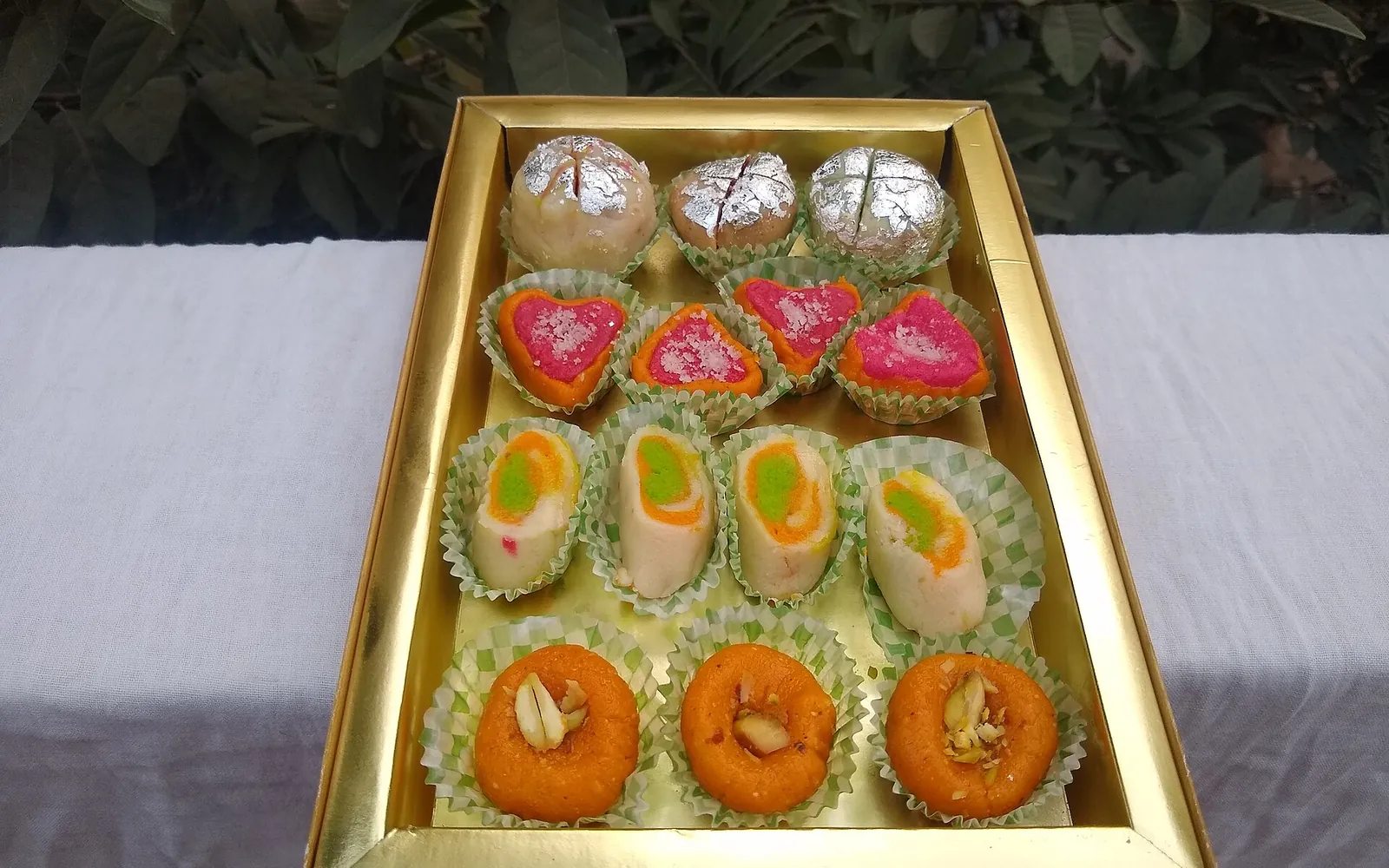
No pilgrim leaves Dwarka without a box of Peda. This soft, round, mildly sweet confection made from khoya, the evaporated milk solids that form the foundation of many of North and West India's finest sweets, is so closely associated with Dwarkadhish Temple that in Gujarati households the two words are virtually synonymous. When a family member sets off on the Dwarka yatra, the first request from those left behind is almost always: "Bring us Peda from Dwarka."
The Dwarka Peda is distinguished by several characteristics that set it apart from generic khoya sweets found elsewhere. It is flavoured with green cardamom, which gives it a fragrant warmth. A touch of saffron, kesar, gives the best pieces a faint golden tinge and a delicate floral note that lifts the richness of the khoya. The texture is soft and slightly grainy at the same time, a result of the careful cooking of the khoya to exactly the right moisture level. The sweetness is deliberately moderate, Dwarka Peda is not cloying like some commercial sweets, and this restraint makes it easy to eat two or three without discomfort. The top of each piece is traditionally pressed with a small wooden mould that leaves a floral or auspicious pattern imprinted on the surface.
The best Peda shops in Dwarka are located immediately outside the two main gates of Dwarkadhish Temple: Swarga Dwar (the north gate, which faces towards the 72-step staircase leading to the riverfront) and Moksha Dwar (the south gate, the main exit). The shops clustered at these two locations have been operating for generations and buy their khoya fresh from local dairy suppliers each morning. The Peda is typically made in batches twice daily, morning and again in the afternoon, and the freshest pieces are available in the hours immediately after each preparation. Pilgrims who arrive for the Rajbhog aarti (midday) and exit through Swarga Dwar or Moksha Dwar around 1:00 PM will find the afternoon batch being laid out in the shop display cases just as they emerge.
Peda Pricing and Box Sizes
- 6-piece box ₹30–40, sufficient for a small household offering or personal consumption during the journey
- 12-piece box ₹60–70, the most popular size for families travelling together
- 24-piece box ₹90–100, ideal for larger families or distributing among neighbours and colleagues on return
- Shelf life (unrefrigerated) 2–3 days, consume or refrigerate promptly on reaching home
- Shelf life (refrigerated) 5–7 days in an airtight container
How to Identify Authentic Peda vs Tourist Traps
The main temple gate area naturally attracts vendors of varying quality. Here is how to identify genuine Dwarka Peda from an authorised, trustworthy shop:
-
1
Location matters most
Buy only from shops immediately at the Swarga Dwar or Moksha Dwar exits, not from street carts or hawkers who approach you near the steps or parking areas. The established shops at the gates have fixed addresses and reputations to protect.
-
2
Look for freshness cues
Authentic Peda should be soft to a gentle press, not hard or dried out. The surface should have a slight sheen from the natural fats in the khoya. If the pieces look dry, cracked around the edges, or are stacked too high in a warm display case, they are not fresh.
-
3
Check the colour
Good Dwarka Peda is a warm ivory-cream colour with occasional golden flecks of saffron. Be wary of pieces that are stark white (may contain excessive milk powder) or deep yellow (artificial colour).
-
4
Ask for the morning batch
The best shops will tell you when they last made a fresh batch. If the answer is "this morning" or "two hours ago," you are in the right place. If the shopkeeper is vague about freshness, move on.
-
5
Price is not a quality indicator
Authentic Peda at authorised shops should cost ₹30-100 depending on box size. If a vendor is charging ₹200+ for a 6-piece box and claiming it is "special" or "VIP temple prasad," it is a tourist trap. Conversely, suspiciously cheap Peda (₹10-15 for 6 pieces) is likely made with adulterated or inferior khoya.
"In Gujarati households, returning from Dwarka without Peda is almost unthinkable. The tradition of distributing Dwarka Peda among family, neighbours, and colleagues is a centuries-old way of sharing the blessings of the pilgrimage with those who could not make the journey."
Prasad Thali: The Complete Offering Set
For devotees who wish to make a complete offering to Lord Dwarkadhish rather than simply receive prasad, authorised sellers outside the temple gates offer pre-assembled prasad thalis, small trays or baskets containing everything needed for a full puja offering. These thalis are assembled to allow even a first-time pilgrim, unfamiliar with the precise items required for temple offerings, to arrive at the inner sanctum with a complete and proper set of devotional materials.
A standard prasad thali from an authorised seller near the Swarga Dwar or Moksha Dwar typically contains: two to four pieces of Peda, a handful of marigold and rose petals or a small garland of marigolds (flowers are one of the five traditional offerings in Vaishnava puja), a small packet of sindoor (red vermilion powder, used for anointing and blessing), one or two incense sticks or a small incense cone, and, in the more complete thalis, a small brass or painted clay miniature of Lord Dwarkadhish or a lotus-shaped diya. The complete assembled thali costs ₹50-100 depending on content and quality.
The procedure for using the prasad thali: carry it into the temple in both hands or in a small cloth bag. When you reach the darshan queue for the inner sanctum, hold the thali respectfully. At the sanctum, offer the flowers and the thali to the priest on duty (pujari), who will place the items before the deity and wave them in a gesture of offering. The priest then returns the Peda and some of the flowers to you as prasad, now doubly blessed, first by the artisans who prepared them and then by the deity who has received them as an offering. Take this returned prasad home or consume it immediately after exiting the temple. The sindoor and incense are generally kept by the temple for use in ongoing rituals.
- Thali Contents Peda + marigold/rose petals + sindoor + incense + small idol (sometimes)
- Price Range ₹50–100
- Where to Buy Authorised shops at Swarga Dwar and Moksha Dwar
- Best For Devotees wanting to make a complete offering to the deity
- After Offering Peda and flowers returned by priest as blessed prasad
Other Prasad Distributed at Dwarkadhish Temple
Beyond the Panchamrit, Charnamrit, Peda, and thali, Dwarkadhish Temple distributes several other items as prasad on specific occasions and during particular rituals. Understanding these additional prasad forms helps pilgrims make the most of their visit, especially those attending festivals or special aartis.
- Akshat (Yellow Rice) Unbroken rice grains tinted with turmeric or saffron, symbolising completeness and prosperity. Distributed during special ceremonies and major festivals like Janmashtami and Holi. Akshat is also used by the priests to bless devotees by placing a few grains on the crown of the head (a gesture called tika). On non-festival days, akshat may be distributed in small packets near the temple exit.
- Tulsi Leaves The holy basil plant (Tulsi or Vrinda) is considered in Vaishnavism to be non-different from Lakshmi, the goddess of prosperity, and is treated with the same reverence as the deity itself. Occasionally, after major aartis or on Ekadashi (the 11th day of the lunar fortnight, considered the most sacred day of the Vaishnava calendar), priests distribute single tulsi leaves to devotees. Receiving a tulsi leaf directly from a pujari at Dwarkadhish is considered an exceptional blessing. The leaf may be consumed or kept in the home altar.
- Flowers After Deity Contact The marigold and rose garlands placed around the main idol of Lord Dwarkadhish are changed at each aarti. The used garlands, flowers that have directly garlanded the deity, are distributed as prasad after the aarti concludes. These flowers are received by devotees with bowed heads and placed on the personal altar at home, used to decorate a vehicle, or tucked into a pilgrim's hair as a mark of divine blessing. Their fragrance is considered to carry a portion of the sanctity of the temple space.
- Mishri (Rock Sugar) Small crystals of rock sugar are sometimes included in the packaged prasad boxes sold at the official temple counter. Mishri is used in many Vaishnava rituals and is associated with the sweetness of Krishna's divine nature. It dissolves slowly on the tongue, and the Bhagavata Purana tradition holds that keeping a piece of mishri from a Vaishnava temple on one's tongue for a moment purifies both body and mind.
Why Prasad Is Sacred: The Vaishnava Philosophy
The theological foundation for the sanctity of prasad in Vaishnavism is rooted in a deceptively simple principle: whatever the Lord touches, tastes, or uses becomes non-different from the Lord. This is not a metaphor in Vaishnava theology, it is a precise philosophical assertion. Just as the sun's rays carry the sun's light and warmth wherever they fall, so too does the Lord's touch carry the Lord's divine nature into whatever substance He contacts. Prasad, therefore, is not food or liquid with a symbolic spiritual meaning. It is, in Vaishnava understanding, an actual extension of the divine body.
This principle is stated explicitly in several passages of the Bhagavata Purana (Srimad Bhagavatam), the text that forms the theological cornerstone of Vaishnavism and which narrates the life and teachings of Lord Krishna, the deity of Dwarkadhish Temple. In the tenth canto, which describes Krishna's life in Dwaraka, there are multiple accounts of devotees receiving Krishna's prasad, the remnants of His meals, the garlands He has worn, the water used to wash His feet, and experiencing immediate transformation, purification, and spiritual upliftment. These scriptural precedents give the prasad distribution at Dwarkadhish Temple its theological depth: when a pilgrim in the twenty-first century cups their hands to receive Charnamrit at Dwarkadhish, they are participating in a tradition of devotional practice that the Bhagavata Purana describes as one of the surest paths to spiritual realisation.
The concept is also connected to the Vaishnava understanding of seva (loving service to the deity). In the Dwarkadhish Temple, the deity is not considered a statue or symbol but is understood by worshippers as the living presence of Lord Krishna Himself. The priests who perform the puja each day are not performing rituals for an inanimate object, they are cooking for, bathing, clothing, and serving a divine being who is understood to be genuinely present. Within this framework, the food that is first offered to the Lord and then returned to the devotee is understood to have undergone a qualitative transformation: what was ordinary food cooked by human hands has become the Lord's own food, returned to the devotee as a gift of grace. This is why prasad is never refused, is always consumed, is treated with reverence even when it is a simple sweet or a few drops of liquid, and is shared with all family members who could not be present.
Taking Prasad Home: How to Carry and Distribute It
The tradition of carrying Dwarka prasad home for family members is deeply embedded in Gujarati pilgrimage culture and extends to pilgrims from across India who make the yatra to Dwarkadhish. Taking prasad home serves two purposes: it extends the blessing of the pilgrimage to those who could not make the journey, and it reinforces the pilgrim's own connection to the darshan by carrying a tangible piece of the sacred experience back into daily life. Here is how to handle prasad properly for the journey home.
- Container for Peda Keep Peda in the original shop box, these are designed to maintain freshness for 2-3 days. Do not transfer Peda to plastic bags, which trap moisture and cause the surface to become sticky and start fermenting. If carrying for more than one day of travel, ask the shop to pack in a ventilated box or wrap individual pieces in paper rather than cling film.
- Cloth Bag vs Plastic Many pilgrims carry prasad items in a small cotton or jute cloth bag rather than a plastic bag. This practice has both spiritual and practical roots. Spiritually, cloth bags are considered more respectful for sacred items than plastic. Practically, cloth allows slight breathability that keeps items like flowers and Peda in better condition. Plastic bags are not prohibited but are generally avoided by experienced pilgrims.
- Liquid Prasad (Charnamrit/Panchamrit) Liquid prasad should be consumed on the spot and is not typically carried home in large quantities. The temple does not distribute take-home bottles of Charnamrit. If you have attended a private abhishek puja and the temple priest offers you a small bottle of the remaining Panchamrit, store it sealed in a cool location, keep it away from direct sunlight, and consume within 24-48 hours. Never mix it with other liquids.
- Distributing to Family The tradition in Gujarati households is for the pilgrim to distribute Peda and other prasad to every household member before consuming any themselves. The prasad is first placed at the home altar, offered symbolically to the deity image there, and then distributed to each family member. Even a single piece of Peda is divided so that all can receive a portion, the spiritual benefit is understood to be in the act of receiving, not in the quantity consumed.
- Neighbours and Colleagues Many pilgrims purchase the 24-piece box of Peda precisely to have enough to distribute to immediate neighbours, close colleagues, and the families of nearby friends on their return. This gesture is a standard part of Gujarati pilgrimage culture and is appreciated and understood across the community as an act of sharing the blessings of the yatra.
- Airport and Train Rules Peda in sealed boxes travels well and is permitted on domestic flights and trains without restriction. The boxes are not considered food items requiring declaration. Panchamrit or Charnamrit in liquid form may attract attention at airport security if carried in quantities exceeding 100ml, consume all liquid prasad before departure to avoid any difficulty at check-in.
Frequently Asked Questions
Also Explore
Locker Facility
Dwarkadhish Temple lockers are at both gates, Swarga Dwar and Moksha Dwar.
Read Full GuideDwarkadhish Temple
Full guide to the main temple, history, darshan, and what to expect inside.
Read Full GuideTemple Timings
Aarti schedule and darshan timings, plan your visit to coincide with Mangla aarti.
Check TimingsDwarka Food Guide
Beyond prasad, pure veg restaurants, Gujarati thali, and street food near the temple.
Explore Food Guide