Is Dwarkadhish Temple a Jyotirlinga? No, and Here Is Why People Confuse This
Dwarkadhish Temple is not a Jyotirlinga, it is a Vaishnava temple dedicated to Lord Krishna. The nearest Jyotirlinga is Nageshwar, the 11th of 12, located 17 km from Dwarka near Okha.
Is Dwarkadhish Temple a Jyotirlinga?
No. Dwarkadhish Temple is a Vaishnava temple dedicated to Lord Krishna, not a Jyotirlinga. The nearest Jyotirlinga is Nageshwar (11th of 12), 17 km from Dwarka.
Useful References
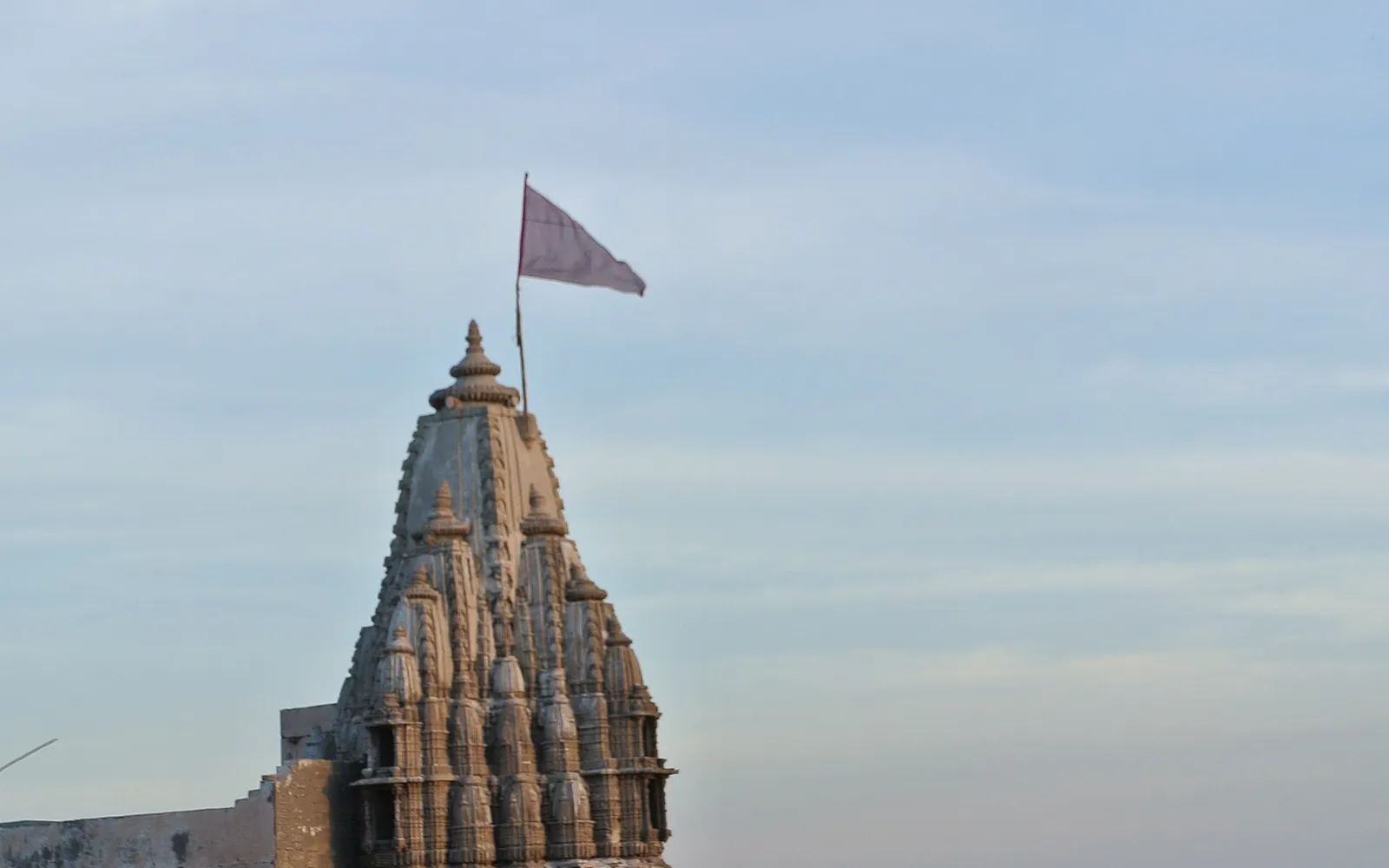
What Is a Jyotirlinga, and Why Dwarkadhish Is Not One
A Jyotirlinga is a sacred manifestation of Lord Shiva in the form of a column of light (jyotir = light/flame, linga = the form or symbol of Shiva). According to Hindu tradition, specifically the Shiva Purana, Shiva appeared as an infinite column of fire between Brahma and Vishnu, who were arguing about supremacy. Neither could find the top or bottom of this column of light. Shiva then revealed himself and declared that wherever his Jyotirlinga form appears on earth, that site is supremely sacred. There are 12 such sites across India, each containing a self-manifested Shiva linga of immense power.
Dwarkadhish Temple, by contrast, is a Vaishnava temple, it belongs to the tradition of Lord Vishnu (of whom Krishna is an avatar, a complete divine descent into human form). The deity worshipped is Dwarkadhish, Lord Krishna in his four-armed royal form. There is no Shiva linga in the main sanctum of Dwarkadhish Temple. The temple's theological framework, its ritual calendar, its priests, and its aartis all belong to the Vaishnava tradition, not the Shaiva tradition. Calling Dwarkadhish Temple a Jyotirlinga is a categorical error, like calling the Kaaba a Buddhist monastery.
This does not diminish the sanctity of Dwarkadhish Temple. Being a Char Dham site, one of only four such sites in all of India, places it at the highest level of the Vaishnava pilgrimage hierarchy. It simply is not in the Jyotirlinga category, which is a Shaiva classification. Both traditions are present in the Dwarka area, but in separate temples serving separate devotional paths.
Nageshwar Jyotirlinga: The 11th Jyotirlinga, 17 km from Dwarka
The Jyotirlinga nearest to Dwarka is Nageshwar, officially known as Nageshwar Jyotirlinga or Nagnath. It is located approximately 17 km from Dwarka town, near Okha on the Saurashtra coast. In the traditional listing of the 12 Jyotirlingas from the Shiva Purana, Nageshwar is the 11th. (The 12th and final Jyotirlinga is Grishneshwar in Aurangabad, Maharashtra.)
Nageshwar Temple is open from 5 AM to 9 PM daily. The Rudrabhishek (special Shiva worship) is performed in the early morning from 6 to 8 AM, the most auspicious time for Jyotirlinga darshan. An evening aarti is held at 7 PM. The temple complex includes a massive seated statue of Lord Shiva, which is visible from a distance on the approach road. The Jyotirlinga linga inside the temple is the main object of worship. Devotees typically perform parikrama (circumambulation) of the linga and offer water, milk, and bilva leaves.
The journey from Dwarka to Nageshwar takes 35 to 40 minutes by road. An auto-rickshaw from Dwarka can be hired for ₹200–300 for the round trip. Most pilgrims who visit Dwarka also plan at least a half-day for Nageshwar, and the two are commonly combined in a single day's circuit, Dwarka in the morning, Nageshwar and Okha (for Bet Dwarka ferry) in the afternoon. This routing is efficient because Nageshwar and Okha are roughly in the same direction from Dwarka.
Why the Confusion Arises: Dwarka Has Both
The confusion between Dwarkadhish Temple and Jyotirlinga status is understandable when you look at the geography. The Dwarka pilgrimage area contains, within a 17 km radius, one of the four Char Dham (Dwarkadhish Temple, Vaishnava) and one of the 12 Jyotirlingas (Nageshwar, Shaiva). No other small geographic area in India packs this density of top-tier sacred sites from two different traditions. Pilgrims visiting the region for the first time sometimes arrive with the understanding that they are visiting "Dwarka and Nageshwar" without clearly distinguishing which temple belongs to which tradition.
The confusion is further reinforced by tour operators and travel packages that market "Dwarka Jyotirlinga" as a destination, by which they typically mean the Nageshwar Jyotirlinga near Dwarka, not the Dwarkadhish Temple. This shorthand, while commercially convenient, leaves many pilgrims with a muddled understanding of what they are visiting. When someone asks "which Jyotirlinga is in Dwarka?", the precise answer is: Nageshwar Jyotirlinga, not Dwarkadhish Temple, which is in Dwarka town but is not a Jyotirlinga.
A second source of confusion is the pairing of Dwarka with Somnath in many pilgrim itineraries. Somnath is itself a Jyotirlinga, the first and most important of all 12. Many pilgrims do the Somnath-Dwarka circuit together, and since Somnath is a Jyotirlinga, the association of Jyotirlinga with this broader travel package sometimes bleeds over into Dwarka itself in popular perception, even though only Somnath (and Nageshwar) hold Jyotirlinga status in this region.
The 12 Jyotirlingas: Complete List with Locations
Understanding where Nageshwar fits among all 12 Jyotirlingas helps clarify its importance. The traditional order from the Shiva Purana lists these 12 sacred shrines across India, each marking a site where Shiva appeared as a self-manifested column of divine light:
Note: There is some scholarly and traditional debate about the locations of Vaidyanath (#9) and Aundha Naghnath (#10), alternate identifications exist. The Nageshwar (#11) listing for the Okha/Dwarka site is, however, widely accepted and is the one recognised in the Shiva Purana verse that lists all 12.
Visiting Both: Planning Dwarkadhish Temple and Nageshwar Together
The good news for pilgrims who want to visit both the Char Dham (Dwarkadhish Temple) and the Jyotirlinga (Nageshwar) is that they are very close to each other and easily combined in a single day trip. The standard circuit from Dwarka town: morning at Dwarkadhish Temple for the Mangla or Shringar aarti, midday drive to Okha (36 km) for the Bet Dwarka ferry, return from Bet Dwarka through Nageshwar (17 km from Dwarka, en route back), then back to Dwarka for the evening Sandhya aarti at Dwarkadhish.
This circuit covers: one Char Dham (Dwarkadhish), one Jyotirlinga (Nageshwar), and the island temple of Bet Dwarka, three major sacred sites in a single day. The distances: Dwarka to Okha 36 km, Okha to Nageshwar 17 km, Nageshwar back to Dwarka 17 km. Total road distance: approximately 80 km. A hired vehicle (taxi or auto for the day) makes this circuit much easier than relying on public transport for each leg.
If you are adding Somnath to your Gujarat pilgrimage, the 1st Jyotirlinga, 236 km from Dwarka, plan it as a separate day or overnight leg. Somnath is large enough to deserve its own full day: the main Jyotirlinga temple, the Triveni Sangam bathing ghat, Bhalka Teerth (where Krishna was struck by the arrow), and the Sound and Light show at the temple in the evening. Combining Somnath with Dwarka requires at least 4 to 5 days total for a proper experience of both.
Frequently Asked Questions
Also Read
Locker Facility
Dwarkadhish Temple lockers are at both gates, Swarga Dwar and Moksha Dwar.
Read Full GuideNageshwar Jyotirlinga
The 11th Jyotirlinga, 17 km from Dwarka, timings, how to reach it, the Rudrabhishek ritual and what to expect at this Shiva shrine.
Read MoreDwarkadhish Temple
The Char Dham Vaishnava shrine dedicated to Lord Krishna, aarti timings, darshan experience, avoiding queues and what to know before visiting.
Read MoreDwarka and Somnath Guide
How to plan a Dwarka–Somnath pilgrimage combining the western Char Dham with the 1st Jyotirlinga, distances, routes and days needed.
Read More