Description
Keep Your Mandir Clean with a Brass Agarbatti Stand
First, incense is part of almost every household pooja. Obviously, so is the ash it leaves behind. Moreover, this Brass Agarbatti Stand solves that daily nuisance completely, because the wide tray catches every bit of ash before it reaches the shelf. In fact, anyone who lights agarbatti every morning knows how quickly a mandir gets dusty. Similarly, the incense burning through the halls of the Dwarkadhish Temple is always contained properly. Now, you can undeniably keep your own pooja room just as clean.
Furthermore, a proper stand changes more than tidiness. When sticks are held at the correct angle, they burn evenly and the fragrance spreads rather than pooling in one corner. Therefore, less incense goes further.
Are you currently balancing agarbatti in a rice bowl or a crack in the shelf? Or perhaps you are tired of wiping ash off the idols? Either way, this Brass Agarbatti Stand is the fix. Indeed, solid brass handles the heat without any discolouration. As a result, it is one of the most practical items you can add to a mandir.
Spiritual Significance of Incense
Undoubtedly, fragrance is one of the five traditional offerings in Hindu worship. Also, it is offered in almost every ritual. A Brass Agarbatti Stand exists to support that offering properly rather than as an afterthought. For instance, the burning of incense in worship is documented across the earliest Indian texts. Because of this, the smoke is understood as carrying prayer upward. Furthermore, the fragrance is said to prepare the mind for concentration before the prayer even begins.
Meanwhile, devotees who follow the published temple timings will notice incense burning continuously through the day. Notably, it is never allowed to lapse. Keeping a proper stand at home lets you offer dhoop during aarti, bhog and mantra jaap without interruption. Thus, the mandir always carries its fragrance. Ultimately, that continuity is part of the practice.
The Symbolism of Smoke and Ash
Specifically, incense carries a lesson in its own burning. First, the stick consumes itself entirely in order to release fragrance, which is treated as the model for selfless service. Then, the smoke rises upward without effort, standing for prayer moving towards the divine without obstruction. Second, the ash that remains is a reminder of impermanence, of what every physical form eventually becomes. In addition, the fragrance reaches every corner of the room equally, without preference, much as grace is understood to. Keeping this stand in the mandir embraces those ideas practically. Consequently, you are reminded that even the residue has meaning. Additionally, containing the ash keeps the sacred space respectful. Finally, the fragrance settles the room as it does along the riverside at Gomti Ghat Dwarka.
Vastu Shastra Guidance for your Brass Agarbatti Stand
Previously, Vastu Shastra placed fragrance offerings in a specific part of the room. Positioning a Brass Agarbatti Stand well keeps the smoke moving properly. Consequently, the whole space benefits. Therefore, follow these guidelines:
- Ideal Direction: Place the stand towards the Southeast of the pooja area. Obviously, this is the traditional quarter for fire and fragrance.
- Height: Keep it slightly below the level of the idols. However, never position burning incense directly above the deity.
- Number of Sticks: Light an odd number, usually one, three or five. Besides, this is the customary practice in most households.
- Airflow: Ensure the smoke can drift freely rather than being trapped. Finally, keep the room aired as is done through festival days in Dwarka.
Practical Design and Solid Brass Build
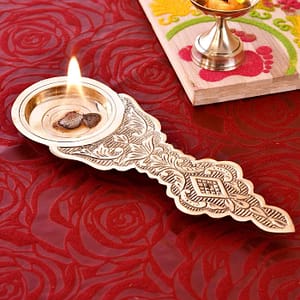
Undeniably, this stand is built around one job, which is catching ash completely. This ensures the tray is wide enough that even a long stick drops its ash inside rather than beyond the rim. Furthermore, the stick slots hold agarbatti firmly at a slight angle so nothing slips mid-burn. Therefore, the design actually works in daily use.
Moreover, brass is the right material for an incense holder. It takes the small heat of a burning tip without discolouring and cleans up in seconds. For example, you can tip out the collected ash and wipe the tray in one motion. As a result, the daily routine stays simple. Because of this, a brass stand outlasts wooden and ceramic alternatives easily.
Care Note: Specifically, empty the ash tray every two or three days. Also, a soft dry cloth removes the fine residue that settles on the surface. However, avoid abrasive scrubbers on the polished finish. Simply wash in warm soapy water occasionally and dry fully instead.
Ideal Occasions for Gifting
Undoubtedly, the most appreciated gifts are the ones used every day. In fact, an incense holder qualifies easily. Thus, this Brass Agarbatti Stand suits these occasions:
- Housewarming: Firstly, it is among the first practical items a new pooja room needs.
- Diwali: Secondly, incense is in constant use across the entire festival week.
- Weddings: Thirdly, it is a useful addition to a couple’s first mandir.
- Return Gifts: Lastly, it works well as an affordable and genuinely usable satsang return gift.
Frequently Asked Questions (FAQs)
1. Does this Brass Agarbatti Stand really catch all the ash?
Yes, in normal use it does. Furthermore, the tray is sized wider than a standard agarbatti length, so ash falls inside rather than onto the shelf beyond it.
2. How many incense sticks can it hold at once?
Basically, it accommodates several sticks together. In addition, most households light one, three or five at a time, which the slots handle comfortably.
3. Will the brass darken from the heat?
Obviously, a little darkening near the slots is normal over time. Meanwhile, it wipes back with a standard brass polish. Therefore, it is cosmetic rather than damage.
4. Can I use it for dhoop cones as well as sticks?
Yes, certainly. In fact, the tray doubles as a base for dhoop cones and small sambrani cups. Because of this, one holder covers several kinds of offering.
5. How often should the ash tray be emptied?
Generally, every two or three days is enough for normal daily use. However, during festivals when incense burns continuously, emptying it daily keeps things tidy.
6. Is it safe to buy brass pooja items online?
Absolutely. Specifically, sellers pack the Brass Agarbatti Stand in protective wrapping since the polished surface marks easily. As a result, it arrives clean.
7. Where exactly should the stand be placed in the mandir?
Undeniably, the Southeast side of the pooja area is traditional. Therefore, keep it slightly below the level of the idols. Ultimately, the smoke should drift past the deity rather than over it.
8. Is it easy to clean?
Yes, very. Moreover, tipping out the ash and wiping the tray with a dry cloth takes a few seconds, and a warm soapy wash every few weeks keeps it looking new.
Finally, keep the fragrance and leave the mess behind. Therefore, do not miss the opportunity to add this practical piece to your mandir. Click to check the latest price and buy securely on Amazon today.