Description
Meenakari Puja Chowki: Handcrafted Wooden Bajot for Your Home Mandir
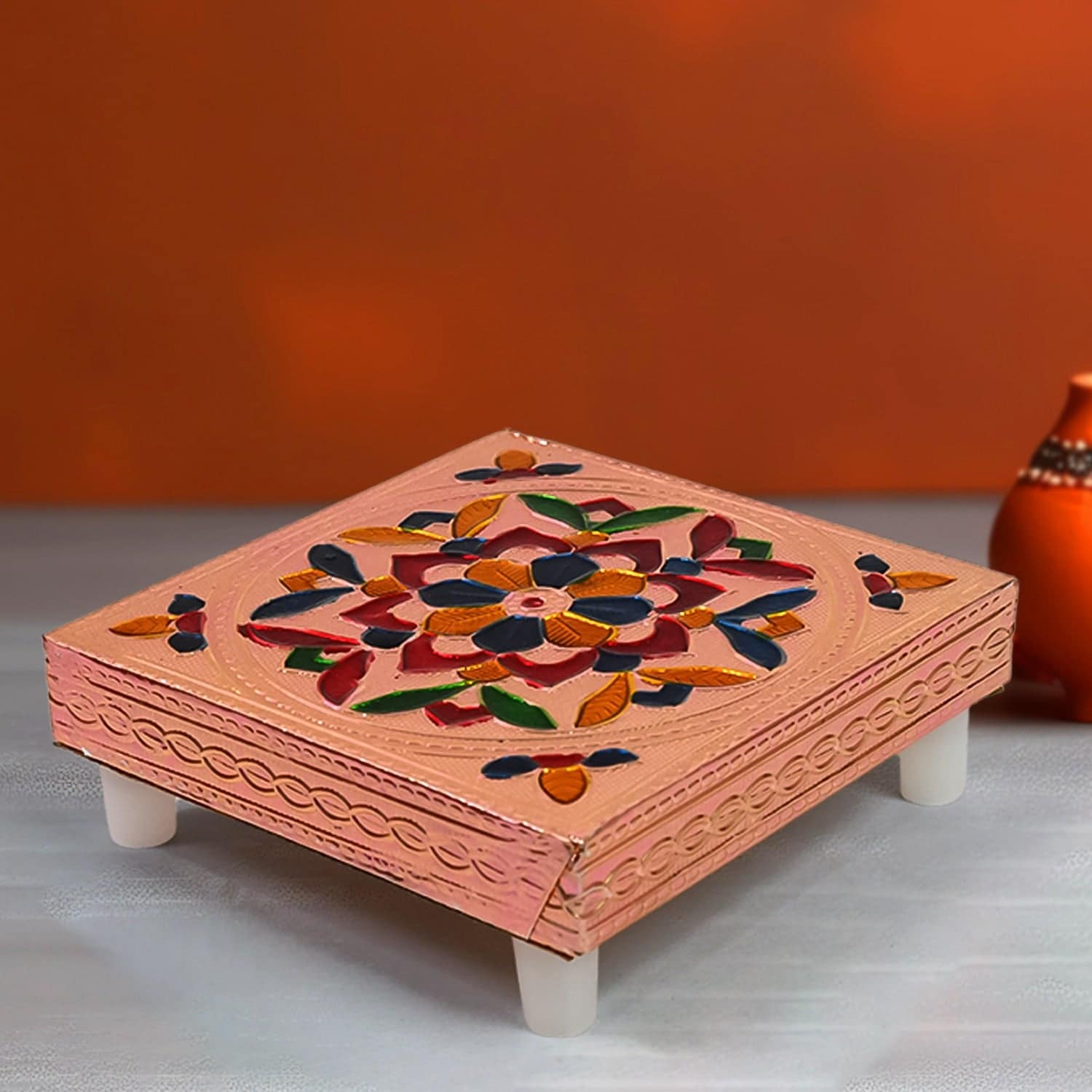
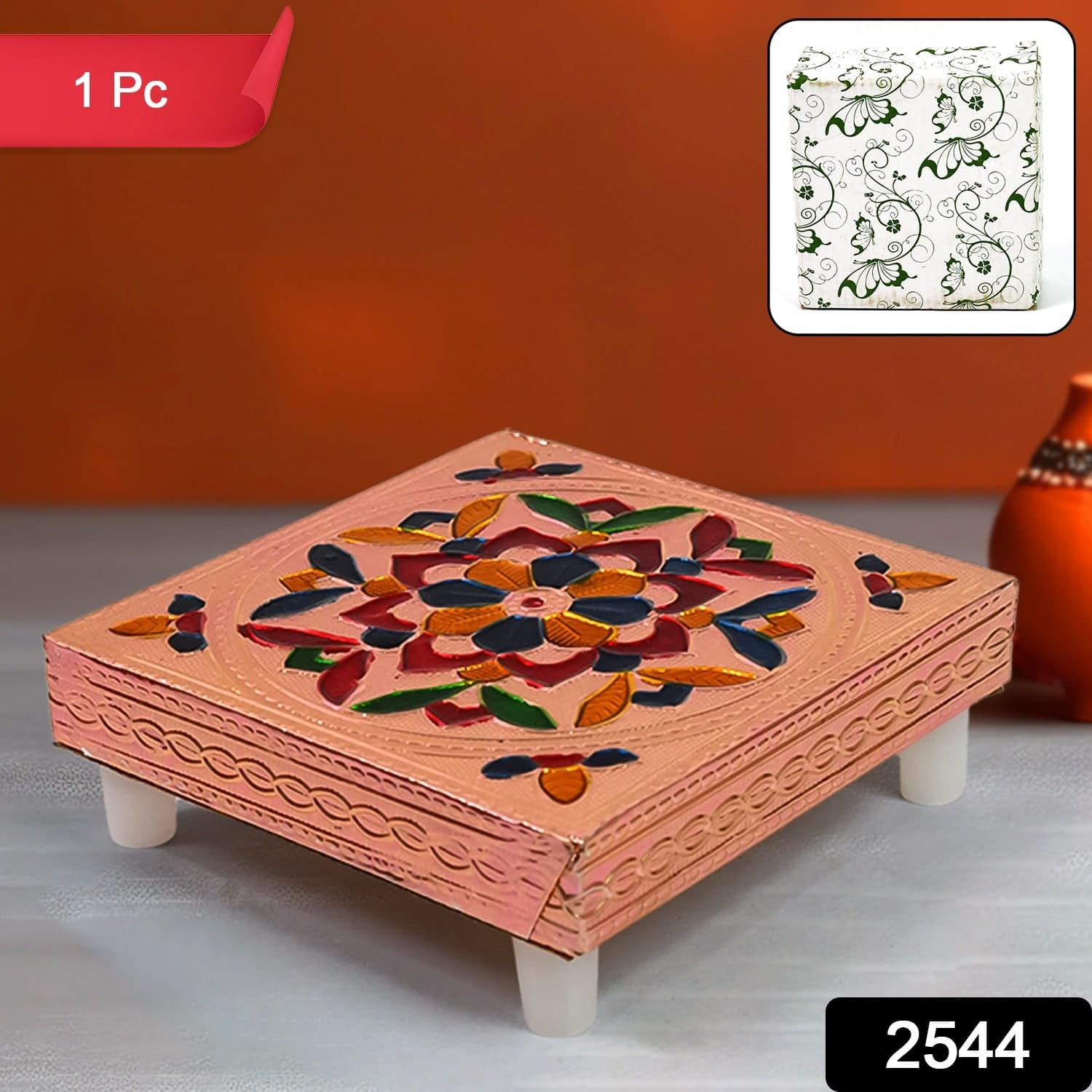
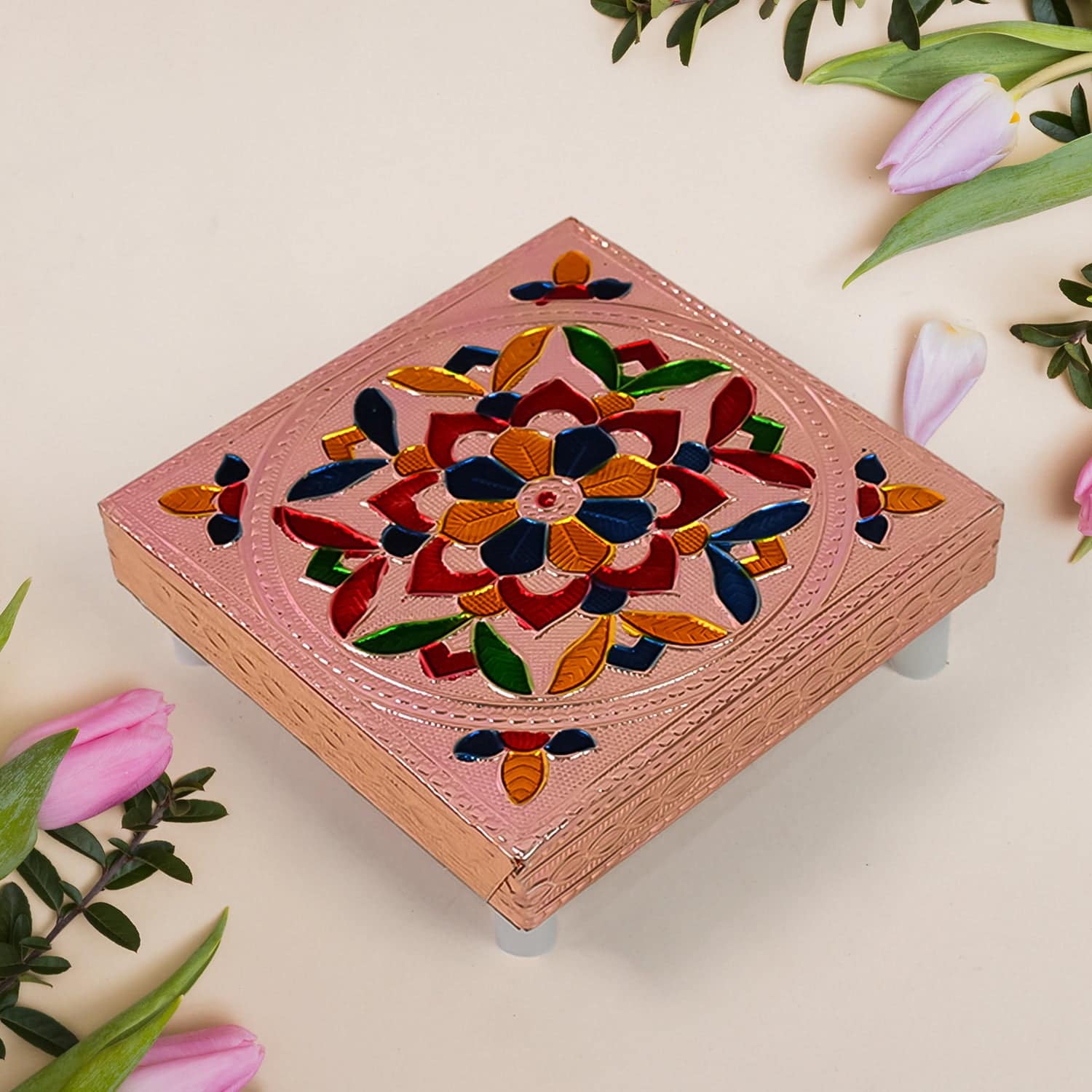
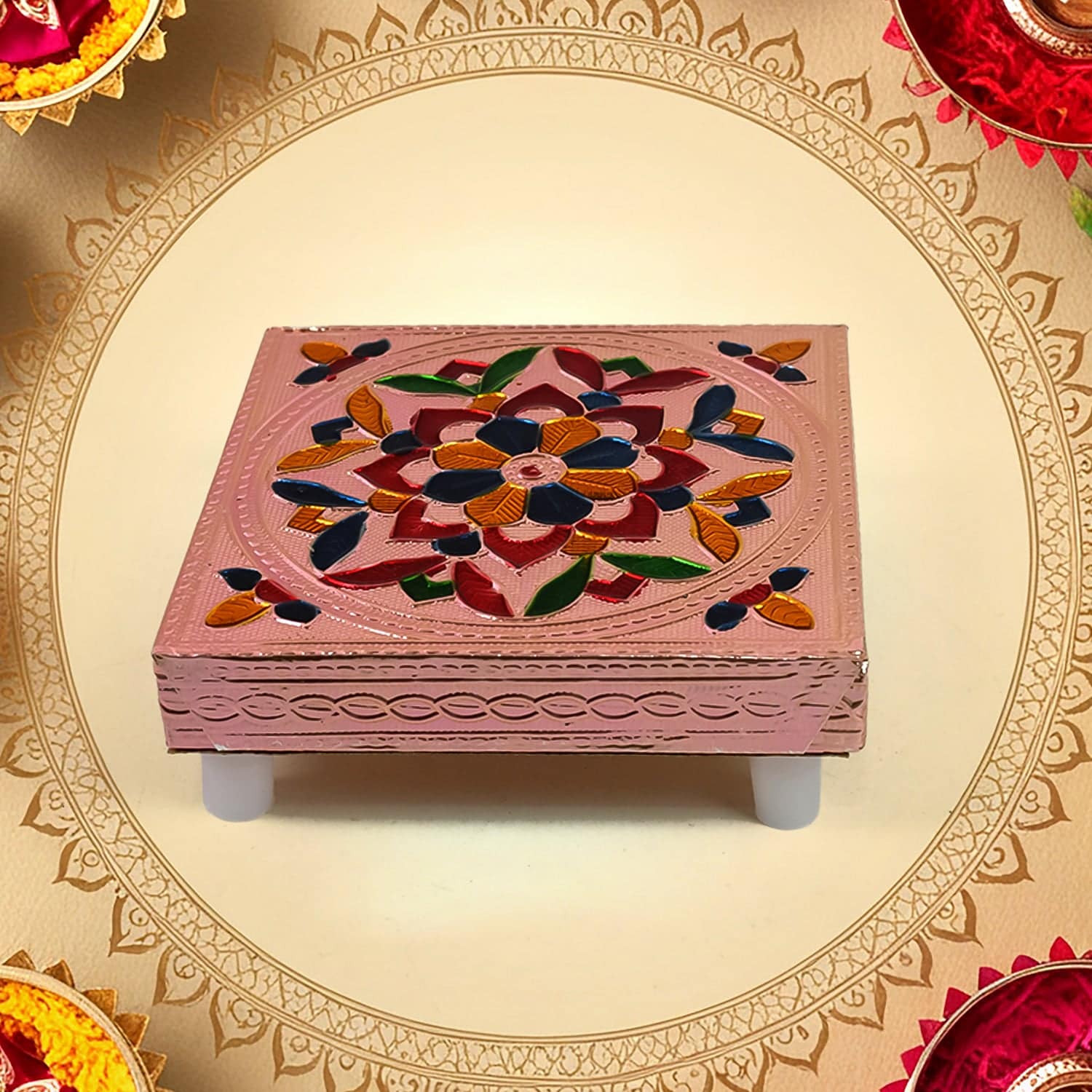
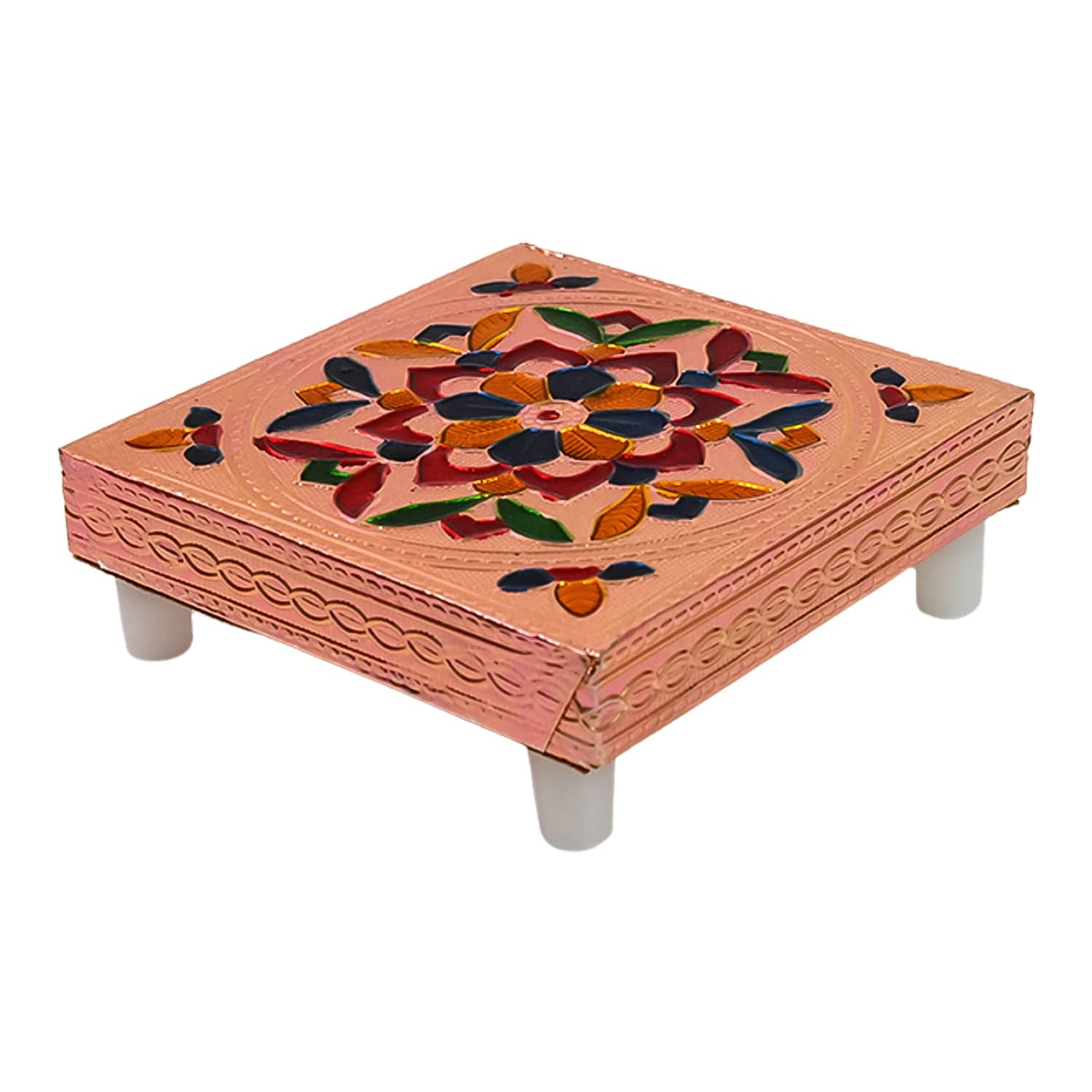
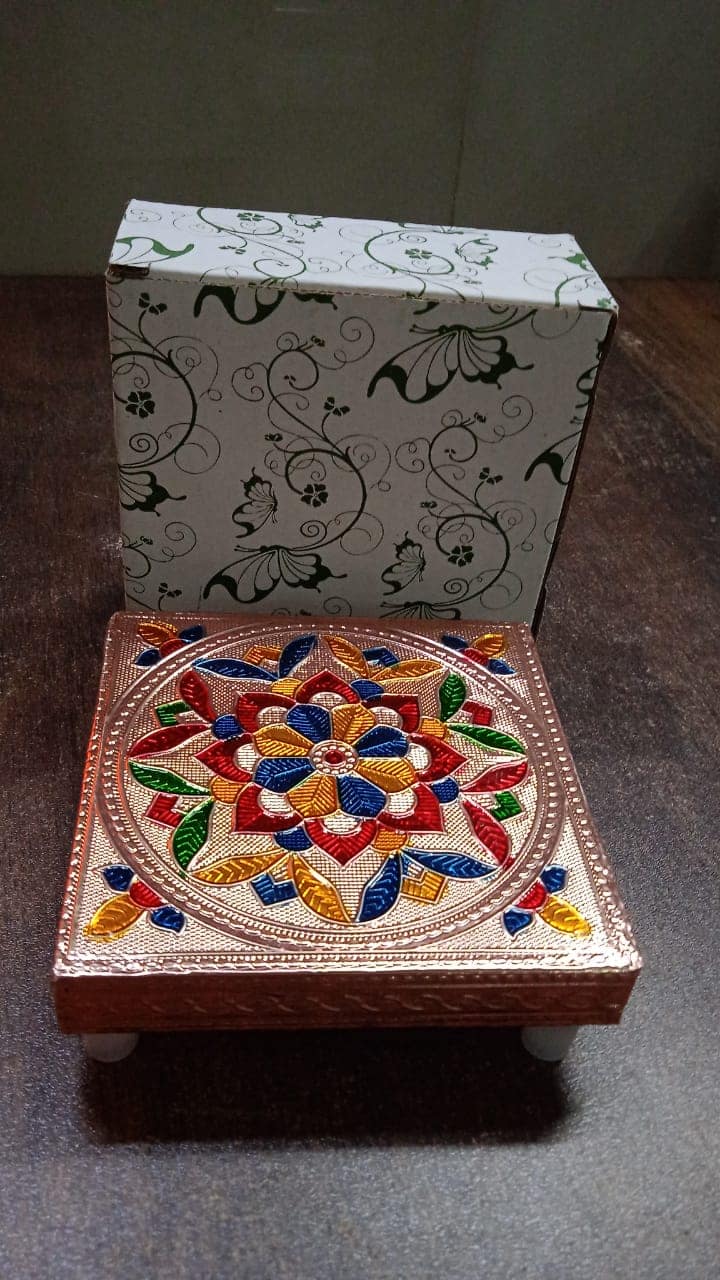
A pooja chowki, also known as a bajot, is the quiet workhorse of any home mandir. It’s the platform your idols, thali, and offerings actually rest on. It’s easy to overlook, yet genuinely central to how organised and complete the whole setup feels. This meenakari puja chowki from Shree Dwarkadhish elevates that everyday essential into something genuinely decorative. Vibrant, hand-painted Meenakari enamel artwork covers a solid wooden base. Because each piece is handcrafted, no two chowkis look perfectly identical. Many customers find this adds to its charm, since it reflects genuine artisan work rather than a mass-produced, machine-stamped finish.
Key Features of This Meenakari Puja Chowki
- Authentic Meenakari artwork: Vibrant, multicolour hand-painted enamel work across the entire surface.
- Premium wood construction: A solid, sturdy platform built to bear the weight of idols, thalis, and offerings.
- Compact square design: A 12 x 12 x 7 cm footprint that fits comfortably on most mandir shelves.
- Traditional aesthetic, contemporary appeal: Classic Indian craftsmanship that suits both traditional and modern homes.
- Genuinely handcrafted: Each piece carries slight individual variation, reflecting real artisan work.
A Piece That Sets the Tone for the Whole Mandir
A chowki sits beneath everything else in a mandir. So its look tends to set the visual tone for the whole arrangement above it. This vividly painted Meenakari base signals a colourful, traditional aesthetic, even before you look at the idol or thali resting on top of it.
Material & Craftsmanship
This chowki comes made from premium quality wood, hand-finished with authentic Meenakari, a traditional Indian enamelling technique known for its rich, multicolour patterns. In fact, skilled artisans hand-paint each chowki individually. That’s why the craftsmanship feels distinctly artisanal, rather than uniform.
Dimensions & Specifications
- Approximate size: 12 cm (L) x 12 cm (W) x 7 cm (H)
- Weight: Approx. 255 g
- Material: Premium wood with hand-painted Meenakari enamel work
- Shape: Square platform
- Finish: Vibrant multicolour traditional artwork
How to Use This Meenakari Chowki
First, place this chowki on your mandir shelf, pooja table, or altar corner. Then use it as the base platform for your idol, thali, diya, or incense holder. As a result, its sturdy wooden construction supports the weight of these items comfortably during daily use.
What Makes Meenakari Work Special
Meenakari is a centuries-old Indian art form. It fuses vibrant, colourful enamel onto a metal or wooden surface, traditionally associated with royal courts and temple craftsmanship. So bringing this technique into an everyday pooja chowki means your mandir gains a genuine piece of traditional Indian artistry, not just a plain, functional stand.
Perfect for These Occasions
- Daily pooja rituals: A sturdy, decorative base for idols and offerings used every day.
- Diwali & Navratri: Adds a festive, colourful touch to your existing pooja setup.
- Housewarming (Griha Pravesh): A meaningful, decorative gift for someone setting up a new home mandir.
- Home decoration: Attractive enough to serve as a standalone decorative accent piece.
Styling This Meenakari Chowki in Your Mandir
Thanks to its vivid, multicolour Meenakari work, this chowki tends to become a visual anchor point in a home mandir, rather than blending quietly into the background. Also, it pairs particularly well with golden kankavati holders and traditional thalis, echoing the same warm, decorative sensibility.
Chowki vs. Bajot: Understanding the Difference
People often use the terms “chowki” and “bajot” interchangeably. In short, both refer to a low wooden platform used in pooja settings. However, “bajot” sometimes implies a slightly taller, stool-like piece meant for seating a person, while “chowki” more often refers to a low platform for holding idols or offerings.
Choosing Between Our Wooden Chowki and Bajot Options
Shree Dwarkadhish also stocks a separate wooden designer bajot stool with carved traditional patterns, rather than painted Meenakari work. So if you’re drawn to bold, colourful artwork, this Meenakari chowki becomes the natural choice. On the other hand, if you prefer natural or stained wood with carved detailing, our designer bajot may suit your taste better.
Why Every Mandir Needs a Proper Platform
It’s easy to overlook the base an idol sits on. However, placing an idol directly on a bare shelf stays both impractical and, in many pooja traditions, less respectful than giving the deity a proper raised base. A dedicated chowki solves this simply. It lifts the idol slightly, and adds genuine decorative value.
A Small Meenakari Chowki With an Outsized Visual Impact
In absolute terms, it’s a small piece of furniture. Yet a chowki this vividly decorated tends to have an outsized effect on how a mandir shelf reads overall. A plain wooden stand disappears into the background. A hand-painted Meenakari chowki, on the other hand, becomes part of the visual story of the mandir itself. Often, it draws the first comment from anyone new who sees your pooja setup.
First-Time Mandir Setups vs. Established Pooja Routines
For anyone setting up their first home mandir, this chowki offers an easy way to add a considered, decorative foundation from day one. For households with an established routine, it often works as a refresh instead. Specifically, it replaces a plain, worn stand with something that photographs and presents beautifully during festive gatherings, while remaining entirely functional for daily use.
Care & Maintenance
- Gently wipe with a soft, dry cloth to remove dust after use.
- Avoid harsh chemicals and direct water contact, which can damage the intricate Meenakari enamel work.
- Keep away from prolonged direct sunlight to help preserve the vibrancy of the colours.
- Handle carefully when repositioning, as with any hand-painted decorative piece.
Why Buy This Meenakari Puja Chowki from Shree Dwarkadhish
We stock this Meenakari puja chowki because it brings genuine traditional Indian craftsmanship into an everyday pooja essential that every mandir needs anyway. As a brand connected to Dwarka, home of the sacred Dwarkadhish Temple, we take pride in offering pooja accessories that honour authentic artisan techniques, rather than mass-produced imitations. Planning a visit? Our temple timings guide can help you plan around it.
How Long Does Meenakari Enamel Work Last?
With regular dry-cloth cleaning, and by avoiding harsh chemicals, direct water contact, and prolonged sunlight, the vibrant colours and patterns on this chowki can stay looking good for years of everyday use. Because it’s an enamel finish rather than surface paint, it tends to hold its vibrancy noticeably longer than cheaper printed or stencilled wooden accessories, provided you follow the basic care guidelines consistently.
Sizing This Meenakari Chowki for Your Mandir Shelf
At 12 cm square, this chowki suits a small to medium idol, a compact thali, or a diya and incense holder set comfortably. It won’t dominate a shelf the way a much larger platform might. In fact, it’s a size that works equally well tucked into a corner of a larger mandir, or serving as the entire focal platform in a compact apartment-style pooja space.
A Few Final Notes Before You Order
Because this chowki comes entirely hand-painted, expect small, natural variations in the exact pattern from piece to piece. That’s a sign of genuine artisan work, not a manufacturing inconsistency. So if you’re ordering more than one for a matched set, keep in mind that they’ll be close in style, but not machine-identical.
Common Questions About This Meenakari Puja Chowki
Q: What is Meenakari work?
A: Meenakari is a traditional Indian enamelling art form known for its vibrant, multicolour patterns, applied here to a wooden pooja chowki.
Q: Is this chowki sturdy enough to hold an idol and thali together?
A: Yes. The solid wooden base is built to support the weight of idols, thalis, and offerings during regular daily use.
Q: Will every chowki look exactly the same?
A: No. Because each piece is hand-painted, there may be slight individual variation between pieces, a natural result of authentic artisan craftsmanship.
Q: How do I clean this chowki without damaging the artwork?
A: So, use a soft, dry cloth only, and avoid harsh chemicals or direct water contact.
Q: Is this a good gift for a housewarming?
A: Yes. Its decorative Meenakari artwork, combined with genuine everyday usefulness, makes it a popular housewarming gift.
More Questions About This Wooden Puja Chowki
Q: Can this chowki be used alongside a singhasan in the same mandir?
A: Yes. In fact, many households place a singhasan on top of or beside this chowki, using it as the overall base platform.
Q: Can this chowki be used for something other than holding an idol?
A: Yes. It works equally well as a base for a thali, a diya and incense holder set, or even as a small decorative stand outside strict pooja use.
Q: Does the Meenakari artwork cover the entire chowki or just part of it?
A: The hand-painted enamel work covers the visible surface of the chowki, giving it a fully decorative finish rather than being limited to a small accent area.
Q: Is the wood underneath the enamel work treated to resist moisture?
A: The wood base is finished to support daily indoor use. So keeping it away from direct water contact and excess humidity is still the best way to protect both the wood and the enamel artwork long-term.
Bring home this handcrafted Meenakari puja chowki, and give your mandir a foundation as beautiful as everything you place upon it.