



Description
Chant with Focus Using a Tulsi Mala 108 Beads
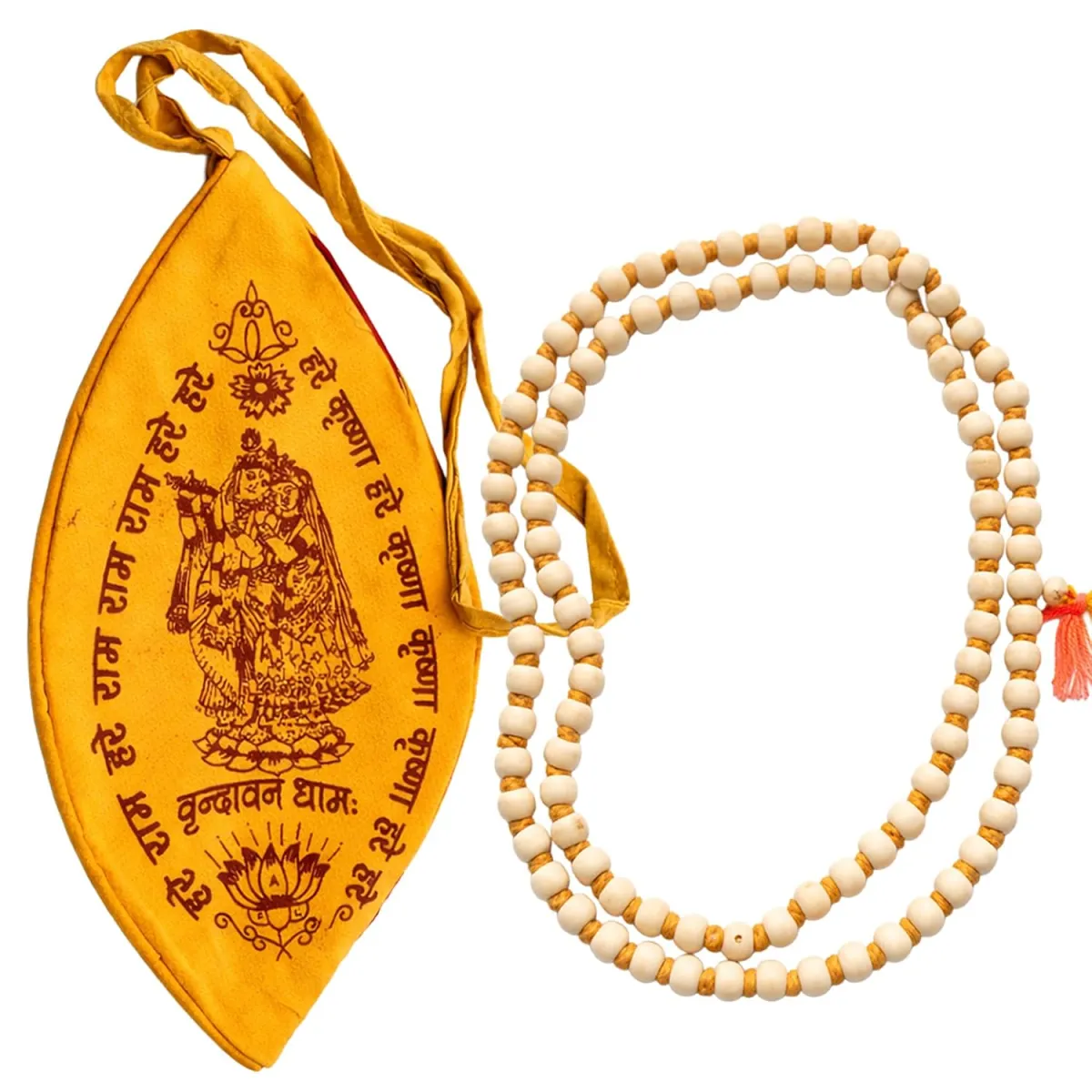
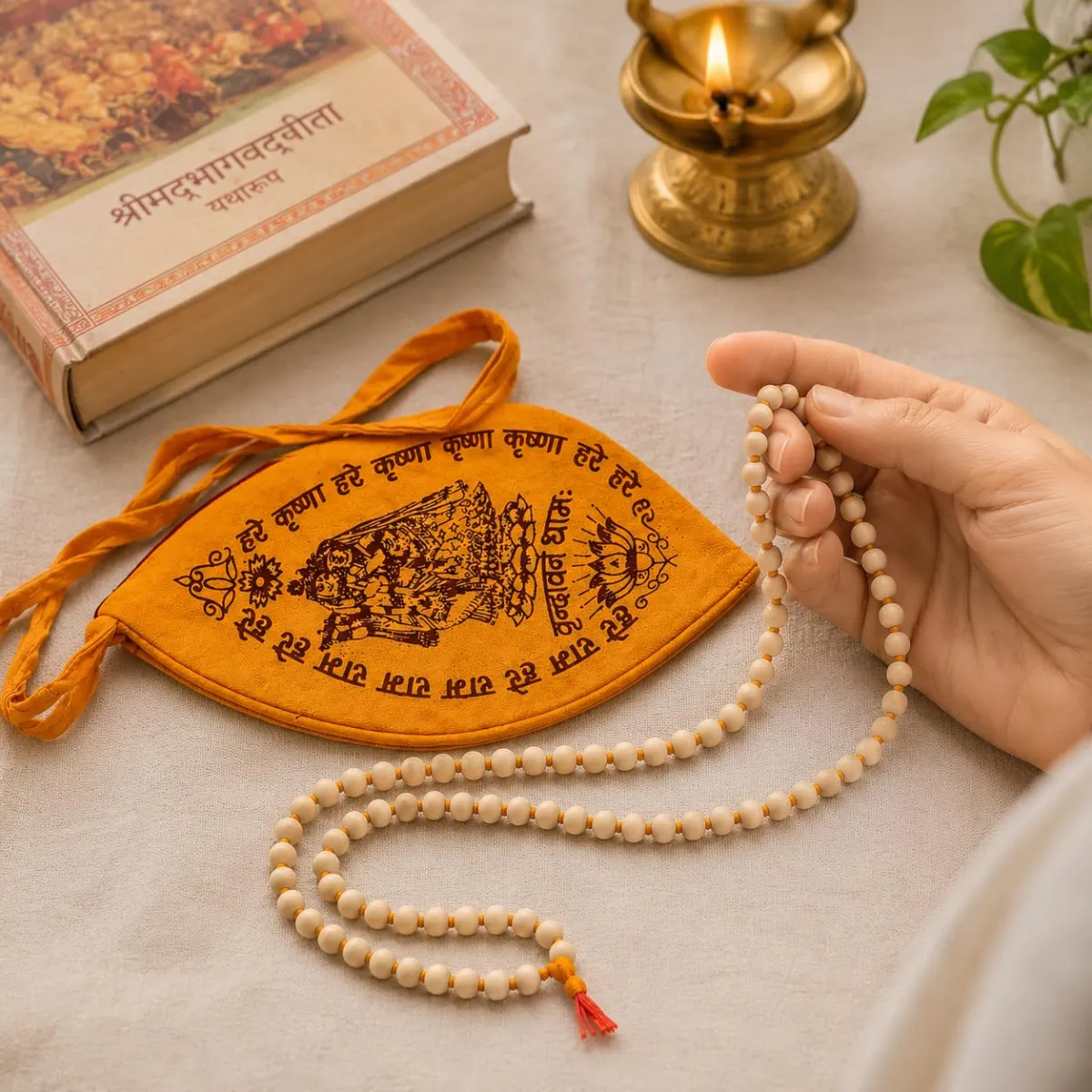
First, japa asks for a fixed count rather than a vague intention. Obviously, that is exactly what a mala provides. Moreover, this original Tulsi Mala 108 Beads comes with its own gomukhi cotton bag, so the mala stays clean and your chanting hand stays covered as tradition prescribes. In fact, tulsi is considered the most auspicious wood for a Vaishnava mala. Similarly, devotees who chant at the Dwarkadhish Temple carry exactly this kind of mala. Now, you can undeniably follow the same practice at home.
Furthermore, using a mala changes the quality of chanting itself. When the fingers move bead by bead, the mind has an anchor and wanders far less. Therefore, even a short session becomes genuinely focused.
Are you currently chanting without a count? Or perhaps your old mala has worn through at the thread? Either way, this Tulsi Mala 108 Beads is the answer. Indeed, tulsi beads grow smoother and darker with years of use. As a result, the mala becomes more personal over time.
Spiritual Significance of Tulsi and Japa
Undoubtedly, tulsi holds an unmatched position in Vaishnava devotion. Also, the plant itself is worshipped in countless homes. A Tulsi Mala 108 Beads is therefore regarded as far more than a counting tool. For instance, the practice of japa is described across the scriptures as among the most accessible forms of worship. Because of this, chanting on tulsi is considered especially dear to Lord Krishna. Furthermore, the count of 108 carries its own long-standing significance in Indian tradition.
Meanwhile, devotees who arrange their day by the published temple timings know that japa fits into any gap, unlike formal ritual. Notably, it needs no articles beyond the mala itself. Keeping this one lets your mantra jaap continue alongside aarti and bhog as a steady daily thread. Thus, devotion extends beyond the mandir. Ultimately, the mala travels wherever you do.
The Symbolism of 108 Beads
Specifically, the structure of a japa mala is deliberate in every respect. First, the count of 108 appears throughout Indian tradition, in the number of Upanishads, in sacred sites, and in the mathematics of the sun, moon and earth. Then, the larger bead at the join, called the sumeru or guru bead, is never crossed during chanting, so the mala is turned around instead, a reminder that the teacher is never stepped over. Second, tulsi wood itself is regarded as the plant form of a devotee, making the mala an act of devotion in material terms. In addition, the gomukhi bag keeps the chanting hand covered and the count private. Keeping this mala embraces all of that. Consequently, the practice stays disciplined. Additionally, the beads smooth with use. Finally, it carries the devotion seen along the ghats at Gomti Ghat Dwarka.
Traditional Guidance for your Tulsi Mala 108 Beads
Previously, clear customs governed how a japa mala should be handled. Using a Tulsi Mala 108 Beads correctly keeps the practice respectful. Consequently, the mala stays in good condition too. Therefore, keep these points in mind:
- Which Hand: Chant with the right hand, using the thumb and middle finger. Obviously, the index finger is traditionally not used to move the beads.
- The Guru Bead: Never cross the larger sumeru bead. Besides, simply turn the mala around and continue in the other direction.
- Keeping It Clean: Store the mala in its gomukhi bag when not in use. However, do not let it touch the floor or unclean surfaces.
- Personal Use: Keep the mala for your own chanting rather than sharing it. Finally, treat it with the care the Bhagavad Gita asks of every practice.
Genuine Tulsi Wood and Careful Stringing
Undeniably, these beads are turned from genuine tulsi wood rather than dyed substitutes. This ensures the light natural colour, the faint characteristic fragrance and the grain that only tulsi has. Furthermore, the beads are strung on a strong thread with the knotting done carefully at the guru bead. Therefore, the mala holds up to daily handling.
Moreover, tulsi is the preferred wood for a japa mala for good reason. It is light enough to wear all day and hard enough to survive years of being handled. For example, the beads gradually darken and take a natural polish from the oils of your fingers. As a result, an old mala looks visibly used. Because of this, devotees rarely replace one without reason.
Care Note: Specifically, keep the mala dry and store it in the gomukhi bag. Also, avoid soap, water and perfume, which will dull the wood. However, if the thread weakens over time, it can simply be restrung. Simply wipe the beads with a dry cloth instead of washing them.
Ideal Occasions for Gifting
Undoubtedly, a japa mala is a deeply personal and meaningful gift. In fact, it supports a practice rather than decorating a shelf. Thus, this Tulsi Mala 108 Beads suits these occasions:
- Janmashtami: Firstly, a tulsi mala is the natural gift for a Krishna devotee.
- Beginning a Practice: Secondly, it is ideal for anyone starting regular japa or meditation.
- Satsang Return Gifts: Thirdly, malas are commonly distributed after group chanting.
- Elders: Lastly, it is a respectful and much used gift for elders in the family.
Frequently Asked Questions (FAQs)
1. Is this an original tulsi mala or a dyed substitute?
Basically, these beads are turned from genuine tulsi wood. Furthermore, the light natural colour, the faint fragrance and the visible grain all distinguish real tulsi from dyed alternatives.
2. How do I use a mala for chanting?
Obviously, hold it in the right hand and move one bead per mantra with the thumb and middle finger. Therefore, one full round of 108 completes when you return to the guru bead.
3. Why should the guru bead not be crossed?
Specifically, the larger sumeru bead represents the teacher. Meanwhile, tradition holds that it is not stepped over, so the mala is simply reversed and chanting continues.
4. Can I wear the mala around my neck?
Yes, and many devotees do. In fact, wearing tulsi is considered auspicious in the Vaishnava tradition. Because of this, most people wear it through the day and use it for japa as needed.
5. Can the mala get wet?
Generally, no. However, tulsi wood dulls and weakens with repeated wetting, so keep it away from water, soap and perfume, and wipe it with a dry cloth instead.
6. Is it safe to buy a tulsi mala online?
Absolutely. Specifically, sellers pack the Tulsi Mala 108 Beads along with its gomukhi bag in sealed packaging. As a result, it arrives clean and ready to use.
7. Does the mala need to be energized before first use?
Undeniably, it arrives in a pure state. Therefore, most devotees offer it briefly at the mandir and chant one round before regular use. Ultimately, no elaborate ritual is required.
8. What is the gomukhi bag for?
Generally, it keeps the chanting hand covered and the mala clean. Moreover, the traditional practice is to chant with the hand inside the bag so the count remains private.
Finally, give your chanting the count it deserves. Therefore, do not miss the opportunity to bring this sacred mala home. Click to check the latest price and buy securely on Amazon today.