Somnath to Shivrajpur Beach Distance: 28 km to Gujarat's Only Blue Flag Beach
Somnath to Shivrajpur Beach is 28 km by road, 35 to 40 minutes via Veraval. The road from Somnath heads north through Veraval's busy fishing harbour before continuing along the Saurashtra coast toward Dwarka. Shivrajpur Beach, Gujarat's only Blue Flag certified beach, lies 12 km south of Dwarka and is most conveniently visited as a stop on the Somnath-to-Dwarka road journey or as a half-day trip from Dwarka.
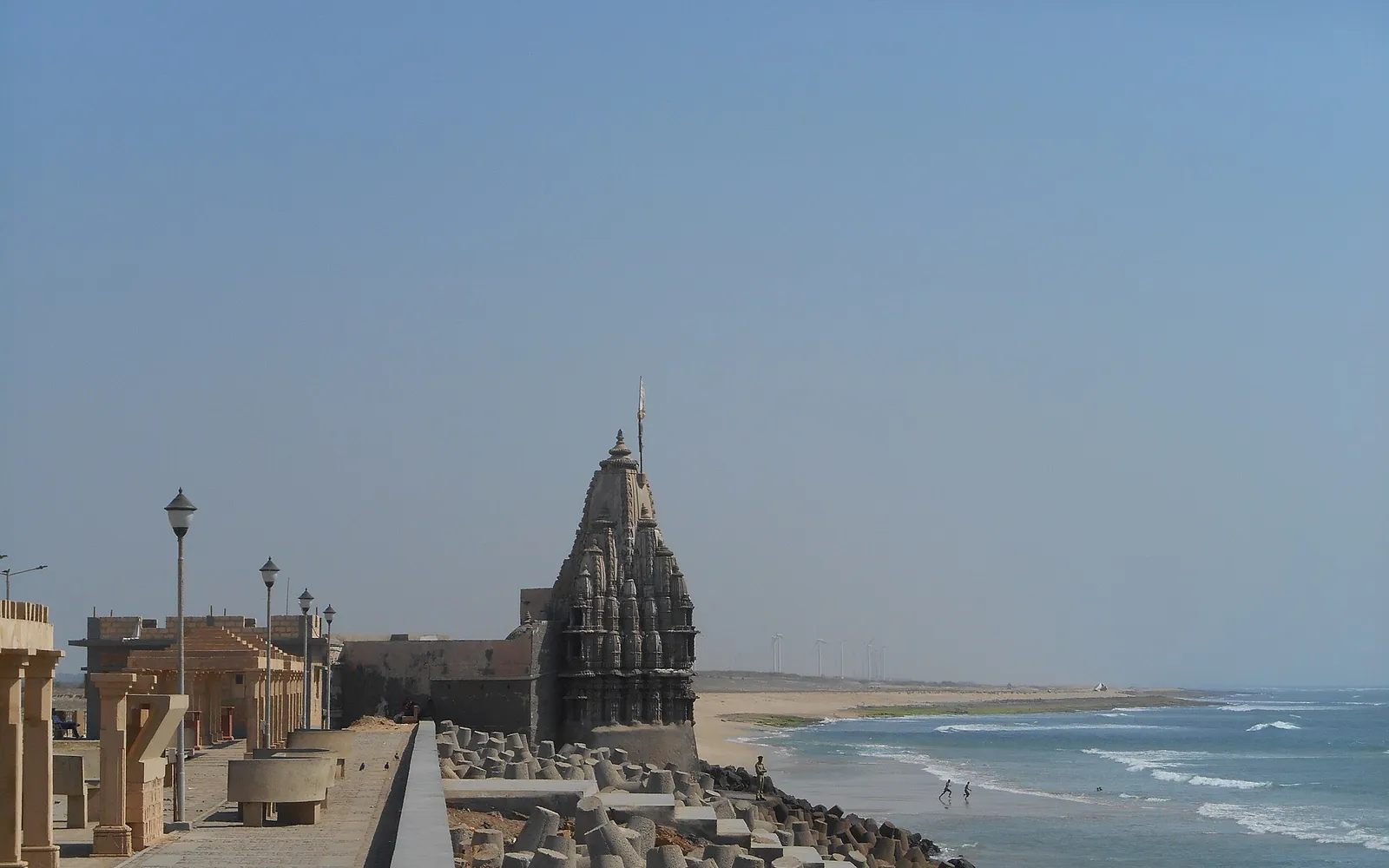
Where Exactly Is Shivrajpur Beach?
Shivrajpur Beach sits on the Arabian Sea coast of Saurashtra, approximately 12 km south of Dwarka town and 28 km north of Somnath (via Veraval). It lies on the NH947 corridor that connects Somnath and Dwarka along the western coast of Gujarat. Administratively it falls in Devbhoomi Dwarka district, the same district as Dwarka city.
The beach is a long, clean stretch of white sand framed by calm, clear water. Unlike the beaches immediately around Somnath or Dwarka, which are adjacent to busy pilgrimage infrastructure, Shivrajpur's coastline has a more open, spacious feel. The sand is finer, the water is clearer (which is part of the reason it earned the Blue Flag certification), and the crowd levels are significantly lower than at the major pilgrimage ghats.
The town of Shivrajpur itself is a small coastal village. The beach has been developed with basic facilities as part of the Blue Flag programme, clean toilets, waste management, lifeguards, signage, and designated activity zones. The contrast with the uncertified, often plastic-strewn beaches found along much of the Gujarat coast is immediately apparent. Pilgrims and families visiting from Dwarka or Somnath often remark that Shivrajpur is the cleanest beach they have encountered in Gujarat.
The Road from Somnath to Shivrajpur via Veraval
The 28 km from Somnath to Shivrajpur Beach runs along the coast through Veraval. Veraval is one of India's largest fishing ports and the road through it carries a distinctive atmosphere, the smell of the sea, fish drying racks along the roadside, hundreds of fishing boats in the harbour, and the general industriousness of a working port town. Most pilgrims pass through quickly, but Veraval harbour is worth a 10-minute pause if you have never seen a large-scale fishing operation up close.
From Veraval, the road north to Shivrajpur and Dwarka follows the coast closely. This stretch north of Veraval is one of the more scenic sections of the Saurashtra coastal highway, the road hugs the cliff edge in places, and the Arabian Sea is intermittently visible. There are several small fishing hamlets along this stretch and the scenery is distinctly different from the flat, inland character of the Ahmedabad-Dwarka route.
For visitors traveling from Somnath to Dwarka, Shivrajpur Beach is a natural stopping point on the way. It lies directly on the highway and requires only a short turnoff. The convenience makes it one of the most visited beaches in the region despite its distance from the main pilgrimage centers. Many pilgrims who have completed Somnath darshan and are heading north to Dwarka stop here for a 30-60 minute break, a walk on the beach, and a brief swim before continuing their journey.
What Makes Shivrajpur a Blue Flag Beach?
The Blue Flag certification, awarded by the Denmark-based Foundation for Environmental Education (FEE), is one of the world's most recognised voluntary eco-labels for beaches, marinas, and sustainable boating tourism operators. It is not a government designation but an international certification that Indian beaches must apply for and maintain against rigorous annual assessment criteria.
To earn and retain Blue Flag status, a beach must meet 33 criteria across four categories: environmental education and information, water quality, environmental management, and safety and services. For Shivrajpur, this means regular water quality testing that meets EC bathing water directives, the presence of trained lifeguards, proper waste management including separate bins and no dumping, information boards about the marine environment, disabled access, first-aid equipment, and prohibition of motorised vehicles on the beach.
Shivrajpur is currently the only beach in Gujarat, and one of a small number in India, to hold this certification. The significance for pilgrims is practical as much as symbolic: you can swim here with greater confidence in water cleanliness, use clean facilities without discomfort, and enjoy a beach environment that is actively maintained rather than neglected. For the many pilgrims who have been doing a dusty, long yatra through Saurashtra's interior, the chance to swim in certified clean water at Shivrajpur is a genuine refreshment before or after darshan at Dwarka.
Visiting Shivrajpur: Practical Information
The best time to visit Shivrajpur Beach is between October and March when the weather is pleasant, the sea is calm, and visibility in the water is at its best. The beach is less crowded on weekdays and early mornings. Weekends, particularly from November to February, see larger crowds from Dwarka and Jamnagar. Sunrise at Shivrajpur, the sea facing west toward the setting sun at the end of the day, or east toward the land for sunrise, is beautiful in the crisp winter months.
For food and accommodation, Shivrajpur village has a few small eateries but no significant hotel infrastructure. All accommodation is in Dwarka (12 km). From Dwarka, day trips to Shivrajpur are easily organised, auto-rickshaws from the Dwarka bus stand charge ₹150-250 for the vehicle round trip. Taxis charge ₹300-400. Many pilgrims combine a morning Dwarkadhish darshan with an afternoon Shivrajpur beach visit before returning to Dwarka for the evening aarti.
Somnath Attractions Nearby Before Heading to Shivrajpur
If you are departing from Somnath toward Shivrajpur, a few important Somnath-area sites are worth including in the morning before making the drive. Bhalka Tirth, just 3-4 km from Somnath temple, is where Lord Krishna is believed to have been struck by the hunter Jara's arrow, the event that preceded his departure from the earthly realm. This small, deeply atmospheric shrine takes only 20-30 minutes to visit and is theologically significant for all Dwarka pilgrims who are doing the complete Krishna circuit.
Triveni Ghat in Somnath, where the Hiran, Kapila, and Saraswati rivers are said to meet the sea, is another important stop for ritual bathing. The ghat is adjacent to the Somnath temple complex and easily combined with morning temple darshan. The Prabhas Patan Museum near Somnath preserves archaeological finds from the ancient Somnath area including sculptural fragments from earlier temple structures.
After covering these Somnath sites in the morning, departing for Shivrajpur Beach around 11 AM puts you there for a midday swim and lunch before continuing north to Dwarka for the afternoon. This sequence, Somnath darshan and local sites in the morning, Shivrajpur midday, Dwarka arrival and evening darshan, is a popular two-city day plan for pilgrims with their own hired vehicle.
Frequently Asked Questions
Also Read
Nageshwar to Shivrajpur Beach
Nageshwar Jyotirlinga to Shivrajpur Beach is 20 km, 25-30 minutes by road.
Read Full GuideGir to Shivrajpur Beach
Gir National Park to Shivrajpur Beach Dwarka is 195 km, about 3.5 hours via Talala, Junagadh and Veraval.
Read Full GuideDwarka to Somnath Guide
Full guide to traveling between Dwarka and Somnath, distances, road routes, transport options, and how to plan the complete Saurashtra Jyotirlinga circuit.
Read MoreNearby Attractions from Dwarka
Shivrajpur Beach, Madhavpur, Porbandar, and other day trips from Dwarka, distances, what to see, and how to plan them around your temple schedule.
Read MoreBest Time to Visit Dwarka
Month-by-month guide to weather, crowd levels, festivals, and sea conditions at Dwarka, including advice on the best season for beach visits at Shivrajpur.
Read More