Bhadkeshwar Mahadev Aarti Time: The Temple the Sea Claims Twice a Day
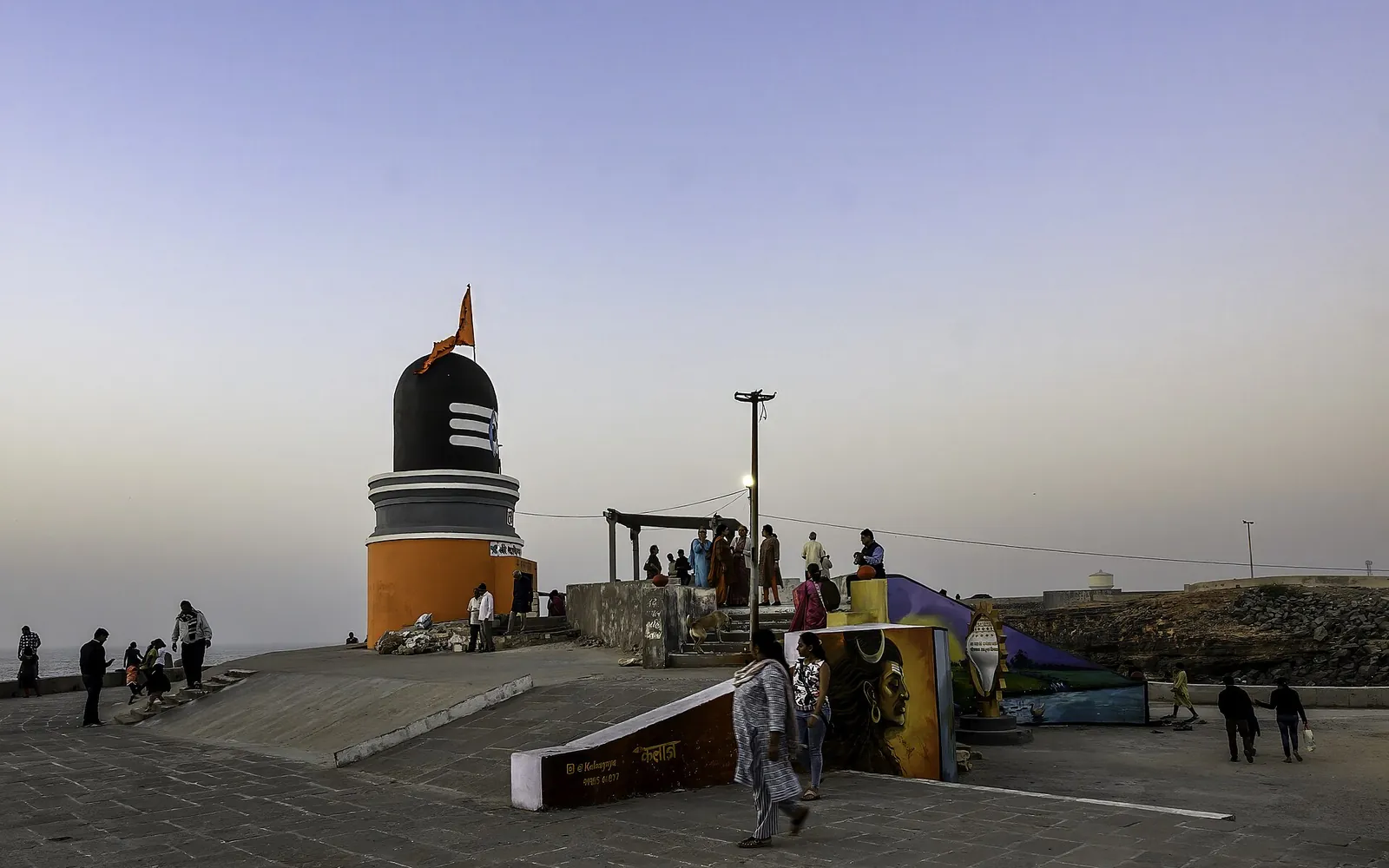
Bhadkeshwar Mahadev is technically open 24 hours, but it is only physically accessible at low tide. The temple sits on a rocky outcrop in the Arabian Sea, connected to the shore by a narrow causeway that floods completely twice a day. Morning and evening aartis are performed when the causeway is clear. Check the tide table before you go.
Understanding Tidal Access: The One Rule That Governs This Temple
No other temple in Dwarka requires you to consult a tide chart before visiting. Bhadkeshwar Mahadev is different, it is a Shiva temple on a tidal rock, and the Arabian Sea does not negotiate with your schedule. The causeway that connects the shore to the temple rock is submerged under roughly a metre of seawater at high tide. When the sea reclaims it, no one goes in or out, regardless of what time your aarti was supposed to be.
Dwarka experiences semi-diurnal tides, two high tides and two low tides roughly every 24 hours. The gap between low tide and the subsequent high tide is typically 5-6 hours. During this window, the causeway is exposed and the temple is accessible. The tide cycle shifts by approximately 45-50 minutes each day, which means the low tide that falls at 7 AM today will fall at roughly 7:45-8 AM tomorrow, and so on. Over a week, the low tide window moves significantly.
The practical consequence: you cannot simply plan to visit Bhadkeshwar at 7 AM every morning and assume you will have access. Some mornings the causeway will be flooded at 7 AM. Some evenings the sunset aarti will not happen because the sea is in. Your visit plan must be built around the tide table, not around a fixed clock time. This is not a problem, it is a feature of the place. The unpredictability is part of what makes Bhadkeshwar remarkable.
When Aarti Happens: Morning and Evening Rituals
A resident priest maintains Bhadkeshwar Mahadev and performs aarti twice a day whenever tide conditions permit. The morning aarti typically happens around 6:00-7:00 AM if the causeway is accessible at that hour. The evening aarti is timed to coincide with sunset, generally 6:00-7:00 PM depending on the season. Both aartis follow the standard Shiva aarti format: the Shivalingam is bathed with water and milk, bel leaves are offered, and the deepa (lamp) is waved before the deity to the chanting of Shiva mantras.
During the morning aarti, the sea is calm and the temple rock glows golden in the early light. The sound of waves combined with the ringing of the aarti bell creates a sensory environment unlike anything inside a conventional temple building. The priest is usually alone or with one or two devotees at this hour. It is intimate to a degree that the Dwarkadhish aartis, with their hundreds of participants, simply cannot be.
The evening aarti, when it aligns with low tide, is even more atmospheric. The sun sets over the Arabian Sea directly from the vantage point of the temple rock. The sky changes from gold to orange to deep red as the lamp is waved. Pilgrims who have timed their visit to catch the Bhadkeshwar sunset aarti consistently describe it as the most visually powerful moment of their entire Dwarka trip. The combination of sea, sky, fire, and Shiva is not something that can be scheduled, it has to be earned by checking the tide table and showing up at the right moment.
How to Check Tide Timings for Bhadkeshwar
The simplest method. Google's Knowledge Panel often shows the day's tide chart directly in the search results for coastal locations. Search for "Dwarka high tide low tide" with today's date.
These websites provide hourly tide height charts for Dwarka and nearby ports. Set the location to Dwarka, Gujarat and read the chart for your visit date. Low tide windows are the safe access periods.
Dwarka locals, especially those who work near the waterfront, know the day's tides by habit. Your hotel reception desk almost certainly knows whether the causeway is open in the morning or evening on any given day.
The IMD publishes official tide predictions for Indian ports. Search for "IMD tide tables Okha", Okha is the nearest major port to Dwarka and its tide times are essentially identical to Bhadkeshwar's.
If you are near Bhadkeshwar at any point during your Dwarka visit, look at the causeway. If it is exposed, note the time and plan your return visit approximately 12 hours later (the next low tide cycle) or stay for the current window.
Safety: What Not to Do at Bhadkeshwar
Every year, a small number of visitors misjudge the tide at Bhadkeshwar and find themselves stranded on the rock as the water rises. The sea here is not placid at high tide, it crashes against the rock and the approach is genuinely hazardous once the causeway begins flooding. The incident rate is not alarmingly high, but it is non-zero, and the risks are serious. The following rules are not advisory, they are the difference between a meaningful pilgrimage experience and an emergency.
Do not visit during or immediately after monsoon rains (June through September). In this period, the sea state is rough even at low tide, waves wash across the causeway unpredictably, and the temple may be officially restricted. Local authorities and the temple priest will tell you if the temple is not safe to approach. Listen to them.
Give yourself a 30-minute buffer before the predicted high tide. If the tide is predicted to turn at 6:30 PM, be back on the shore by 6:00 PM at the absolute latest. The water does not rise gradually in a linear way, the last 20 minutes of the incoming tide can fill the causeway very quickly. Many people who have been caught on the rock report that the speed of the final flooding surprised them despite knowing the tide was coming in.
Getting to Bhadkeshwar Mahadev from Dwarka
Bhadkeshwar is visible from Gomti Ghat, the rocky promontory in the sea with a small temple structure on it. Many pilgrims spot it from the ghat without realising it is accessible on foot. The temple can be combined with a Gomti Ghat visit, particularly in the evening if the tide permits. The walk from the ghat area to the Bhadkeshwar shore approach takes about 10 minutes.
Frequently Asked Questions
Also Read
Gwal Aarti Time
Dwarkadhish Gwal Aarti is at 8:30 AM daily, the quieter mid-morning darshan between Mangala and Rajbhog.
Read Full GuideSandhya Aarti Time
Dwarkadhish Sandhya Aarti is held around sunset, about 6 PM in winter and 7 PM in summer.
Read Full GuideShayan Aarti Time
Dwarkadhish Shayan Aarti is at 9:00 PM, the last, quietest darshan of the day.
Read Full GuideBhadkeshwar Mahadev Temple
The complete guide to Bhadkeshwar Mahadev, the legend, the tidal rock, how to time your visit, and what to expect on the causeway walk.
Read MoreGomti Ghat Aarti Timings
Gomti Ghat aarti happens twice daily. Bhadkeshwar is visible from the ghat, combine both in an evening visit when the tide cooperates.
Read MoreBest Time to Visit Dwarka
October to February is peak season. Monsoon months affect Bhadkeshwar access significantly. Plan around both the calendar and the tides.
Read More