Dwarkadhish Shayan Aarti at 9 PM: The Aarti Day-Trippers Never See
Shayan Aarti at Dwarkadhish Temple is at 9:00 PM every night, the last ritual of the day, when Lord Dwarkadhish is ceremonially put to rest and the sanctum is sealed until Mangala Aarti the next morning. Because it falls well after most day-tour buses have already left Dwarka, it is by far the quietest, least crowded aarti of the entire schedule, an experience reserved almost entirely for pilgrims who stay in Dwarka overnight.
All Nine Dwarkadhish Aartis in Order
| Aarti | Time | Significance |
|---|---|---|
| Dhwaja Ceremony | 5:00 AM | Sacred flag raised on the temple spire |
| Mangala Aarti | 6:00 AM | Lord awakened, first darshan of the day |
| Shringar Aarti | 7:00 AM | Lord dressed in morning attire |
| Gwal Aarti | 8:30 AM | Lord departs for grazing (symbolic) |
| Rajbhog Aarti | 12:00 PM | Noon meal offering, finest shringar |
| Temple Closes | 1:00 PM | Lord rests, vishram period begins |
| Uthapan Aarti | 5:00 PM | Lord awakened from afternoon rest |
| Sandhya Aarti | Sunset (~6-7 PM) | Evening lamp ceremony |
| Shayan Aarti | 9:00 PM | Lord put to rest, final aarti of the day |
| Dhwaja Lowered | Sunset | Sacred flag lowered at day's end |
What Happens During Shayan Aarti: Putting the Lord to Rest
"Shayan" is the Sanskrit-derived word for sleep, and the aarti at 9 PM is exactly that in ritual form, the closing of the Lord's day. By this hour, Lord Dwarkadhish has already been woken at dawn (Mangala), dressed twice (Shringar and Rajbhog), fed his midday royal meal, rested through the afternoon, woken again (Uthapan), and honoured with the evening lamp offering at sunset (Sandhya). Shayan Aarti is the ninth and final act in that daily cycle, and it is deliberately understated compared to everything that came before it.
The ceremony itself is brief, usually 10 to 15 minutes. The priests perform a short deepa aarti, a single round of lamps waved before the sanctum, accompanied by a soft closing chant rather than the loud conch-and-cymbal sequence heard at Mangala or Sandhya. In many temples following this Ashtayama tradition, the ornate daytime shringar is either simplified for the night or a curtain is drawn across the fully decorated form, so that the Lord is symbolically retired from public view rather than undressed in front of devotees. The sanctum lights are dimmed rather than switched off, in keeping with the idea that the Lord is resting, not absent.
Once the aarti concludes, the priests close the inner doors and the temple shuts for the night, generally between 9:15 PM and 9:30 PM. There is no further darshan until the Dhwaja ceremony and Mangala Aarti resume the cycle the following morning at 5 AM and 6 AM. In this sense, Shayan Aarti is not simply "the last one on the list", it is the ritual full stop on the entire Ashtayama Seva, the moment that gives the whole day's sequence its shape.
Why It's the Quietest Darshan, and Who Actually Attends
Dwarka functions as both a pilgrimage town and a day-trip destination, and the two kinds of visitors keep very different clocks. The majority of tour buses and taxi groups arriving from Jamnagar, Rajkot, or Ahmedabad build their itinerary around the Rajbhog Aarti at noon and the Sandhya Aarti at sunset, then head back out of town for dinner and an overnight stay elsewhere, or drive on toward Somnath or Bet Dwarka the same evening. By 8 or 8:30 PM, a large share of the day's footfall has already left Dwarka entirely.
What remains for the 9 PM Shayan Aarti is a much smaller, self-selected group: pilgrims who have booked a room in Dwarka for the night, families doing a slower multi-day circuit of the Char Dham and Dwarka's other temples, and a handful of regulars and local devotees for whom the closing aarti is part of a daily routine rather than a one-time event. The queue outside the temple at 8:45 PM is typically a fraction of what it is at noon or at sunset, sometimes short enough that there is no real wait at all.
This changes the character of the darshan itself. Instead of the press of hundreds of people straining for a glimpse during Rajbhog or the open-air crowd at Gomti Ghat during Sandhya, Shayan Aarti offers something closer to a private audience: a near-empty courtyard, a dimly lit sanctum, a short chant, and a clear, unhurried view of the Lord in the last moments before the doors close. Pilgrims who have attended both describe Shayan as the aarti that feels most personal, precisely because so few people are there to share it.
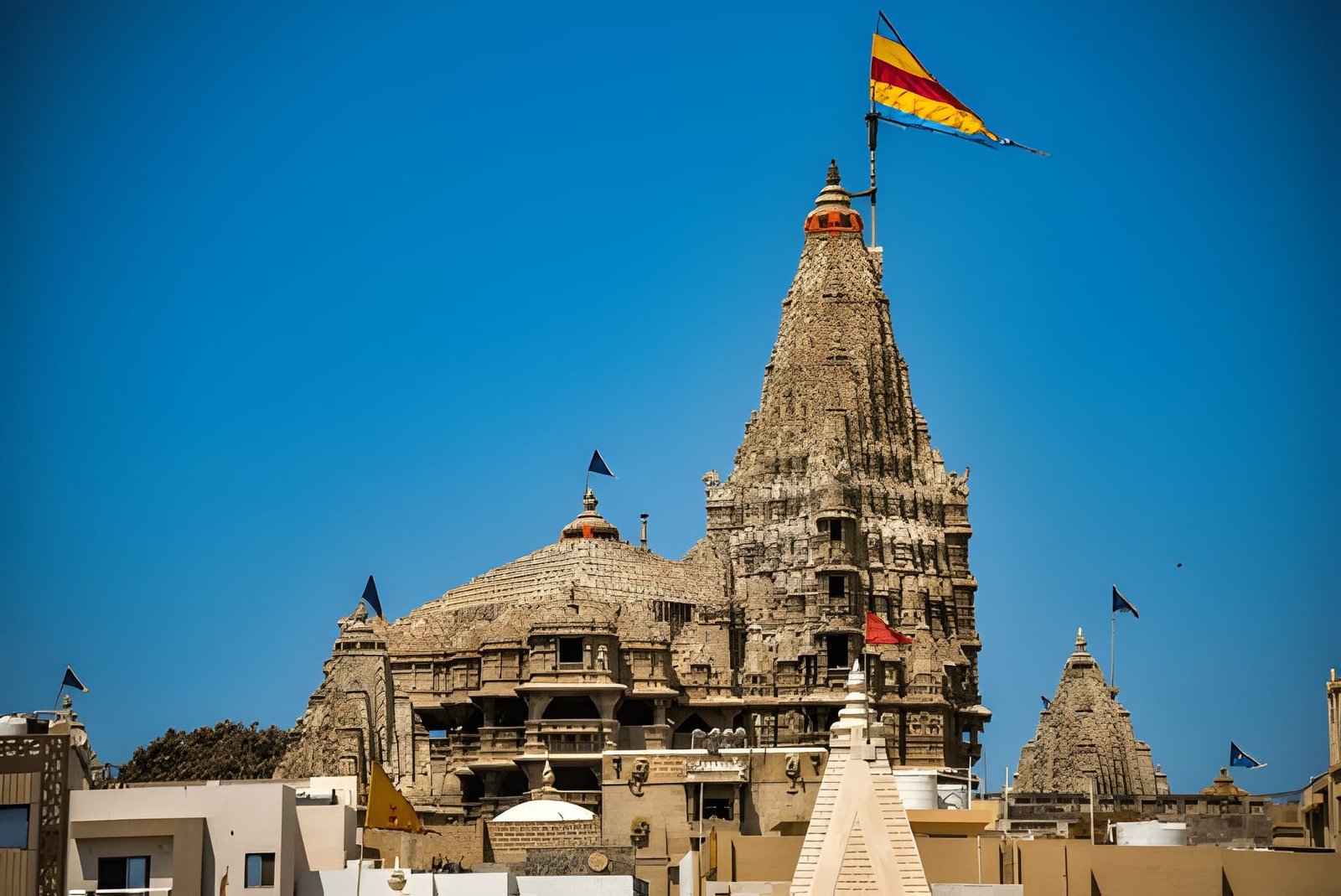
Planning an Overnight Stay in Dwarka Around Shayan Aarti
Seeing Shayan Aarti is, in practice, a decision about where you sleep rather than a decision about queueing strategy. Day-trippers arriving from Jamnagar or the Somnath–Dwarka highway rarely have a 9 PM aarti in their plan at all, because it requires either staying the night in Dwarka or leaving town well after dark. If the closing aarti matters to you, book a hotel or dharamshala in Dwarka itself for at least one night, and treat the evening block, Uthapan at 5 PM, Sandhya at sunset, dinner, then Shayan at 9 PM, as a single, unhurried sequence rather than something to rush through before catching a bus.
Arrival timing is simple: reach the temple by 8:45 PM. Because the crowd thins out sharply after sunset, 15 minutes is generally enough to clear the security check, deposit footwear and any electronics at the lockers near the entrance (₹20-40), and take a position in the courtyard before the aarti begins. This is a marked contrast to the hour or more of buffer that is sensible for Rajbhog or Sandhya.
Dwarkadhish Temple does not run a paid VIP or priority-queue scheme at any hour, including Shayan Aarti, so there is no separate ticket to buy for faster access, every pilgrim uses the same single general queue. In practice this matters little at 9 PM: with the general queue already thin, arriving by 8:45 PM is enough to walk through to the sanctum without a meaningful wait. Be wary of anyone near the temple or online offering a paid "VIP darshan pass", they have no connection to the Dwarkadhish Temple Trust, and pilgrims should not pay them. After Shayan Aarti concludes and the temple closes for the night, the Trust's prasad counters and the Bhojnalaya canteen also wind down for the day, so plan dinner before the aarti rather than after it.
Frequently Asked Questions
Also Read
Dwarkadhish Temple Timings
The complete Dwarkadhish schedule, all nine daily aartis from Mangala at 6 AM to Shayan at 9 PM, the Dhwaja ceremony, and the temple's closing pattern.
See Full Aarti ScheduleDwarkadhish Sandhya Aarti Time
The sunset lamp ceremony at Gomti Ghat and inside the sanctum, the most spectacular and most crowded aarti of the day, and the natural lead-in to Shayan.
Read Sandhya Aarti GuideDwarkadhish Rajbhog Aarti Time
The noon aarti when the Lord is dressed in his finest shringar, the busiest darshan window of the day, and a useful contrast to the quiet of Shayan.
Read Rajbhog Aarti Guide