How Old Is Dwarkadhish Temple? 2,500 Years of Tradition, 500 Years of This Building
The current Dwarkadhish Temple structure dates from the 15th–16th century CE. The tradition of a temple on this site, however, goes back over 2,500 years to Vajranabha, grandson of Lord Krishna.
How old is Dwarkadhish Temple?
The current structure dates from the 15th–16th century CE. Tradition holds the original temple was built by Krishna's grandson Vajranabha over 2,500 years ago.
Useful References
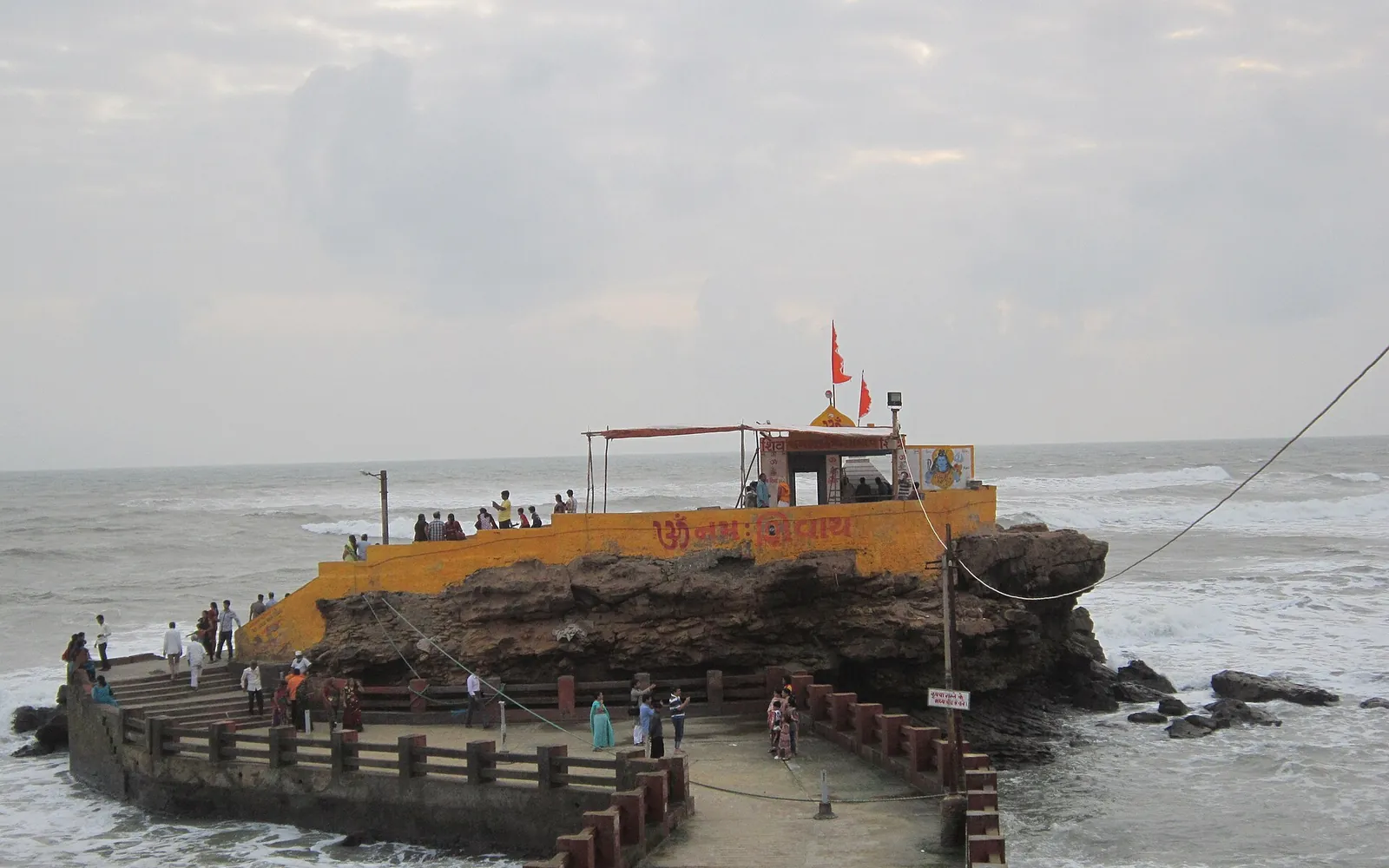
The Two Timelines of Dwarkadhish Temple
When pilgrims and visitors ask how old Dwarkadhish Temple is, they are actually asking two overlapping questions. The first is about the physical building, the stone structure, the shikhara, the mandapas, the carved pillars that you can see and touch today. The second is about the sacred tradition, the continuous worship of Dwarkadhish (Lord Krishna as the king of Dwarka) that has taken place on this spot, in various forms, across millennia.
On the first count, the physical building, the current structure dates primarily from the 15th to 16th century CE. Inscriptions found at the temple site and scholarly analysis of the stonework and architectural style place the main construction phase in this period. The five-storey shikhara, the most recognizable feature, is generally assigned to this era. Some elements may be older, possibly from the 12th century CE, when temple building was also active in Gujarat under Solanki (Chalukya) patronage.
On the second count, the sacred tradition, Hindu scriptural tradition places the founding of the first temple by Vajranabha, the grandson of Krishna, after the Mahabharata period. If one accepts the traditional dating of the Mahabharata to around 3100 BCE or more conservatively to around 500–1000 BCE, the tradition of worship here is ancient by any measure. Even at the conservative end, this represents a continuous pilgrimage tradition of well over two thousand years.
Vajranabha and the First Temple: What Tradition Says
According to Hindu scriptural accounts, after Lord Krishna's death (which traditional accounts place at the end of the Dvapara Yuga), the sea rose and submerged the golden city of Dwarka as Krishna had foretold. His remaining devotees and descendants fled to the mainland. Among them was Vajranabha, Krishna's grandson through Aniruddha. It is Vajranabha who is credited with establishing the first shrine at what had been the innermost sanctum of Krishna's original palace, the one spot of sacred ground that, in tradition, was not submerged.
Vajranabha is said to have installed the original idol of Dwarkadhish and consecrated the site for public worship. This act of establishing the temple is understood in the tradition not as building a new religious structure but as marking and preserving the original site of Krishna's presence. Adi Shankaracharya, the 8th-century philosopher-reformer, is said to have visited this temple during his pan-India travels and included Dwarka in the Char Dham circuit he established for Hindu pilgrimage. His visit and endorsement would suggest the temple was an established sacred site well before the 8th century CE.
What happened to the temple between Vajranabha's founding and the medieval period is difficult to reconstruct from historical documents alone. The Puranas mention the site repeatedly, and various royal inscriptions refer to donations and renovations made to the Dwarkadhish shrine at different points. But the continuous thread of worship is attested, the tradition was never interrupted, even if the physical structure changed many times.
The Current Building: Architecture of the 15th–16th Century
The Dwarkadhish Temple as it stands today is a five-storey structure built in the Nagara style of North Indian temple architecture, with specific influences of the western Chalukya (Solanki) tradition that flourished in Gujarat between the 10th and 13th centuries CE. The main temple is called Jagat Mandir, the Temple of the World. It consists of a sanctum (garbhagriha), a vestibule (antarala), an assembly hall (mandapa), and a porch, all enclosed within a towered structure.
The shikhara, the tapering tower above the sanctum, rises 43 metres (approximately 141 feet) above the ground level. It is visible from a considerable distance across the flat coastal terrain of Dwarka and from approaching boats on the Arabian Sea. At the top of the shikhara flies the temple's famous flag (dhwaja), measuring 52 yards in length, which is changed twice daily, at sunrise and sunset. The flag carries the symbols of the sun and moon, indicating that this divine residence will exist as long as these celestial bodies endure.
The assembly hall is supported by 72 intricately carved pillars. The carvings throughout the temple include figures of gods, dancers, musicians, animals, and geometric patterns consistent with the Chalukya aesthetic. The two main entrances, Swarga Dwar (Gate of Heaven, to the north) and Moksha Dwar (Gate of Liberation, to the south), are themselves architectural features of note, with carved frames and steps leading down to the Gomti Ghat level.
Destructions and Rebuildings: A Temple That Has Survived
Dwarkadhish Temple, like many of India's great sacred sites, has not had an uninterrupted history. Historical sources record attacks on Dwarka during the medieval period. Mahmud Ghazni's raids in the early 11th century affected much of western India, and later rulers also targeted the prosperous coastal city. The original temple structures were likely damaged or destroyed multiple times, with each subsequent rebuilding recovering as much of the earlier form as possible.
The 15th–16th century reconstruction that produced the current building appears to have been particularly thorough and well-funded. Gujarat at this time was under the Sultanate of Gujarat, but Hindu temples continued to receive patronage from wealthy merchants, local rulers, and religious trusts. The Vaishnava religious revival associated with figures like Vallabhacharya (who visited Dwarka) brought renewed donations and attention to the Dwarkadhish shrine. This is the most likely context in which the current grand five-storey structure was built or substantially rebuilt.
Since the 16th century, the temple has undergone periodic restoration and maintenance work but no wholesale rebuilding. The Archaeological Survey of India (ASI) and the Dwarka temple trust have both been involved in conservation efforts, particularly in stabilizing the structure against coastal erosion and the effects of salt air on the stone. The temple's age makes it a protected monument as well as a living place of worship.
Frequently Asked Questions
Also Read
Locker Facility
Dwarkadhish Temple lockers are at both gates, Swarga Dwar and Moksha Dwar.
Read Full GuideDwarkadhish Temple
Full guide to Jagat Mandir, the main shrine, the idol, the aarti timings, avoiding queues and everything to know before visiting.
Read MoreDwarka History
From Krishna's golden city to the underwater archaeological discoveries, the full documented history of Dwarka across millennia.
Read MoreWhy Dwarka Is Char Dham
Adi Shankaracharya's 8th-century designation of Dwarka as the western Char Dham, the story and its lasting religious importance.
Read More