Janmashtami 2026 at Dwarkadhish Temple: When Half a Million Pilgrims Arrive for One Night
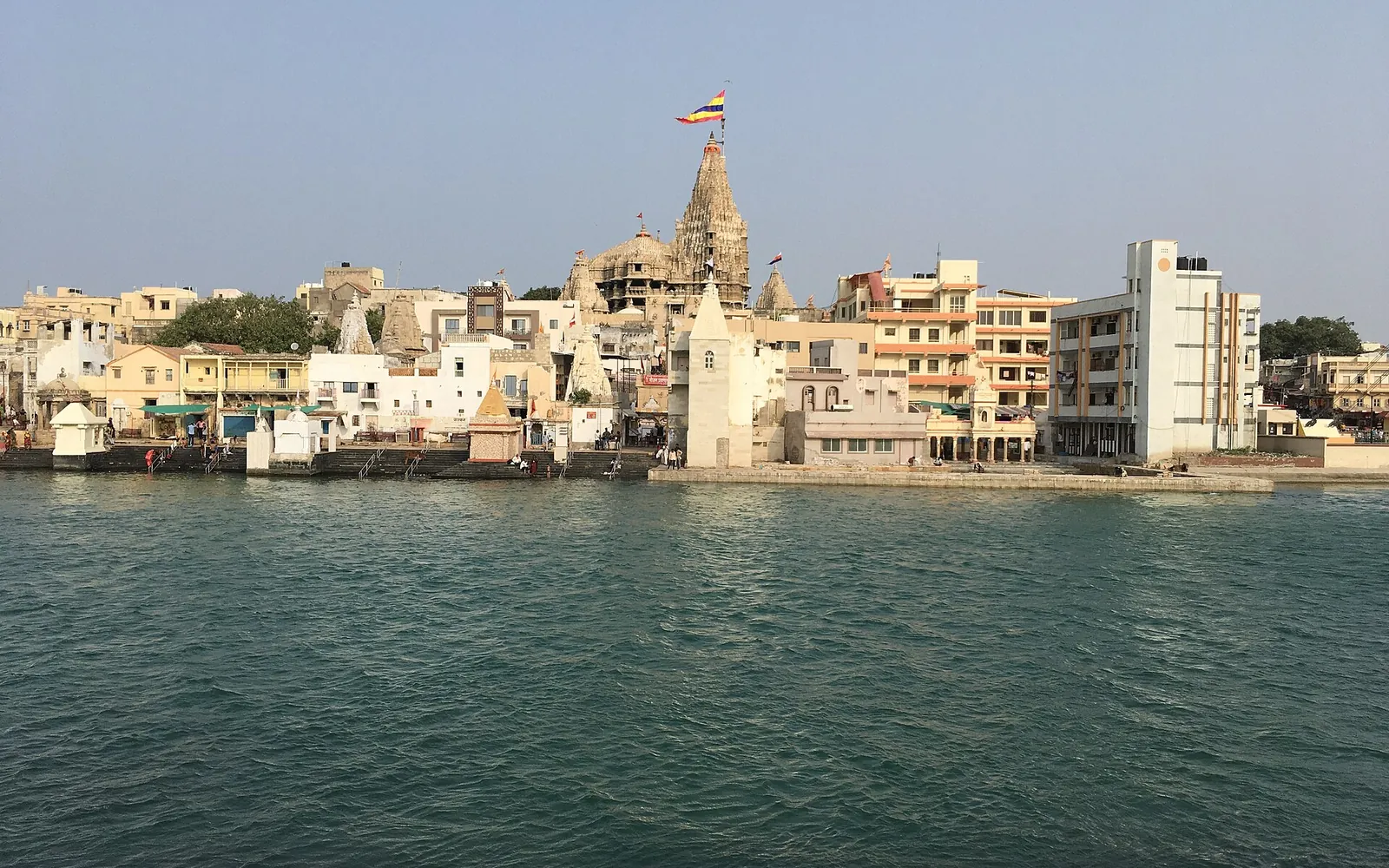
Janmashtami 2026 falls on Friday 4 September, the Ashtami of Bhadrapada Krishna Paksha, the night Lord Krishna was born. Vaishnava households, including many in Gujarat, observe it the next day, Saturday 5 September, so Dwarka is full across both. At Dwarkadhish Temple in Dwarka, this is not just a festival. It is a homecoming. Krishna ruled this city for over a century. When half a million pilgrims gather here for the midnight Janm ceremony, they are gathering in his own capital, in the temple that has stood at the heart of his kingdom across centuries of destruction and reconstruction. Nothing else in India is quite like it.
What Is Janmashtami and Why Is the Dwarka Celebration Extraordinary
Janmashtami celebrates the birth of Lord Krishna, the Ashtami (eighth day) of the Krishna Paksha (dark fortnight) of the month of Bhadrapada in the Hindu calendar. In 2026 this falls on Friday 4 September, with the Vaishnava observance on Saturday 5 September. The festival is observed across all of India, in every city, town, and village where Krishna has a temple or a following.
But Dwarka's Janmashtami exists in a category entirely apart. Dwarka is the city Krishna himself founded and ruled for more than a hundred years. After leaving Mathura as a young man, he built an entirely new city, Dwarka, on the western edge of India, rising from the sea. He governed from here, maintained his court here, and the Char Dham pilgrimage site that stands here today is built on that sacred ground. When you celebrate Krishna's birth in Dwarka, you are celebrating it in his own home, in the city he constructed, in a tradition that the priests of this temple have maintained continuously across a history that includes multiple invasions, temple destructions, and restorations.
Over 5 lakh pilgrims, half a million people, descend on a city of 40,000 in the three days surrounding Janmashtami. The scale of this influx reshapes every aspect of life in Dwarka during that period. Roads approaching the city gridlock. Every accommodation option within 50 km fills up months in advance. The narrow lanes around the temple become a continuous human river. And yet, every pilgrim who has attended describes the experience as one of the most powerful of their life. The sheer mass of devotion concentrated in one small peninsula, focused on a single moment at midnight, creates something that transcends the logistics.
The 3-Day Celebration: Day-by-Day Schedule
Janmashtami at Dwarkadhish is a three-day event. Understanding all three days helps you decide whether to come for the full experience or plan around a specific moment.
Hundreds of volunteers begin preparations from early morning, deep cleaning of the sanctum, ordering and arranging rare flowers, final coordination of the 56-bhog (56 food offerings) preparations. The temple receives elaborate decoration. Evening programs of bhajans and kirtans begin. Pilgrims who have arrived a day early use this day for a relatively calmer darshan before Ashtami crowds peak. The queue on Saptami is long but manageable, usually 1-2 hours compared to 4-8 hours on Ashtami. Arriving on Saptami, taking darshan that evening, then positioning yourself for the main Ashtami night is the strategy most experienced pilgrims follow.
The main day begins before dawn. Special Shringar darshan opens from approximately 5 AM, the Lord is dressed in Janmashtami garments commissioned months in advance, often woven in Surat or Varanasi with gold and silver thread, adorned with jewelry from the temple treasury. This early morning window (4:30-6 AM) is the best time to see the most elaborate decoration with a flowing queue. By 6 AM, the temple is packed. Bhajans and kirtans run continuous through the day. All regular aartis happen but in extended, more elaborate form. The afternoon closure that normally falls at 1 PM does not apply, the temple stays open through the day as Janmashtami preparations unfold. The elaborate 56-bhog (56 food offerings) is prepared and offered. Evening arrives and the crowd pressure reaches its maximum. As midnight approaches, the emotional intensity in the temple rises steadily. At exactly 12:00 AM, conch shells sound from inside the sanctum, bells begin ringing in waves, and the Janm ceremony begins, flowers are showered, the Lord's image is revealed in a special cradle arrangement, Panchamrit Abhishek is performed, and the birth aarti is offered. The cry of "Jai Shri Krishna" from 5 lakh throats at that moment is something devotees carry for the rest of their lives.
Nanda Mahotsav celebrates the joy of Nanda Baba, Krishna's foster father, on learning of the birth. The energy shifts from the reverent intensity of midnight to something festive and warm. The morning aarti is extended and celebratory. Special prasad, Panjiri (wheat flour and ghee sweet) and portions of the Panchamrit from the midnight Abhishek, is distributed to all pilgrims present. Some pilgrims who came specifically for the midnight ceremony have already left, making the crowd on Navami morning slightly less compressed than Ashtami night. If you find the midnight crowd overwhelming but want to experience the Janmashtami decoration at its peak and the joyful post-birth atmosphere, Navami morning darshan is an excellent option. The decoration is still fully intact, the prasad is special, and the queue moves more freely.
What to Expect Inside the Temple on Janmashtami Night
The darshan queue on Ashtami night can run between 4 and 8 hours from the moment you join. There is no shortcut, and there is no official VIP or paid priority queue at Dwarkadhish on Janmashtami or any other day, every pilgrim joins the same single general queue. Be wary of touts, agents, or unofficial websites near the temple or online offering a paid "VIP darshan pass" for Janmashtami, they have no connection to the temple trust and cannot get you in any faster. Plan to join the main queue no later than 8-9 PM to have a reasonable chance of being inside the sanctum at midnight.
The atmosphere in the queue is itself remarkable and is not an ordeal in the way a regular wait feels. The queue moves through lanes lined with pilgrims chanting, bhajan groups passing, incense burning at small stalls, and the constant sound of bells from inside the temple. Families who have travelled from hundreds of kilometres away stand together singing. The wait is devotional, not bureaucratic. Children are carried on shoulders. Elderly pilgrims are helped through the lanes. The crowd manages itself with a collective patience that is striking given its scale.
Once inside, the sanctum is compressed and the darshan moment is brief, a few seconds of direct view of the Lord at his most elaborately dressed, before the queue presses you forward. Those few seconds, at the end of an 8-hour wait, in the middle of a crowd of 5 lakh people, with conch shells sounding and flowers raining from above, is reported by almost every visitor as an unforgettable life experience. The emotion is real and immediate, many devotees weep, many stand frozen, many are too overcome to do anything but absorb the moment. After the midnight ceremony, the temple stays open through the night and darshan continues into the early Navami hours.
To be inside the temple at the midnight Janm moment, join the main darshan queue by 8-9 PM at the latest. Arriving at 11 PM or later risks being caught outside when the conch shells sound. The wait is part of the experience, arrive with that understanding and the queue does not feel like a hardship.
Accommodation: The Crisis and How to Handle It
Every hotel, dharamshala, and guesthouse within 50 km of Dwarka fills up 3-4 months before Janmashtami. This is not an exaggeration, properties that open their Janmashtami availability in April for August dates are fully booked by May. If you are planning to attend Janmashtami 2026, booking accommodation in April or May 2026 is strongly recommended. Waiting until June or July will leave you with limited and expensive options.
How to Reach Dwarka for Janmashtami 2026
Reaching Dwarka during Janmashtami requires planning well ahead of the festival, not just booking accommodation, but securing transport. Every mode of travel to Dwarka reaches capacity during Janmashtami week.
What to Carry for Janmashtami at Dwarkadhish
Packing correctly for Janmashtami at Dwarkadhish is as important as the travel itself. Large bags are not permitted inside the temple complex on festival days, security checks are thorough and bags above a certain size are turned away at the gate. Travel as light as possible.
Is It Worth It? What Pilgrims Say
The answer from those who have attended Janmashtami at Dwarkadhish is consistently, unequivocally yes. The crowd sounds daunting on paper, 5 lakh people in a town of 40,000, an 8-hour queue, no shortcut, August heat. In reality, the devotional atmosphere of the crowd transforms every element that sounds difficult from a distance.
The 8-hour queue is not like standing in a government office. It is a 8-hour immersion in continuous bhajan, shared anticipation, and the company of thousands of people who have travelled hundreds of kilometres for the same moment. Children sleep on parents' shoulders. Elderly pilgrims are passed water and helped forward. Complete strangers share snacks. The queue is not an obstacle to the experience, it is the beginning of it.
The midnight Janm moment itself is described by almost every attendee as the single most powerful devotional experience they have ever had. When the conch shells sound at midnight and the cry of "Jai Shri Krishna" rises from 5 lakh throats simultaneously, the effect is physical as much as emotional. You do not hear it from far, you are inside it, surrounded by it on all sides. Many pilgrims weep without knowing they are weeping. Many stand completely still, unable to move or speak. Many return every year. That cry of Jai Shri Krishna from half a million people in Krishna's own capital, at the moment of his birth, it is something you carry for the rest of your life.
Planning for Janmashtami 2026 should begin now: confirm the date from the Panchang, book trains 120 days in advance, book accommodation in Dwarka or within 50 km no later than April-May 2026, and plan to arrive at least 2 days before the main Ashtami night. The logistics are entirely manageable with advance preparation. The reward is an experience that most pilgrims describe as the highlight of their spiritual lives.
Frequently Asked Questions
Also Read
Bet Dwarka
Guide to Bet Dwarka island: ferry from Okha, the Sudarshan Setu bridge, seasonal temple timings, and what to see on the island where Krishna lived.
Read Full GuideJanmashtami in Dwarka
Full overview of the Janmashtami festival in Dwarka, history, all venues, and what makes this different from Mathura and Vrindavan celebrations across India.
Read MoreDwarkadhish Temple
Complete guide to Jagat Mandir, history, architecture, six daily aartis, darshan timings, dress code, and everything a first-time pilgrim needs to know.
Read MoreHow to Reach Dwarka
All transport options for reaching Dwarka, trains from Ahmedabad and Mumbai, buses, road routes, and the nearest airport with distances and travel times.
Read More