Madhavrai Temple Dwarka: The Quiet Krishna Temple Few Pilgrims Know
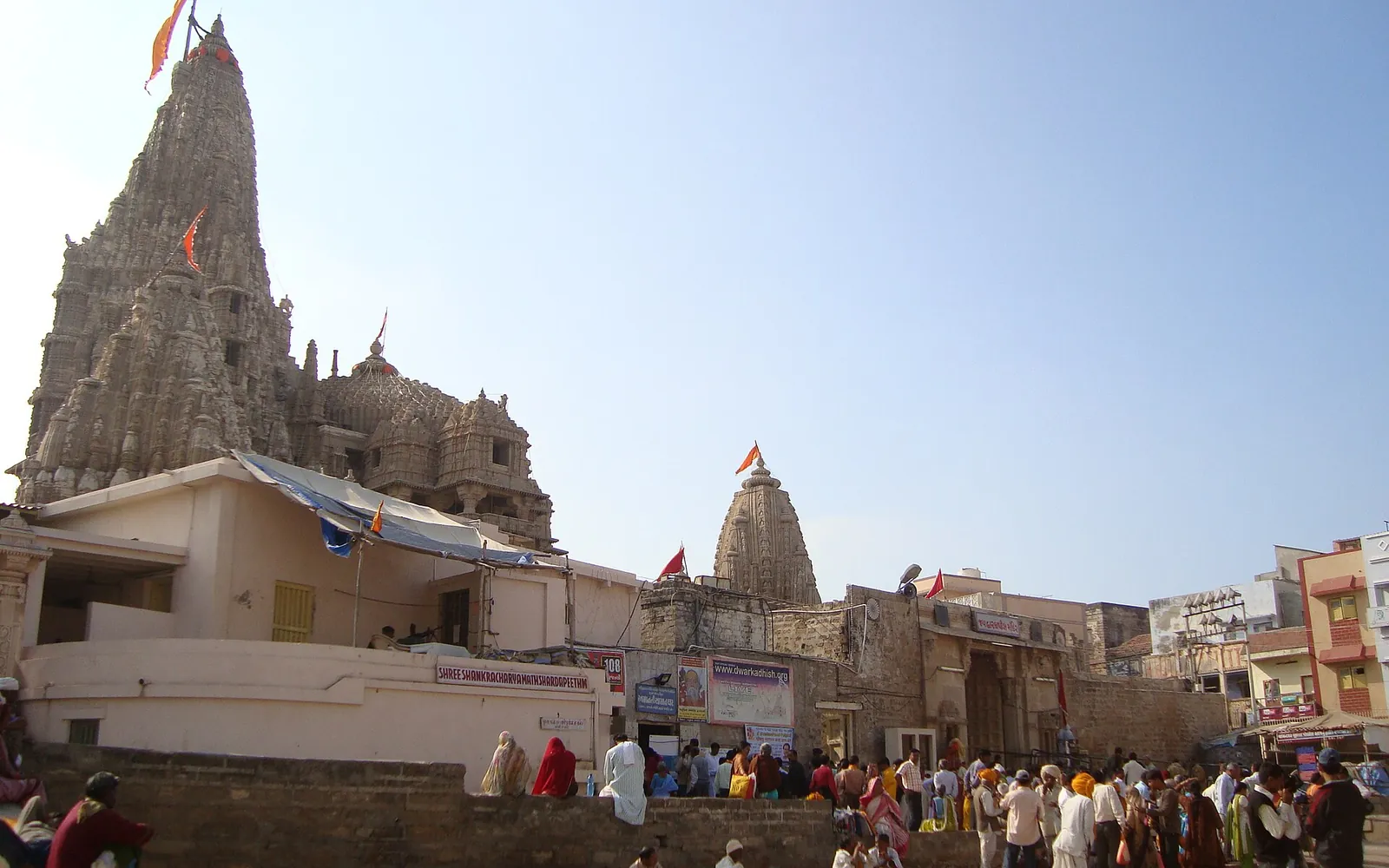
Madhavrai Temple in Dwarka is dedicated to Lord Madhava, one of the principal names of Krishna in his kingly aspect. Located in the older lanes near the main Dwarkadhish Temple complex, it opens at 8 AM and closes at 12 PM, then reopens 5 PM to 8:30 PM. It is rarely crowded. For pilgrims seeking the quieter, more contemplative side of Dwarka's sacred geography, away from the massive queues at Dwarkadhish, Madhavrai offers a darshan that is intimate, accessible, and theologically significant in its own right.
Useful References
Who Is Madhava: The Name and Its Meaning
Madhava is one of the Sahasranama (thousand names) of Lord Vishnu, and specifically one of the names most associated with Krishna in the Vaishnav tradition. The name has multiple etymological interpretations within Sanskrit scholarship. The most commonly cited derives Madhava from "Madhu", either the demon Madhu killed by Vishnu (making Madhava "the slayer of Madhu") or the spring season (Madhu being another name for spring, making Madhava "the Lord of springtime"). A third interpretation connects Madhava to "Ma" (Lakshmi) and "Dhava" (husband), "the husband of Lakshmi," which is a name for Vishnu in his complete cosmic form.
In the specific context of Dwarka, Madhava carries additional meaning. Krishna's lineage is traced through the Yadava clan and specifically the Madhu vamsha (the lineage of Madhu). As a descendant of this lineage, Krishna bears the name Madhava as a dynastic title, the Lord of the Madhava line. This is not merely an abstract theological point at Dwarkadhish; it is directly relevant to the geography of Dwarka itself. The city of Dwarka was the capital of the Yadava kingdom, and Krishna as Madhava was its king. When pilgrims take darshan at Madhavrai Temple, they are venerating Krishna in his specifically royal, dynastic aspect as the Lord and King of Dwarka, which complements the cosmic sovereign form worshipped at Dwarkadhish.
The name Madhavrai adds "Rai", which in Gujarati and northern Indian usage means "king" or "lord." Madhavrai therefore translates roughly as "Lord Madhava" or "King Madhava," a specifically regnal address that suits a temple in the very city where Krishna ruled. This naming pattern, suffixing "rai" or "raja" to a deity name, is common in Gujarat's temple tradition and reflects the region's understanding of the divine as simultaneously transcendent and politically immanent: God not only as cosmic creator but as actual king of an actual city.
The Temple: Architecture and Setting
Madhavrai Temple is a smaller temple by the standards of Dwarka's major shrines. It does not have the towering five-storey gopuram of Dwarkadhish or the large open courtyard of Rukmini Devi Temple. It is a compact, traditionally built Gujarat temple in the older lanes of Dwarka town, the kind of temple that has existed in this form for generations, maintained by the same families of priests across centuries, embedded in the residential fabric of the town rather than set apart on a ceremonial plaza.
The architecture follows the Nagara style typical of Gujarat's Vaishnav temples, a shikhara (tower) over the sanctum, a small mandapa (hall) for the gathering of devotees, and an inner sanctum (garbhagriha) housing the primary deity. The stone work and proportions are modest but well-maintained. The deity of Madhavrai inside, the vigraha (sacred image) of Lord Madhava, is dressed and decorated in the daily seva tradition, with fresh flower offerings at each session, incense, and the lamp aarti performed at opening and closing times.
What distinguishes the feel of Madhavrai Temple from the main Dwarkadhish complex is scale and intimacy. At Dwarkadhish, the devotee is one of hundreds or thousands of pilgrims moving through a large managed space. At Madhavrai, the ratio reverses, often only a handful of pilgrims are present at any given time, the priest has space to give individual attention, and the deity is visible clearly rather than glimpsed at distance through a moving crowd. For devotees who find the Dwarkadhish darshan emotionally overwhelming due to crowds, or who want a second, quieter darshan after the main temple visit, Madhavrai serves this purpose precisely.
Darshan Timings and What to Expect
Madhavrai Temple follows a straightforward two-session daily schedule. The morning session runs from 8 AM to 12 PM, the temple opens at 8 AM with the morning shringar aarti and remains open for darshan through the morning until the midday closure. The evening session runs from 5 PM to 8:30 PM, opening with the Uthapan (awakening) aarti and closing with the Shayan (retirement) aarti. This schedule aligns broadly with the Dwarkadhish pattern but on a smaller scale and with different specific times.
| Session | Open | Close | Key Moment |
|---|---|---|---|
| Morning | 8:00 AM | 12:00 PM | Morning shringar aarti at opening; best darshan 8-10 AM |
| Midday Closure | - | - | Temple closed 12 PM to 5 PM |
| Evening | 5:00 PM | 8:30 PM | Evening aarti at opening and closing |
On regular weekdays, there is essentially no queue at Madhavrai Temple. You walk in, complete the darshan at the garbhagriha, receive the priest's blessing (typically a tilak and a small offering of tulsi and flowers), and exit. The entire visit takes 10-20 minutes unless you choose to sit in the mandapa for bhajan or prayer. On festival days, particularly Janmashtami, when all Dwarka temples see elevated footfall, Madhavrai sees somewhat larger crowds, but even on peak festival days it remains far more manageable than Dwarkadhish.
The priests at Madhavrai are generally approachable and willing to speak with pilgrims who have genuine questions about the deity, the temple history, or the local tradition. This accessibility, which is largely impossible at the busy Dwarkadhish where the priests work at scale and pace, is one of the quiet gifts of visiting a smaller temple in the same sacred town. Pilgrims who want to understand Dwarka more deeply, beyond the mechanics of queuing and darshan, often find that conversations with priests at smaller temples like Madhavrai yield more insight than any formal guided tour of the main temple.
Madhavrai in the Context of Dwarka's Temple Circuit
Dwarka is not simply Dwarkadhish Temple plus a few supporting sites, it is a town that has accumulated sacred geography over more than a thousand years of continuous religious habitation. The town within and around the main temple complex has numerous smaller shrines, temples, and sacred spots that are not visible to pilgrims who arrive, queue for Dwarkadhish darshan, and depart the same day. Madhavrai Temple is one of the more significant of these secondary temples, but there are others, each with their own deity, their own tradition, and their own community of regular worshippers from among the Dwarka residents.
The traditional Dwarka padayatra (walking pilgrimage within the town) includes several points beyond Dwarkadhish. Gomti Ghat and its 56 kunds, the Dwarkadheesh gopuram approach from different directions, the Sudama Setu, and temples like Madhavrai form a walking circuit that resident pilgrims and serious devotees complete in a morning or a full day. This circuit is rarely done by one-day visitors who are focused on the main temple queue, but it is the way that Dwarka is designed to be experienced, as a sacred town to be walked and inhabited, not just a single temple to be visited and photographed.
Including Madhavrai in your Dwarka itinerary is simplest when you have two or more days in the town. On a single day visit, the priority is naturally Dwarkadhish darshan and perhaps one major excursion (Bet Dwarka or Nageshwar). But on a second day, or for pilgrims who have completed Dwarkadhish darshan and have a few hours before their afternoon departure, the older lanes near the main temple, with Madhavrai as a destination, offer a different quality of time in Dwarka than the structured queue-and-darshan experience of the main temple visit.
Other Small Temples Near Dwarkadhish Worth Visiting
Madhavrai is one of several smaller shrines within the Dwarka town circuit that reward patient exploration. Understanding the broader landscape of Dwarka's secondary temples helps pilgrims make the most of extended visits. The town has accumulated shrines across different traditions and centuries, each reflecting a specific theological emphasis or a local patron's devotion.
The most significant secondary temple in the Dwarka circuit, dedicated to Krishna's principal consort Rukmini. Auto fare ₹50-70. Darshan: 8:30 AM-12:30 PM and 5 PM-8:30 PM. The temple has fine sculptural work and is a mandatory visit for devotees completing the Dwarka darshan properly.
The International Society for Krishna Consciousness temple in Dwarka operates with its own full daily schedule including multiple aartis, prasadam distribution, and a welcoming atmosphere for international visitors. Mangala aarti at 4:30 AM; darshan 7:15 AM-1 PM and 4:30-8:30 PM.
The tidal Shiva temple on a rocky island, accessible at low tide only. Open 24 hours in principle but tide-dependent in practice. The only major Shiva temple in the Dwarka immediate vicinity, it provides the Shaiva complement to the Vaishnav sacred landscape of the town.
The 56 kunds (sacred water tanks) at Gomti Ghat include several small shrines at their edges. A slow walk along the ghat in the early morning will pass several of these, small, quiet, often tended by a single priest, they represent the granular devotional texture of Dwarka's sacred geography.
How to Include Madhavrai in Your Dwarka Itinerary
The most natural time to visit Madhavrai Temple is during the gap between the Dwarkadhish midday closure (1 PM) and the Uthapan reopening (5 PM). After taking the morning Rajbhog darshan at Dwarkadhish and emerging into the afternoon, pilgrims often have 2-3 hours of free time when the main temple is closed. This gap is usually filled with lunch, rest, and exploring the town. Adding a Madhavrai darshan at the 5 PM evening opening, immediately before the Dwarkadhish Uthapan aarti, creates a natural double-temple evening circuit.
Alternatively, if you are doing the early morning temple round, arriving at Dwarkadhish for the 6 AM Mangla aarti and completing darshan by 8:30-9 AM, Madhavrai opens at 8 AM and can be visited immediately after the Dwarkadhish morning session while the wider town is still quiet. Walking from the main temple to Madhavrai through the older lanes at 8-9 AM, when the streets have their morning light and the day's full pilgrim rush has not yet begun, is one of the most pleasant ways to experience Dwarka town itself.
For pilgrims doing a dedicated extended circuit of Dwarka, spending 3 or more days to cover all the sites, Madhavrai slots naturally into a morning walk through the old town lanes on the second or third day. The experience of Dwarka's older residential sacred geography, with small shrines tucked into lane corners, vendors selling flowers and garlands outside temple entrances, and the sound of aarti bells from several directions at once, is most accessible at this pace. Madhavrai Temple is a particularly satisfying example of this embedded temple tradition, small, quiet, genuinely old, and carrying the theological significance of Krishna's Madhava name in the very city where he ruled by that name.
Frequently Asked Questions
Also Read
Bet Dwarka Temple Timings
Bet Dwarka temple opens at 6:00 AM (summer) or 6:30 AM (winter).
Read Full GuideTrust Bhojnalaya
Dwarkadhish Temple Trust Bhojnalaya serves free or ₹20 vegetarian meals to all pilgrims.
Read Full GuideDwarkadhish Temple
The main Char Dham temple at Dwarka, history, architecture, timings, and everything first-time visitors need to know.
Read MoreRukmini Devi Temple Dwarka
Krishna's principal consort Rukmini has her own temple 2.5 km from Dwarkadhish, one of the must-visit secondary temples in Dwarka.
Read MorePanch Dwaraka
The five sacred Dwaraka sites, Dwarkadhish, Bet Dwarka, Rukmini Devi, Nageshwar, and Gopi Talav, and how to complete the full circuit.
Read More