Top Places to Visit in Dwarka: The Ultimate Pilgrimage & Sightseeing Guide
Dwarka, the legendary kingdom of Lord Krishna, is not just a city; it is an emotion deeply woven into the fabric of Hindu spirituality. As one of the sacred Char Dhams and one of the Sapta Puris (seven holy cities), Dwarka draws millions of devotees worldwide. Beyond the main Dwarkadhish Temple, the region is dotted with ancient shrines, sacred ponds, and surprisingly pristine beaches along the Arabian Sea. This guide breaks down the absolute best places to visit in and around Dwarka to help you plan the perfect itinerary.
Quick Answer: Top 5 Places in Dwarka
If you are short on time, here are the absolute must-visit locations in the Dwarka region:
- 1. Dwarkadhish Temple: The main 2000-year-old shrine of Lord Krishna.
- 2. Bet Dwarka: The island residence of Lord Krishna, reachable via ferry.
- 3. Nageshwar Jyotirlinga: One of the 12 sacred Shiva Jyotirlingas.
- 4. Rukmini Devi Temple: An architectural marvel dedicated to Krishna's chief queen.
- 5. Shivrajpur Beach: A pristine, Blue-Flag certified white sand beach.
The Inner City: Spiritual Heart of Dwarka
The city center of Dwarka is highly walkable and concentrated. The main spiritual activities happen within a 1-kilometer radius, making it incredibly convenient for pilgrims to explore on foot or via local auto-rickshaws.
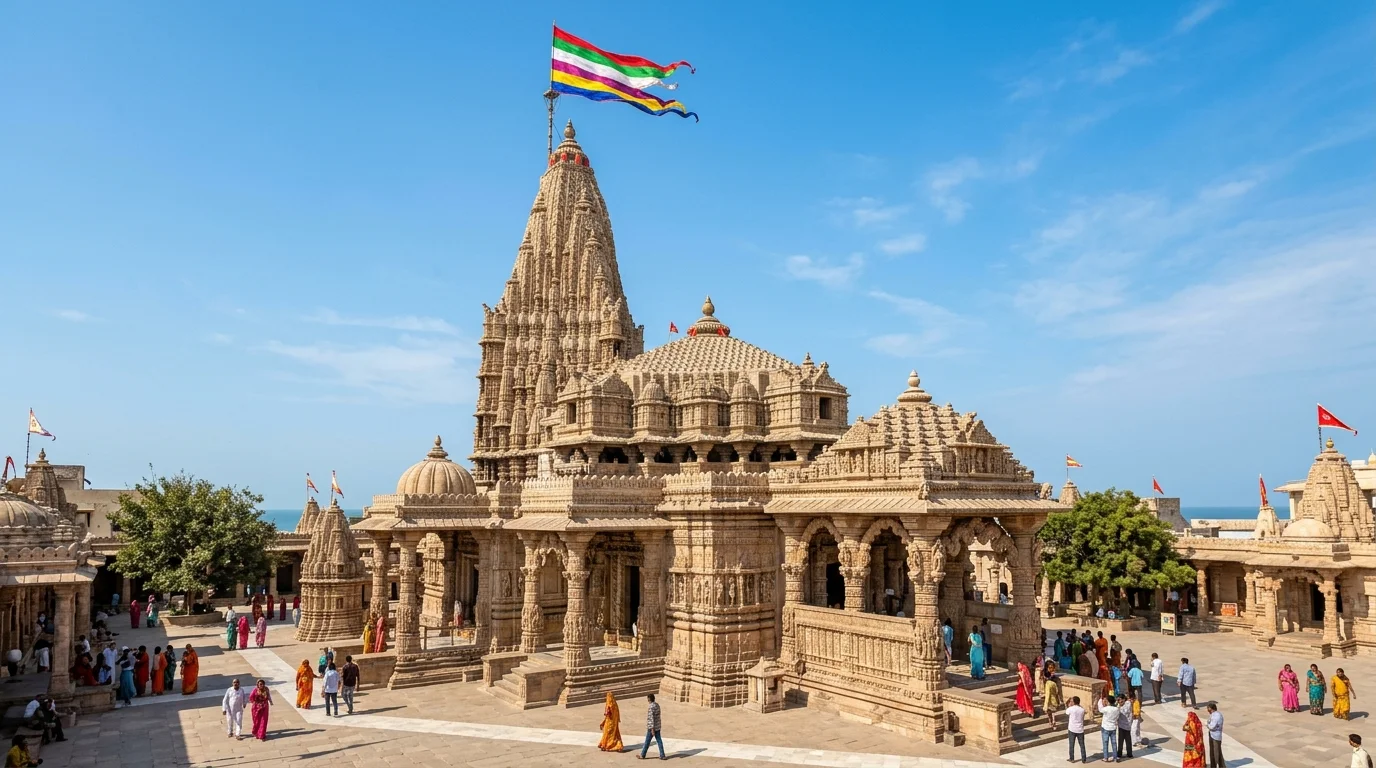
1. Shree Dwarkadhish Temple (Jagat Mandir)
This is the epicenter of the city and the primary reason millions flock to this corner of Gujarat. Believed to have been originally built by Vajranabha (Lord Krishna's great-grandson) over the Hari-Griha (Lord Krishna's residential palace), the current structure dates back over 2000 years, with major 15th-century renovations. The temple is supported by 72 exquisitely carved pillars and rises five stories high.
The temple has two main gates: Moksha Dwar (Gate of Salvation) for entering, and Swarga Dwar (Gate of Heaven) for exiting towards the Gomti river. Attending the morning Mangla Aarti or the evening Sandhya Aarti here is a transcendent, intensely energetic experience that you simply cannot miss.
2. Gomti Ghat and Sudama Setu
Immediately behind the Dwarkadhish Temple lies the Gomti Ghat, where the Gomti River meets the Arabian Sea. Pilgrims traditionally take a holy dip in these waters before entering the main temple to purify their sins. The banks are lined with smaller, ancient shrines dedicated to Lord Shiva, Samudra Narayan (God of the Sea), and Goddess Saraswati.
Spanning across the Gomti river is the Sudama Setu, a stunning pedestrian suspension bridge. Crossing this bridge offers unparalleled panoramic views of the entire Dwarkadhish temple complex rising majestically against the skyline, and leads to the serene, sandy Panchnad Tirth on the opposite bank.
3. Bhadkeshwar Mahadev Temple
Located on a small hillock extending into the Arabian Sea, the Bhadkeshwar Mahadev Temple is dedicated to Lord Shiva. What makes this temple incredibly unique is that during high tide, the ocean waters submerge the pathway, and the temple essentially becomes an island. It is naturally "abhisheked" (bathed) by the crashing waves of the Arabian Sea. It is widely considered the best spot in Dwarka city to witness a mesmerizing sunset over the ocean.
The Outer Circuit: Excursions from Dwarka City
Once you have absorbed the energies of the inner city, you must hire a local taxi or board a "Dwarka Darshan" bus to explore the highly significant sites located 15 to 35 kilometers outside the city limits. This usually takes a full day.
4. Nageshwar Jyotirlinga Temple
Situated roughly 17 kilometers from Dwarka, this is one of the 12 legendary Jyotirlingas of Lord Shiva mentioned in the Shiva Purana. The complex is easily identifiable from miles away due to the massive, 25-meter (82 feet) tall statue of Lord Shiva in a seated, meditative posture. Unlike many other ancient temples, the Nageshwar temple complex is vast, modern, incredibly clean, and allows devotees to perform abhishek on the lingam directly.
5. Bet Dwarka (Beyt Dwarka)
Also known as Shankhodhar, Bet Dwarka is an inhabited island located 36 kilometers away, off the coast of Okha port. According to scripture, while Dwarka city was the administrative capital, Bet Dwarka was the actual residential palace where Lord Krishna lived with his queens. The journey itself is an adventure, you must drive to Okha, and then take a 20 to 30-minute, seagull-escorted boat ride across the deep blue sea to reach the island. The main temple here houses a beautiful idol of Lord Krishna that is believed to have been crafted by Queen Rukmini herself.
6. Rukmini Devi Temple
Located an isolated 2 kilometers outside the city on the highway, this architectural masterpiece from the 12th century is dedicated to Goddess Rukmini, Lord Krishna's chief consort. The temple walls are adorned with intricate, heavily weathered carvings of gods, goddesses, and mythical beasts. Local folklore suggests that Sage Durvasa cursed Rukmini to live separated from her husband, which is why her temple stands outside the main city, completely devoid of the sweet water found in Dwarka.
7. Gopi Talav
A small, deeply revered lake located midway between Dwarka and Bet Dwarka. It is believed that the Gopis (milkmaids) of Vrindavan traveled all the way here to meet Lord Krishna, and unable to bear the pain of parting from him, merged into the soil around this lake. The smooth, yellow clay found at the bottom of the lake is called "Gopi Chandan," which pilgrims purchase and apply to their foreheads as a mark of devotion.
Itinerary Comparison: Inner City vs. Outer Circuit
If you are planning your trip, understanding the logistics of Dwarka's sightseeing is crucial. Here is a quick breakdown to help you allocate your time:
| Circuit Type | Key Attractions | Time Required | Best Mode of Transport |
|---|---|---|---|
| Inner City (Walking) | Dwarkadhish Temple, Gomti Ghat, Sudama Setu, Bhadkeshwar Mahadev. | Half Day (4-5 Hours) | Walking or Local Auto-rickshaw (Chhakda). |
| Outer Circuit (Road Trip) | Rukmini Temple, Nageshwar Jyotirlinga, Gopi Talav, Bet Dwarka. | Full Day (7-9 Hours) | Hired AC Taxi or GSRTC "Dwarka Darshan" Tourist Bus. |
Nature and Leisure: Dwarka Beyond Temples
While Dwarka is fundamentally a pilgrimage destination, its geographic location on the extreme western tip of the Saurashtra peninsula blesses it with some of the most spectacular coastal ecology in Gujarat. If you need a break from temple hopping, these natural retreats are highly recommended.
8. Shivrajpur Beach (Blue Flag Certified)
Located just 12 kilometers from Dwarka on the way to Okha, Shivrajpur Beach is an absolute revelation. It was recently awarded the prestigious international "Blue Flag" certification for its impeccable cleanliness, safety standards, and environmental management. Unlike the muddy beaches common in India, Shivrajpur offers crystal clear, turquoise waters, pristine white sands, and calm waves. It is equipped with changing rooms, clean toilets, and food courts, making it a perfect spot for families. Activities like scuba diving and snorkeling are also slowly gaining popularity here.
9. Dunny Point
If you are an adventure seeker, Dunny Point is a hidden gem located at the extreme tip of Bet Dwarka island. It is a completely isolated, eco-tourism site surrounded by the sea on three sides. It is famous for marine life spotting, you can frequently see dolphins, sea turtles, and exotic birds. Access requires a bit of off-roading or a specialized boat ride from Bet Dwarka, but the utter silence and raw natural beauty are well worth the effort.
Practical Tips for Sightseeing in Dwarka
To ensure your sightseeing experience remains blissful rather than stressful, keep these practical guidelines in mind:
- Dress Modestly: Dwarka is a deeply conservative and religious city. Whether you are at the Dwarkadhish temple or out at Gopi Talav, avoid wearing shorts, sleeveless tops, or revealing clothing. Traditional Indian attire is highly appreciated and sometimes mandatory.
- Start Early: The Gujarat sun is unforgiving, especially between March and October. Begin your temple visits as early as 6:30 AM to beat the intense midday heat and the massive crowds that arrive via tourist buses later in the day.
- Beware of Touts: While Dwarka is generally safe, you will encounter aggressive pandas (priests) and auto drivers offering "VIP Darshan" or special tours. Firmly but politely decline unauthorized offers and rely only on official temple boards and registered tour operators.
- Cash is King: While UPI is prevalent in hotels and large restaurants, you will need physical cash (especially small denominations of ₹10, ₹20, and ₹50) for purchasing prasad, offering donations at smaller shrines, and paying local auto drivers.
- Stay Hydrated: Carry a reusable water bottle. The coastal humidity combined with the physical exertion of walking barefoot inside large temple complexes can lead to rapid dehydration.
In Short
A complete Dwarka sightseeing itinerary requires 2 full days. Dedicate Day 1 to the inner city, covering the magnificent Dwarkadhish Temple, Gomti Ghat, and sunset at Bhadkeshwar Mahadev. On Day 2, hire a cab for the outer circuit to visit the highly sacred Nageshwar Jyotirlinga, take a boat to the island of Bet Dwarka, and relax in the evening at the pristine, Blue Flag certified Shivrajpur Beach.