Dwarkadhish Mangla Aarti Time: 6:00 AM, the First Darshan of the Lord's Day
Mangla Aarti at Dwarkadhish Temple begins at 6:00 AM every single day of the year. It is the first darshan of the day, the ritual awakening of Lord Dwarkadhish from his overnight rest. The queue at Swarga Dwar forms from 5:00-5:30 AM. Dwarkadhish Temple runs no official VIP darshan or paid priority-queue scheme; every pilgrim shares the same free general queue, so arriving early is the only way to stand closer to the sanctum. This is where the Lord's day begins, and where many pilgrims have chosen to begin theirs for centuries.
What Mangla Aarti Is and Why It Matters
In the Vaishnava tradition, the deity in the temple is not treated as a stone idol but as a living divine presence, a royal guest who sleeps, wakes, eats, and rests according to a precise daily ritual called the Ashtayama Seva (eight-period service). Mangla is the first of these eight services. The word itself means auspicious, blessed, it is the act of waking the Lord and presenting the first lamp and offering of the day.
At Dwarkadhish Temple, Mangla Aarti begins precisely at 6:00 AM when the Dharmadhikari (chief ritual priest) and the temple seva team conduct the formal awakening ritual in the inner sanctum. The main doors of the garbhagriha open. The Lord is visible to the gathered devotees. Lamps, deepas, are waved in circular motions before the four-armed idol. Conch shells are blown, bells ring in a controlled pattern, and Vedic mantras specific to the Mangla service are chanted. The atmosphere at this moment is unlike any other time of day in the temple.
The idol visible during Mangla Aarti is the Lord in a relatively simple state compared to the elaborate Shringar that follows at 7 AM. Some devotees specifically value the Mangla darshan for this reason, the simplicity, the sense of catching the Lord at the very beginning of his day, before the ceremony and adornment that follows. Others come for the pre-dawn atmosphere that is unique to this hour. Both motivations have a long history among Dwarka pilgrims.
How to Attend Mangla Aarti: Step-by-Step
Attending Mangla Aarti requires arriving at the temple premises before 6 AM. There is only one queue for everyone, the free general darshan queue, so the earlier you join it, the closer you will stand to the sanctum. Below is the practical sequence:
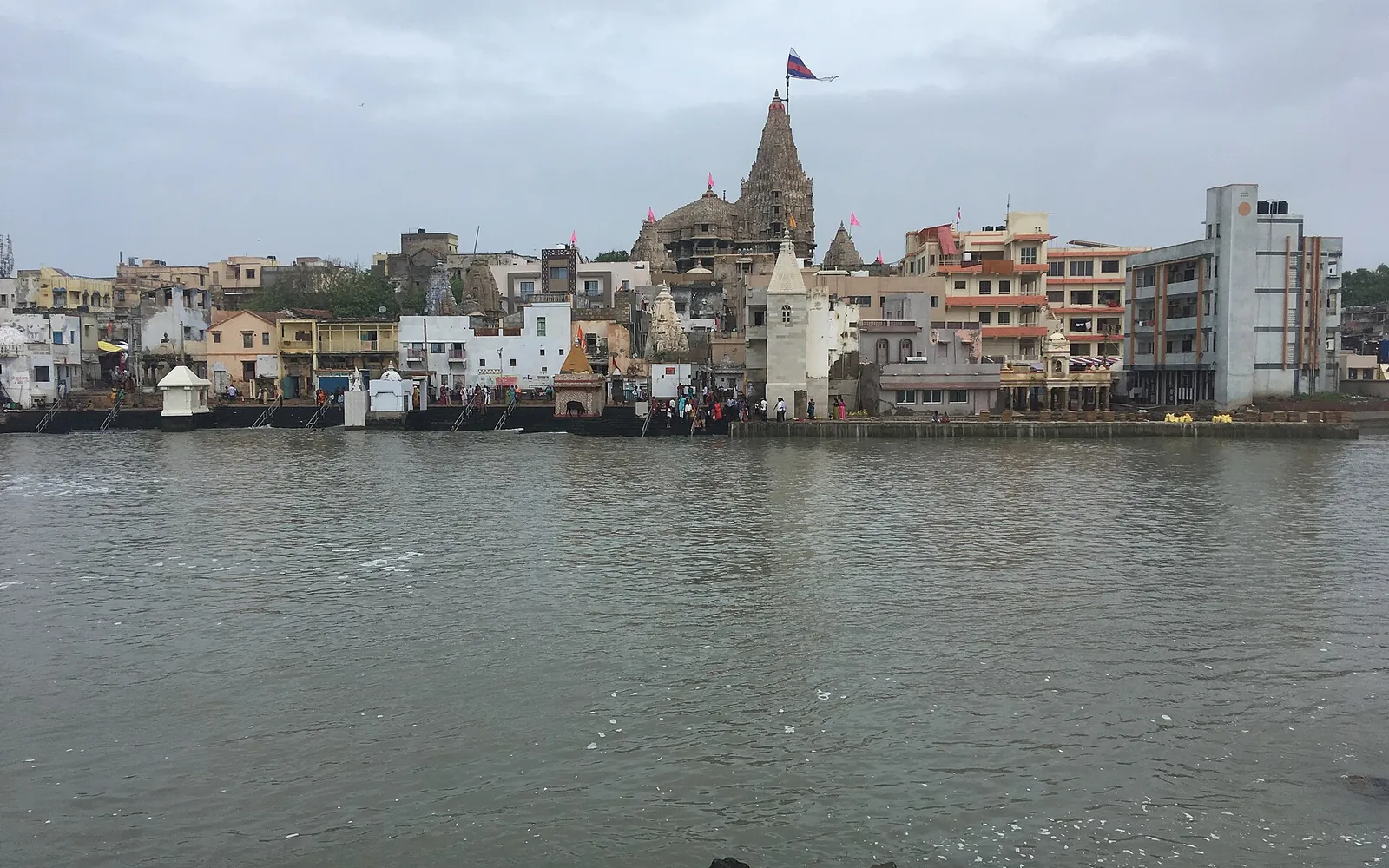
Between Mangla Aarti and the 7 AM Shringar Darshan, many devotees visit Gomti Ghat, a 5-minute walk from the temple, for a holy dip in the Gomti river. This is considered especially auspicious when done between Mangla and Shringar. The ghat is quiet and accessible at this hour, and in winter the post-aarti bath in the Gomti, while cold, is a traditional part of the morning darshan ritual for dedicated pilgrims.
Mangla Aarti Through the Seasons: What Changes and What Does Not
The Mangla Aarti is conducted at 6:00 AM every single day of the year, this does not change across seasons or festivals. What changes is the atmosphere, the crowd, and the experience around the ritual itself. Understanding the seasonal variation helps you prepare for what you will actually encounter.
| Season / Month | Temperature at 6 AM | Crowd at Mangla | General Queue Wait |
|---|---|---|---|
| November | 20-22°C, cool, sea breeze | Moderate | 20-40 minutes |
| December | 16-18°C, cold, sometimes foggy | Large, peak season | 1-2 hours |
| January | 13-16°C, coldest of year | Very large, maximum peak | 1.5-3 hours, longest of the year |
| February | 16-19°C, pleasantly cool | Moderate | 20-40 minutes |
| March | 22-26°C, warm | Low | 15-25 minutes |
| April-May | 28-32°C, warm but manageable | Very low | 10-20 minutes |
| June-September | 28-32°C, humid, may have rain | Very low (except Janmashtami) | 10-20 minutes (except Janmashtami) |
| October | 26-28°C, Navratri period | Elevated during Navratri | 30-50 minutes during Navratri |
The December and January versions of Mangla Aarti are the most often described by pilgrims as transformative. The cold pre-dawn air, the lamplight cutting through the darkness, the packed crowd of devotees in shawls all chanting simultaneously, the sensory density of this experience in winter is very different from the quieter, more personal Mangla Aarti of a July morning when perhaps a hundred people are present instead of several thousand. Both are the same ritual. They are not the same experience.
Janmashtami, Lord Krishna's birthday, falling in August (approximately September 4-5 in 2026), is the one monsoon exception when Mangla Aarti attendance rivals peak winter levels. On Janmashtami, the midnight birth celebration the previous night means the temple has not closed. Devotees flow through the night, and the 6 AM Mangla Aarti on Janmashtami day is conducted amid the largest single-day crowd of the year.
Mangla Aarti and the Full Daily Schedule
Mangla Aarti is the first of seven major aarti and darshan events that constitute the daily ritual life of Dwarkadhish Temple. Understanding its place in the full sequence helps pilgrims who have multiple days in Dwarka plan which sessions to prioritise.
| Aarti / Darshan | Time | Significance |
|---|---|---|
| Dhwaja Change | 5:00 AM | Flag hoisting on the 43m shikhara, first ritual of the day |
| Mangla Aarti | 6:00 AM | Lord's awakening, first darshan of the day |
| Shringar Darshan | 7:00 AM | Lord in full adornment, most visually spectacular |
| Gwal Darshan | 8:30 AM | Morning darshan, mid-morning crowd |
| Rajbhog Aarti | 12:00 PM | Midday offering, temple closes at 1 PM after this |
| Uthapan Darshan | 5:00 PM | Lord awakens from afternoon rest, temple reopens |
| Sandhya Aarti | Sunset (~6-7 PM) | Evening lamp ceremony, most atmospheric |
| Shayan Aarti | 9:00 PM | Lord's bedtime, final darshan of the day |
For a pilgrim with a single day in Dwarka, the strategic sequence is: Mangla Aarti (6 AM) immediately followed by Shringar Darshan (7 AM), then Gomti Ghat (8 AM), then the Sandhya Aarti in the evening and optionally the Shayan Aarti at 9 PM. This covers the two most significant morning aartis and the most visually powerful evening aarti, the essential Dwarkadhish experience, within a single day.
Rules, Dress Code and Temple Protocols
Dwarkadhish Temple enforces specific rules at all times, including Mangla Aarti. These are not suggestions, they are requirements for entry:
Photography is restricted inside the main sanctum. The approach lanes, the exterior of the temple, and the Gomti Ghat are generally permissible for photography, but always confirm with temple staff. During Mangla Aarti itself, photographers pointing cameras toward the sanctum are not appropriate regardless of any policy, the focus of the moment should be the darshan, not documentation.
Frequently Asked Questions
Also Read
Shayan Aarti Time
Dwarkadhish Shayan Aarti is at 9:00 PM, the last, quietest darshan of the day.
Read Full GuideBhadkeshwar Mahadev Aarti Time
Bhadkeshwar Mahadev aarti happens morning and evening, but access depends on tide, the temple sits on a tidal rock reachable only via a narrow causeway.
Read Full GuideDwarkadhish Temple Timings
Complete daily schedule of all aartis from Mangla at 6 AM to Shayan at 9 PM, with notes on queue and crowd management.
Read MoreDwarkadhish Sandhya Aarti Time
The sunset evening aarti, what time it begins by season, what happens, and how to position yourself at Gomti Ghat.
Read MoreDwarkadhish Temple
History, architecture, significance, and the complete pilgrimage guide to the Char Dham temple of Lord Dwarkadhish.
Read MoreDwarkadhish Gwal Aarti Time
The 8:30 AM mid-morning aarti, its cowherd symbolism and why it's a quieter darshan window than Mangala or Rajbhog.
Read More