Aranmula Parthasarathy Temple, Pathanamthitta: History, Timings & Visitor Guide
The Aranmula Parthasarathy Temple is a Hindu temple located in Aranmula, a village in Pathanamthitta District, Kerala, South India, on the southern bank of Pamba river, the third longest river in Kerala. It is dedicated to the Lord Krishna, who is worshipped as Parthasarathy (Arjuna's charioteer).

About Aranmula Parthasarathy Temple
The Aranmula Parthasarathy Temple is a Hindu temple located in Aranmula, a village in Pathanamthitta District, Kerala, South India, on the southern bank of Pamba river, the third longest river in Kerala. It is dedicated to the Lord Krishna, who is worshipped as Parthasarathy (Arjuna's charioteer). Constructed in the Kerala style of architecture, it is one of the "Divya Desams", the 108 temples of Vishnu revered by the Alvar saints.
It is one of the most important Krishna temples in Kerala and is one of the five ancient shrines in Kerala, connected with the legend of the Mahabharata, where the five Pandavas are believed to have built one temple each; Aranmula is built by the Pandava prince Arjuna.
The sacred jewels, called Thiruvabharanam of Ayyappan are taken in procession to Sabarimala each year from Pandalam, and Aranmula Temple is one of the stops on the way. Also, the Thanka Anki, golden attire of Ayyappan, donated by the king of Travancore, is stored here and taken to Sabarimala during the Mandala season of late December.
Aranmula is also known for snake boat race held every year during Onam linked to the legends of the Mahabharata. The temple has four towers over its entrances on its outer wall. The Eastern tower is accessed through a flight of 18 steps and the Northern tower entrance flight through 57 steps leads to the Pamba River. The temples has paintings on its walls dating back to early 18th century.
Aranmula Parthasarathy Temple: Key Facts
- TempleAranmula Parthasarathy Temple
- LocationPathanamthitta, Kerala
- StateKerala
- Entry FeeFree (general darshan)
- Best Time to VisitOctober to February
- Nearest Railway StationChengannur railway station, ~9 km
- Nearest AirportKochi (COK), ~97 km
- GPS9.32778, 76.68833
Aranmula Parthasarathy Temple Timings 2026
Aranmula Parthasarathy Temple is open every day, usually from early morning to late evening with a break in the afternoon. Darshan and aarti timings change with the season and on festival days.
- MorningOpens early morning (around 5 to 6 AM)
- AfternoonShort break around midday at many temples
- EveningEvening aarti around sunset, closes by about 8 to 9 PM
Ask the temple office on arrival for the day's aarti schedule.
Dress Code & Temple Rules
- DressModest, traditional clothes covering shoulders and knees
- FootwearRemove before entering; use the shoe stand
- PhotographyNot allowed inside the sanctum
- Not AllowedLeather items, tobacco, alcohol, non-veg food
- QueueFollow queue lines and staff instructions on festival days
How to Reach Aranmula Parthasarathy Temple
- LocationPathanamthitta, Kerala
- By AirKochi (COK), about 97 km
- By AirThiruvananthapuram (TRV), about 97 km
- By TrainChengannur railway station, about 9 km
- Major StationAlappuzha railway station, about 44 km
- By RoadTaxis, autos and state buses from the railway station and nearby cities
Distance from Nearby Cities
| From | Road Distance (approx.) | Travel Time (approx.) |
|---|---|---|
| Kochi | 126 km | 3 hr |
| Thiruvananthapuram | 127 km | 3 hr |
| Tuticorin | 210 km | 5 hr |
| Madurai | 213 km | 5 hr |
| Coimbatore | 251 km | 6 hr |
Best Time to Visit
October to February. The weather is cooler and drier. April–May is very hot, and the monsoon brings heavy rain to the coast. Weekday mornings are the least crowded; expect long queues on weekends, holidays and festivals.
History of Aranmula Parthasarathy Temple
As per Hindu legend in Mahabharata, Arjuna, one of the Pandavas was returning with the image of Krishna after along penance. He faced a huge flood in the Pamba river. A poor low caste Hindu helped him cross the river with a raft made with six bamboos. It is believed that the Aranmula Boat Race is celebrated annually on the Pamba river to commemorate the poor Hindu. The race is held on the last day of the Onam festival when snake boats around 100 ft (30 m) with four helmsmen, 100 rowers and 25 singers participate. The boats move in pairs to the rhythm of music. After the watersport, there is an elaborate feast in the Aranmula temple. The festival is the largest boat race festival held in Kerala and is attended by thousands of visitors. The festival was largely a religious one until 1978, when the Government of Kerala declared it a sports event, but during 2000, the religious festivities were restored.
The Malayalam month of Meenam witnesses a festival where Aranmula Parthasarathy is taken in a grand procession on the Garuda mount to the Pampa river bank, where an image of the Bhagawati from the nearby Punnamthode temple is brought in procession for the Arattu festival.
Another festival celebrated here is the Khandavanadahanam celebrated in the Malayalam month of Dhanus. For this festival, a replica of a forest is created in front of the temple with dried plants, leaves and twigs. This bonfire is lit, symbolic of the Khandavana forest fire of the Mahabharata.
Legend & Significance
The Aranmula Parthasarathy Temple is one of the five ancient shrines in the Chengannur area of Kerala, connected with the legend of the Hindu epic Mahabharata. Legend has it that the Pandava princes, after crowning Parikshit as king of Hastinapura left on a pilgrimage. On arriving on the banks of Pamba River, each one is believed to have installed a tutelary image of Krishna; Thrichittatt Maha Vishnu Temple by Yudhishthira, Puliyur Mahavishnu Temple by Bheema, Aranmula by Arjuna, Thiruvanvandoor Mahavishnu Temple by Nakula and Thrikodithanam Mahavishnu Temple to Sahadeva. Legend has it that Arjuna built this temple, to expiate for the sin of having killed Karna on the battlefield, against the dharma of killing an unarmed enemy. It is also believed that here, Vishnu revealed the knowledge of creation to the god Brahma, from whom the Madhu-Kaitabha demons stole the Vedas.
The image of the temple was brought here in a raft made of six pieces of bamboo to this site, and hence the name "Aranmula" (six pieces of bamboo). There is another story, which says it was brought in a raft made of seven pieces of bamboo, out of which one got separated at a place 2 km upstream of the current Temple's location on the banks of Pamba. The place is called "Mulavoor Kadavu" meaning "river bank where the bamboo pole came off". There are still descendants of a family of Ayurveda physicians with great lineage by that name Mulavoor residing there. As per other legend, the place derives its name from arin-villai, a land near a river.
Architecture of Aranmula Parthasarathy Temple
The temple is built in Kerala style architecture, which is common in all temples in the South Indian state of Kerala in eastern axis. The temple has an elevated structure reached by a flight of 20 steps. The temple has a two-storeyed gopuram or a gateway tower, with the upper storey having wooden trails covering the Kottupura (a hall of drum beating during festivals). A rectangular wall around the temple, called Kshetra-Madilluka, pierced by the gateways, encloses all the shrines of the temple. The metal plated flagpost or Dwajasthambam is located axial to the temple tower leading to the central sanctum and there is a Deepastamba, which is the light post. Chuttuambalam is the outer pavilion within the temple walls. The central shrine and the associated hall is located in a rectangular structure called Nallambalam, which has pillared halls and corridors. Between the entrance of Nalambalam to the sanctum, there is a raised square platform called Namaskara Mandapam which has a pyramidal roof. Thevrapura, the kitchen used to cook offering to the deity is located on the left of Namaskara Mandapa from the entrance. Balithara is an altar is used for making ritualistic offering to demi-gods and the festive deities. The central shrine called Sreekovil houses the image of the presiding deity, who is a standing four-armed Lord Vishnu worshipped as Parthasarathy. It is on an elevated platform with a single door reached through a flight of five steps. Either sides of the doors have images of guardian deities called Dvarapalakas. As per Kerala rituals, only the main priest called Thantri and the second priest called Melshanthi alone can enter the Sree Kovil. The central shrine has a circular plan with the base built of granite, superstructure built of laterite and conical roof made of terracotta tile supported from inside by a wooden structure. The lower half of Sree Kovil consists of the basement, the pillar or the wall, called stambha or bhithi and the entablature called prasthara in the ratio 1:2:1, in height. Similarly the upper half is divided into the neck called griva, the roof tower called shikhara and the conical kalasam (made of copper) in the same ratio. The roof projects in two levels to protect the inner structure from heavy rains during monsoon. The roof of the temple and some of the pillars have lavish wood and stucco carvings depicting various stories of ancient epics, Ramayana and Mahabharatha. The outer walls around the sanctum have a series of wooden frames housing an array of lamps, which are lit during festive occasions. The temples have paintings on its walls dating back to early 18 century. The image of the presiding deity is 6 ft (1.8 m) tall, making it the tallest among the idols of all Krishna temples in Kerala. Krishna is in Vishvarupa pose, the one he depicted to Arjuna during the Mahabharatha war. It is thus considered to be in fierce form. As per one legend, Arjuna is believed to have built the temple in Nilakal Narayanapuram and later brought to Aranmula in a raft made with six bamboo. In the second precinct, there are shrines of Sastha, Yakshi, Nagaraja and Erangavil Bhagavathy. There is another shrine for Balarama in the lower shrine, considered to be older than the main shrine.
Festivals & Rituals at Aranmula Parthasarathy Temple
The annual Utsavam commences on the Atham Nakshatra in the month of Makara and concludes ten days later on the Thiruvonam day.
Garuda Vahanam Ezhunellippu is the main event during this ten day festival. This event falls on the fifth day of the annual festival and is also called Anchaam Purappadu. The deity is taken out from the sanctum sanctorum mounted on Garuda. It is believed that all 33 million Devas (the elements of nature) and Gandharvas would be present in the temple at that time to witness Lord Krishna riding on his vahana, the Garuda.
Frequently Asked Questions
Temples Near Aranmula Parthasarathy Temple

Thrichittatt Maha Vishnu Temple
The Thrichittatt Mahavishnu Temple (also called Thiruchenkundrur and Imayavarappan temple) is a Hindu temple dedicated to Vishnu, located in…
Read Full Guide
Kaviyoor Mahadeva Temple, Kerala
Kaviyoor Mahadevar Temple is one of the important Siva temples in Kerala, located in Kaviyoor, Tiruvalla Pathanamthitta District, Kerala, India. It…
Read Full Guide
Puliyur Mahavishnu Temple
The Thripuliyoor Mahavishnu Temple (also called Mayapiran temple) is a Hindu temple dedicated to Vishnu and located in Puliyoor, Alappuzha District…
Read Full Guide
Sreevallabha Temple, Thiruvalla
The Sreevallabha Temple is an orthodox Hindu temple dedicated to Sreevallabha (Vallabha meaning consort of Sree or Lakshmi), a form of Vishnu. It is…
Read Full Guide
Vazhappally Maha Siva Temple
Vazhappally Maha Siva Temple is a Hindu temple located in Vazhappally near Changanassery in Kottayam district in the Indian state of Kerala. The…
Read Full Guide
Ambalappuzha Sri Krishna Temple
Ambalappuzha Sree Krishna Swamy Temple is an Indian Hindu temple dedicated to Krishna at Ambalappuzha in Alappuzha district of Kerala. The temple is…
Read Full GuideShop Puja & Temple Accessories
Handpicked pooja items and temple accessories for your home mandir, delivered anywhere in India.
Dwarkadhish Photo Frame for Home Mandir
View details
Brass Panchmukhi Diya for Aarti
View details
Tulsi Mala 108 Beads with Japa Bag
View details
Brass Puja Bell Ghanti for Mandir
View details
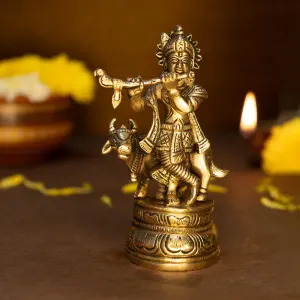
Pure Brass Lord Krishna Idol
View details
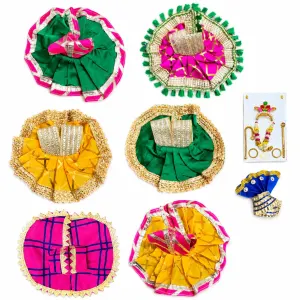
Laddu Gopal Poshak Dress Set with Mukut
View details
Original Shankh for Puja and Home Mandir
View details
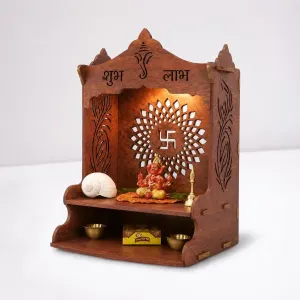
Wooden Home Mandir Temple for Pooja Room
View details