Meenakshi Temple, Madurai: History, Timings & Visitor Guide
Meenakshi Temple, also known as Meenakshi Sundareswarar Temple, is a historic Hindu temple located on the southern bank of the Vaigai River in Madurai, Tamil Nadu, India. It is dedicated to Meenakshi, a form of Parvati, and her consort Sundareswarar (Shiva).

About Meenakshi Temple
Meenakshi Temple, also known as Meenakshi Sundareswarar Temple, is a historic Hindu temple located on the southern bank of the Vaigai River in Madurai, Tamil Nadu, India. It is dedicated to Meenakshi, a form of Parvati, and her consort Sundareswarar (Shiva). The temple is theologically significant as it represents a confluence of various denominations of Hinduism such as Shaivism, Shaktism, and Vaishnavism.
While the Sangam literature mentions the temple city of Madurai, the existence of a temple is first referenced in the Tamil texts from 6th century. It is one of the Paadal Petra Sthalams, Shiva temples that are revered in the Tevaram verses composed by the Nayanars between the 6th and 11th century. The early structures of the temple were built during the reign of the Pandyas in the 12th to 13th centuries. It was later rebuilt by the Vijayanagara Empire in the 14th century, after its destruction by the armies of the Delhi Sultanate. The temple complex was later expanded extensively by the Madurai Nayaks in the 16th and 17th centuries. While a few structural improvements were made during the 18th and 19th centuries, the temple condition degraded due to negligence during the British Raj. After the Indian independence in the mid 20th century, the temple was restored with donations collected from people. Further restoration and kumbhabhishekam of the temple was conducted in 1974, 1995, 2009, and 2026.
The temple complex is spread over 5.7 hectares (14 acres). It consists of monuments inside several concentric enclosures (prakara), each layer fortified with high masonry walls. The outer walls have four large gopurams (ornamental gateways), one on each cardinal direction, and 10 smaller gopurams. The tallest is the southern tower, which was built in the 16th century and rises to 170 ft (52 m). The shrines of Meenakshi and Sundareswarar, the prominent and largest of the shrines in the temple, is located in the courtyard of the innermost prakara. The complex has numerous mandapas, including the thousand pillared hall, which are used for housing idols, temple festivities, and as choultry. There are images of various Hindu gods located across various shrines and mandapas in the temple. The golden lotus pond (potramarai kulam) is the main temple tank, located within the premises.
The temple is managed by the Hindu Religious and Charitable Endowments Department of the Government of Tamil Nadu. The temple complex is a prominent landmark in Madurai and attracts thousands of visitors every day. Hence, it serves as an economic center, with the goods and services associate with the temple and its activities forming a significant part of the economy of Madurai. The state emblem of Tamil Nadu is based on the west gopuram (ornate tower) of the temple. In October 2017, the temple was adjudged the best 'Swachh Iconic Place' in India under the Swachh Bharat Abhiyan by the Government of India.
Meenakshi Temple: Key Facts
- TempleMeenakshi Temple
- LocationMadurai, Tamil Nadu
- StateTamil Nadu
- Entry FeeFree (general darshan)
- Best Time to VisitOctober to February
- Nearest Railway StationMadurai Junction railway station, ~1 km
- Nearest AirportMadurai (IXM), ~10 km
- GPS9.91972, 78.11944
Meenakshi Temple Timings 2026
Meenakshi Temple is open every day, usually from early morning to late evening with a break in the afternoon. Darshan and aarti timings change with the season and on festival days.
- MorningOpens early morning (around 5 to 6 AM)
- AfternoonShort break around midday at many temples
- EveningEvening aarti around sunset, closes by about 8 to 9 PM
Check the exact timings on the official website before your visit.
Dress Code & Temple Rules
- DressModest, traditional clothes covering shoulders and knees
- FootwearRemove before entering; use the shoe stand
- PhotographyNot allowed inside the sanctum
- Not AllowedLeather items, tobacco, alcohol, non-veg food
- QueueFollow queue lines and staff instructions on festival days
How to Reach Meenakshi Temple
- LocationMadurai, Tamil Nadu
- By AirMadurai (IXM), about 10 km
- By AirTiruchirappalli (TRZ), about 114 km
- By TrainMadurai Junction railway station, about 1 km
- By RoadTaxis, autos and state buses from the railway station and nearby cities
Distance from Nearby Cities
| From | Road Distance (approx.) | Travel Time (approx.) |
|---|---|---|
| Madurai | 13 km | 1 hr |
| Tiruchirappalli | 148 km | 3 hr |
| Tuticorin | 173 km | 4 hr |
| Coimbatore | 222 km | 5 hr |
| Kochi | 247 km | 5 hr |
Best Time to Visit
October to February. The weather is cooler and drier. April–May is very hot, and the monsoon brings heavy rain to the coast. Weekday mornings are the least crowded; expect long queues on weekends, holidays and festivals.
History of Meenakshi Temple
The town of Madurai is described from the Sangam era texts, dated to 1st to 4th century. Tamil texts imply that a temple existed in Madurai by the mid-6th century. As per these texts, the town of "Koodal" (Madurai) is described as a temple town where every street radiated from the temple. In the Teveram texts, the temple and its deity are referred to by various epithets and names. In Campantar describes the deity as Aalavaai Iraivan. In early medieval literature and inscriptions, it is sometimes referred to as Kadambavanam as the region was covered with Kadamba trees. Various descriptions and mythology associated with the temple are described in regional texts and literature, which are often centered around a warrior goddess, but the details vary significantly and are inconsistent with each other. Hence, scholars have attempted to determine the history of the temple from the inscriptions and records relating to South Indian dynasties. However, most of these are dated to post 12th century.
During the rule of the Pandya dynasty, goddess Meenakshi is described as the divine ruler of Madurai, who along with Shiva were revered as the primary deities. The earliest of the existing masonry of the Meenakshi temple was built during the reign of the Pandya emperor Sadayavarman Kulasekaran I (r. 1190–1216). The gopuram at the entrance of the Sundareswarar shrine and the central portion of the Meenakshi shrine were built during his reign. Texts and inscriptions also credit him with building shrines for Nataraja and Surya near the main sanctum, Ayyanar in the east, Vinayagar in the south, Kariamal Perumal in the west and Kali in the north of the temple complex. The temple was later expanded during the reign of Maravarman Sundara Pandyan I (r. 1216–1238). During his reign, Ananda Nambi built the Vembathurar gopuram, and another large gopuram (named after Sundara Pandya) was added in 1231. Maravarman Sundara Pandyan II (r. 1238–1251) added the Chitra gopuram in the west, a pillared corridor heading towards the Sundareswarar shrine, and a mandapa named after him.
During the 18th century, the British gave endowments to the temple and participated in temple festivities to gain socio-political acceptance. Robert Clive donated the jewels looted by the British from Srirangapatna to the temple. However, in 1820, they withdrew from their roles as temple patrons and only participated in temple festivities. The Christian missionaries ridiculed the temple artwork and criticised the temple practices. However, the missionary efforts were largely unsuccessful with people continuing to patronise the temple.
Legend & Significance
According to the 16th century Tamil text of Thiruvilaiyadal Puranam, king Malayadhwaja Pandya and his wife Kanchanamalai performed a yajna seeking a son to succeed the king. A daughter appeared out of the fire, who was three years old and had three breasts. When the parents prayed to Shiva, a divine voice advised them to bring up the child, and that she will lose the third breast when she meets her future husband. The girl grew up in the palace, and the king crowned her as his successor. When she finally met Shiva, who took the form of Sundareswarar, she took her true form of Meenakshi, an incarnation of Parvati. Meenakshi Tirukalyanam, the marriage of Meenakshi and Shiva was a grand event, with the attendance of various Hindu gods, and other celestial and living beings.
According to religious scholar William P. Harman, the story may reflect the matrilineal traditions prevalent in South India during the time and the regional beliefs that "[spiritual] powers rest with the women", gods listen to their spouse, and that the fates of kingdoms rest with the women. He notes:
Architecture of Meenakshi Temple
The Meenakshi temple is located in the heart of Madurai, on the southern bank of the Vaigai River. The Nayak rulers followed the Shilpa Shastras, Hindu texts on architecture, in designing the temple and the city. The roads radiating from the temple complex, form a concentric pattern around the temple. The streets and junctions are named after months of the Tamil Calendar, originating from the practice of starting the temple procession from the spots corresponding to the respective months. The temple and the city were designed to face east, to face the Sun in the morning. Tamil texts mention that the temple was the centre of the city and the streets radiated out like a lotus and its petals. In the Middle Ages, the city developed around the temple, with human settlements structured as per the varna system. The royalty, Kshatriyas and Vaishyas lived on the southeast side of the temple, the Brahmins lived in special quarters close to the temple, and others in other areas and fringes of the city. The king initiated processions from the temple to associate his royal authority with the divine and thus upheld the social system.
The main shrines are located in the center of the temple complex, surrounded by various monuments inside concentric prakarams (enclosures). The enclosures are fortified with high masonry walls, with the outer walls having four towering gopurams (gateways), one each on either direction, which allow people to enter the complex from all four directions. The temple corridors and streets are used for accommodating elaborate processions during the festivals, and the temple cars used in the processions are progressively more massive the further they travel from the centre. The temple is surrounded by shops and traditional markets along the surrounding streets.
Frequently Asked Questions
Temples Near Meenakshi Temple

Koodal Azhagar Temple
Koodal Aḻagar Temple or "Koodal Azhagar Temple" in Madurai, a city in the South Indian state of Tamil Nadu, is a temple dedicated to the Hindu god…
Read Full Guide
Karpaka Vinayakar Temple
Karpaka Vinayaka Temple or Pillaiyarpatti Pillaiyar Temple is a 7th-century-CE rock-cut cave shrine, significantly expanded over the later…
Read Full Guide
Srivilliputhur Andal Temple
The Srivilliputhur Andal Temple in Srivilliputhur, a town in Virudhunagar district in the South Indian state of Tamil Nadu, It is one of the 108…
Read Full Guide
Dhandayuthapani Swamy Temple
Dhandayuthapani Swamy Temple is a Hindu temple dedicated to Murugan situated atop a hillock amidst the Palani Hills in Palani, Dindigul district of…
Read Full Guide
Mangala Devi Temple
Mangaladevi Kannagi Temple is a Hindu temple located at Mangaladevi, near the present-day border of Theni District (of Tamil Nadu) and Idukki…
Read Full Guide
Kunnandarkoil Cave Temple
Kunnandarkoil Cave Temple in Kunnandarkoil, a village in Pudukottai district in the South Indian state of Tamil Nadu, is dedicated to the Hindu god…
Read Full GuideShop Puja & Temple Accessories
Handpicked pooja items and temple accessories for your home mandir, delivered anywhere in India.
Dwarkadhish Photo Frame for Home Mandir
View details
Brass Panchmukhi Diya for Aarti
View details
Tulsi Mala 108 Beads with Japa Bag
View details
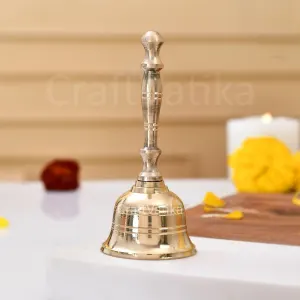
Brass Puja Bell Ghanti for Mandir
View details
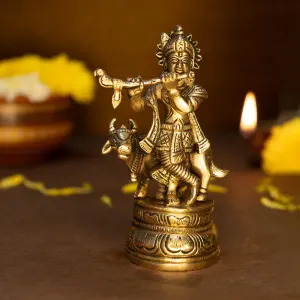
Pure Brass Lord Krishna Idol
View details
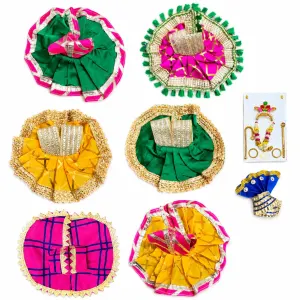
Laddu Gopal Poshak Dress Set with Mukut
View details
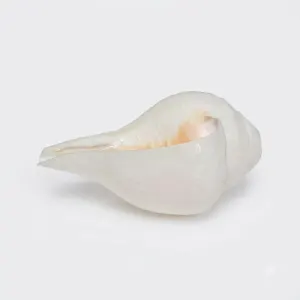
Original Shankh for Puja and Home Mandir
View details
Wooden Home Mandir Temple for Pooja Room
View details