Prahadisvarar Temple, Thanjavur: History, Timings & Visitor Guide
Brihadisvara Temple, called Rajarajesvaram (lit. 'Lord of Rajaraja') by its builder, and known locally as Thanjai Periya Kovil (lit. 'Thanjavur Big Temple') and Peruvudaiyar Kovil (lit. 'Temple of the great lord'), is a Shaivite Hindu temple built in a Chola architectural style located on the south bank of the Cauvery…

About Prahadisvarar Temple
Brihadisvara Temple, called Rajarajesvaram (lit. 'Lord of Rajaraja') by its builder, and known locally as Thanjai Periya Kovil (lit. 'Thanjavur Big Temple') and Peruvudaiyar Kovil (lit. 'Temple of the great lord'), is a Shaivite Hindu temple built in a Chola architectural style located on the south bank of the Cauvery river in Thanjavur, Tamil Nadu, India. It is one of the largest Hindu temples and an exemplar of Tamil architecture. It is also called Dakshina Meru (Meru of the South). Built by Chola emperor Rajaraja I between 1003 and 1010 CE, the temple is a part of the UNESCO World Heritage Site known as the "Great Living Chola Temples", along with the Chola-era Gangaikonda Cholapuram temple and Airavatesvara temple, which are about 70 kilometres (43 mi) and 40 kilometres (25 mi) to its northeast respectively.
The original monuments of this 11th-century temple were built around a moat. It included gopura, the main temple, its massive tower, inscriptions, frescoes, and sculptures predominantly related to Shaivism, but also of Vaishnavism and Shaktism. The temple was damaged in its history and some artwork is now missing. Additional mandapam and monuments were added in the centuries that followed. The temple now stands amidst fortified walls that were added after the 16th century.
Built using granite, the vimana tower above the shrine is one of the tallest in South India. The temple has a massive colonnaded prakara (corridor) and one of the largest Shiva lingas in India. It is also famed for the quality of its sculpture, as well as being the location that commissioned the brass Nataraja, Shiva as the lord of dance, in the 11th century. The complex includes shrines for Nandi, Parvati, Murugan, Ganesha, Sabhapati, Dakshinamurti, Chandeshvara, Varahi, Thiyagarajar of Thiruvarur, Siddhar Karuvoorar and others. The temple is one of the most visited tourist attractions in Tamil Nadu.
Prahadisvarar Temple: Key Facts
- TemplePrahadisvarar Temple
- LocationThanjavur, Tamil Nadu
- StateTamil Nadu
- Entry FeeFree (general darshan)
- Best Time to VisitOctober to February
- Nearest Railway StationThanjavur Junction railway station, ~1 km
- Nearest AirportTiruchirappalli (TRZ), ~46 km
- GPS10.78306, 79.13250
Prahadisvarar Temple Timings 2026
Prahadisvarar Temple is open every day, usually from early morning to late evening with a break in the afternoon. Darshan and aarti timings change with the season and on festival days.
- MorningOpens early morning (around 5 to 6 AM)
- AfternoonShort break around midday at many temples
- EveningEvening aarti around sunset, closes by about 8 to 9 PM
Ask the temple office on arrival for the day's aarti schedule.
Dress Code & Temple Rules
- DressModest, traditional clothes covering shoulders and knees
- FootwearRemove before entering; use the shoe stand
- PhotographyNot allowed inside the sanctum
- Not AllowedLeather items, tobacco, alcohol, non-veg food
- QueueFollow queue lines and staff instructions on festival days
How to Reach Prahadisvarar Temple
- LocationThanjavur, Tamil Nadu
- By AirTiruchirappalli (TRZ), about 46 km
- By AirPuducherry (PNY), about 151 km
- By TrainThanjavur Junction railway station, about 1 km
- Major StationTiruchirappalli Junction railway station, about 49 km
- By RoadTaxis, autos and state buses from the railway station and nearby cities
Distance from Nearby Cities
| From | Road Distance (approx.) | Travel Time (approx.) |
|---|---|---|
| Tiruchirappalli | 60 km | 1 hr |
| Puducherry | 196 km | 4 hr |
| Madurai | 202 km | 4 hr |
| Salem | 209 km | 5 hr |
| Coimbatore | 299 km | 7 hr |
Best Time to Visit
October to February. The weather is cooler and drier. April–May is very hot, and the monsoon brings heavy rain to the coast. Weekday mornings are the least crowded; expect long queues on weekends, holidays and festivals.
History of Prahadisvarar Temple
A spectrum of tamil temple styles continued to develop from the fifth to the ninth century over the Chalukya era rule as evidenced in Aihole, Badami and Pattadakal, and then with the Pallava era as witnessed at Mamallapuram and other monuments. Thereafter, between 850 and 1280, Cholas emerged as the dominant dynasty. The early Chola period saw a greater emphasis on securing their geopolitical boundaries and less emphasis on architecture. In the tenth century, within the Chola empire emerged features such as the multifaceted columns with projecting square capitals. This, states George Michell, signaled the start of the new Chola style. This South Indian style is most fully realized both in scale and detail in the Brihadeshwara temple built between 1003 and 1010 by the Chola king Rajaraja I.
Architecture of Prahadisvarar Temple
The Peruvudaiyar temple's plan and development utilizes the axial and symmetrical geometry rules. It is classified as Perunkoil (also called Madakkoil), a big temple built on a higher platform of a natural or man-made mounds. The temple complex is a rectangle that is almost two stacked squares, covering 240.79 metres (790.0 ft) east to west, and 121.92 metres (400.0 ft) north to south. In this space are five main sections: the sanctum with the towering superstructure (sri vimana), the Nandi hall in front (Nandi-mandapam) and in between these the main community hall (mukhamandapam), the great gathering hall (mahamandapam) and the pavilion that connects the great hall with the sanctum (Antrala).
The temple complex integrates a large pillared and covered veranda (prakara) in its spacious courtyard, with a perimeter of about 450 metres (1,480 ft) for circumambulation. Outside this pillared veranda there are two walls of enclosure, the outer one being defensive and added in 1777 by the French colonial forces with gun-holes with the temple serving as an arsenal. They made the outer wall high, isolating the temple complex area. On its east end is the original main gopuram or gateway that is barrel vaulted. It is less than half the size of the main temple's vimana. Additional structures were added to the original temple after the 11th century, such as a mandapa in its northeast corner and additional gopurams (gateways) on its perimeters to allow people to enter and leave from multiple locations. Some of the shrines and structures were added during the Pandya, Nayaka, Vijayanagara and Maratha era, before the colonial era started, and these builders respected the original plans and symmetry rules. Inside the original temple courtyard, along with the main sanctum and Nandi-mandapam are two major shrines, one for Kartikeya and for Parvati. The complex has additional smaller shrines.
Frequently Asked Questions
Temples Near Prahadisvarar Temple

Odhanavaneswarar Temple, Tiruchotruturai
Odhanavaneswarar Temple, Tiruchotruturai (also called Oppillaselvar Temple) is a Hindu temple dedicated to Shiva located in the village of…
Read Full Guide
Thenupuriswarar Temple
Thenupuriswarar Temple is a Hindu temple dedicated to the god Shiva located in the village of Patteeswaram, Tamil Nadu, India. Shiva is worshiped as…
Read Full Guide
Swamimalai Murugan Temple
Swaminatha Swamy Temple is a Hindu temple dedicated to god Murugan. It is located on the banks of a tributary of river Kaveri in Swamimalai near…
Read Full Guide
Thenkurangaduthurai Temple
Abathsahayeswarar Temple, Aduthurai (also calledTen Kurangaadutrai Temple, Aduthurai) is a Hindu temple dedicated to Shiva located in the village of…
Read Full Guide
Airavatesvara Temple
Airavatesvara Temple is a Hindu temple of Chola architecture located in Darasuram, a suburb of Kumbakonam, Thanjavur District in the South Indian…
Read Full Guide
Adi Kumbeswarar Temple
Adi Kumbeswarar Temple, Kumbakonam is a Hindu temple dedicated to Shiva, located in the town of Kumbakonam in Thanjavur District Tamil Nadu, India.…
Read Full GuideShop Puja & Temple Accessories
Handpicked pooja items and temple accessories for your home mandir, delivered anywhere in India.
Dwarkadhish Photo Frame for Home Mandir
View details
Brass Panchmukhi Diya for Aarti
View details
Tulsi Mala 108 Beads with Japa Bag
View details
Brass Puja Bell Ghanti for Mandir
View details
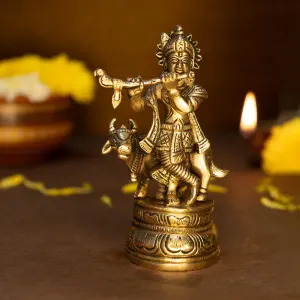
Pure Brass Lord Krishna Idol
View details
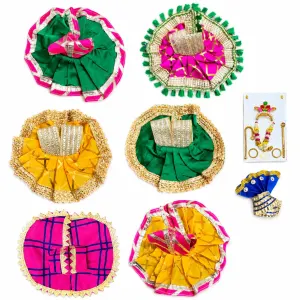
Laddu Gopal Poshak Dress Set with Mukut
View details
Original Shankh for Puja and Home Mandir
View details
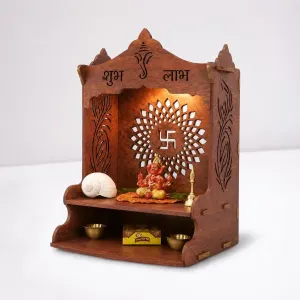
Wooden Home Mandir Temple for Pooja Room
View details