Sankat Mochan Hanuman Temple: History, Timings & Visitor Guide
The Sankat Mochan Hanuman Temple is a Hindu temple in Varanasi, Uttar Pradesh, India dedicated to the Hindu deity Hanuman, in his form as sankat mochan (saṅkaṭamocana), meaning the "reliever from troubles". The temple was established by the Hindu preacher and poet-saint Tulsidas in the early 16th century.

About Sankat Mochan Hanuman Temple
The Sankat Mochan Hanuman Temple is a Hindu temple in Varanasi, Uttar Pradesh, India dedicated to the Hindu deity Hanuman, in his form as sankat mochan (saṅkaṭamocana), meaning the "reliever from troubles". The temple was established by the Hindu preacher and poet-saint Tulsidas in the early 16th century. It is situated on the banks of the Assi river.
Sankat Mochan Hanuman Temple: Key Facts
- TempleSankat Mochan Hanuman Temple
- LocationUttar Pradesh
- StateUttar Pradesh
- Entry FeeFree (general darshan)
- Best Time to VisitOctober to March
- Nearest Railway StationBanaras railway station, ~3 km
- Nearest AirportVaranasi (VNS), ~24 km
- GPS25.28211, 82.99998
Sankat Mochan Hanuman Temple Timings 2026
Sankat Mochan Hanuman Temple is open every day, usually from early morning to late evening with a break in the afternoon. Darshan and aarti timings change with the season and on festival days.
- MorningOpens early morning (around 5 to 6 AM)
- AfternoonShort break around midday at many temples
- EveningEvening aarti around sunset, closes by about 8 to 9 PM
Ask the temple office on arrival for the day's aarti schedule.
Dress Code & Temple Rules
- DressModest, traditional clothes covering shoulders and knees
- FootwearRemove before entering; use the shoe stand
- PhotographyNot allowed inside the sanctum
- Not AllowedLeather items, tobacco, alcohol, non-veg food
- QueueFollow queue lines and staff instructions on festival days
How to Reach Sankat Mochan Hanuman Temple
- LocationUttar Pradesh
- By AirVaranasi (VNS), about 24 km
- By AirPrayagraj (IXD), about 128 km
- By TrainBanaras railway station, about 3 km
- By RoadTaxis, autos and state buses from the railway station and nearby cities
Distance from Nearby Cities
| From | Road Distance (approx.) | Travel Time (approx.) |
|---|---|---|
| Varanasi | 31 km | 1 hr |
| Prayagraj | 167 km | 4 hr |
| Gorakhpur | 219 km | 5 hr |
| Ayodhya | 239 km | 5 hr |
| Gaya | 267 km | 6 hr |
Best Time to Visit
October to March. Winter is pleasant for darshan and sightseeing. May–June can be very hot and July–September brings monsoon rain. Weekday mornings are the least crowded; expect long queues on weekends, holidays and festivals.
History of Sankat Mochan Hanuman Temple
The temple was founded by the poet-saint Tulsidas, author of the Ramcharitmanas, on the site where he is believed to have had a vision of Hanuman. According to tradition, Tulsidas composed a substantial portion of the epic at this shrine. The temple attracts thousands of worshippers, particularly on Tuesdays and Saturdays, days considered auspicious for Hanuman. In Hindu astrology, Hanuman is believed to protect devotees from the malefic influences of planets, particularly Shani (Saturn) and Mangala (Mars); consequently, many pilgrims visit the temple seeking astrological remedies.
The legend of Tulsidas's meeting with Hanuman—who attended the poet's katha disguised as an elderly leper before leading him to the wooded clearing where the temple stands—was first recorded in the Bhaktirasa bodhini, Priyadas's commentary on the Bhaktamal (c. 1713). According to Philip Lutgendorf, the inner shrine houses a stone image of Hanuman attributed to Tulsidas's era. Most of the complex's modern structures were built in the mid 20th century as the site grew in prominence following the southward expansion of Varanasi and the establishment of Banaras Hindu University. An eight-and-a-half-acre semi-wild preserve, home to troops of monkeys, surrounds the temple grounds.
The temple is an important centre for performances of the Ramcharitmanas. Philip Lutgendorf, describing it in the early 1980s, noted that devotees recite the epic before the main shrine every morning and evening—especially the Sundar Kand, which celebrates Hanuman's exploits. Professional expounders discourse on the poem in the temple courtyard every afternoon, the temple holds twice-yearly exposition (katha) festivals, and on Hanuman Jayanti, groups from across the city sing the epic through the night. The temple also sponsors the Tulsi Ghat Ramlila, an eighteen-day production of the epic staged during the Dussehra season, whose organising committee dates from 1933 but which claims to continue a tradition begun by Tulsidas himself.
Frequently Asked Questions
Temples Near Sankat Mochan Hanuman Temple

Tulsi Manas Mandir
Tulsi Manas Mandir (Hindi: तुलसी मानस मंदिर) is one of the most famous temples in the holy city of…
Read Full Guide
Durga Mandir, Varanasi
Durga Mandir (Hindi: दुर्गा मंदिर), also known as Durga Kund Mandir and Durga Temple, is one of the most famous temples in the holy city of…
Read Full Guide
New Vishwanath Temple
Shri Vishwanath Mandir also known as Vishwanath Mandir, Vishwanath Temple, New Vishwanath Temple and Birla Temple is another prominent Hindu temple…
Read Full Guide
Vishalakshi Temple
The Vishalakshi Devi Temple (Viśālākṣī Amman Kōyil), also known as Vishalakshi Gauri Mandir, is a Hindu temple in Varanasi dedicated to the goddess…
Read Full Guide
Nepali Mandir
Shri Samrajeswar Pashupatinath Mahadev Mandir, also known as the Nepali Mandir, Kanthwala Mandir, and Mini Khajuraho, is one of the oldest and most…
Read Full Guide
Kashi Vishwanath Temple
Kashi Vishwanath Temple is a Hindu temple dedicated to Shiva. It is located in Vishwanath Gali, in Varanasi, Uttar Pradesh, India.
Read Full GuideShop Puja & Temple Accessories
Handpicked pooja items and temple accessories for your home mandir, delivered anywhere in India.
Dwarkadhish Photo Frame for Home Mandir
View details
Brass Panchmukhi Diya for Aarti
View details
Tulsi Mala 108 Beads with Japa Bag
View details

Brass Puja Bell Ghanti for Mandir
View details
Pure Brass Lord Krishna Idol
View details
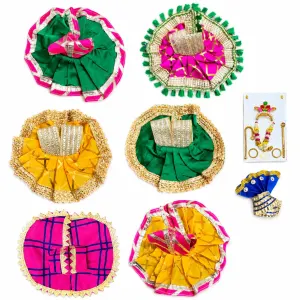
Laddu Gopal Poshak Dress Set with Mukut
View details

Original Shankh for Puja and Home Mandir
View details
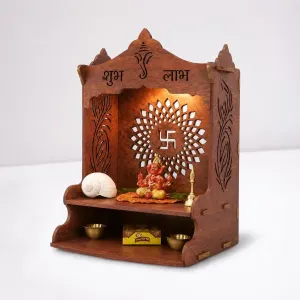
Wooden Home Mandir Temple for Pooja Room
View details