Dwarka in 3 Days: Adding Shivrajpur Beach to the Sacred Circuit
Three days at Dwarka allows the complete sacred circuit, all city temples, Nageshwar Jyotirlinga, Bet Dwarka by ferry, plus a morning or afternoon at Shivrajpur, Gujarat's Blue Flag certified beach 12 km away. Three days means no rushing, multiple aartis attended, and Dwarka experienced as a pilgrimage rather than a check-in visit.
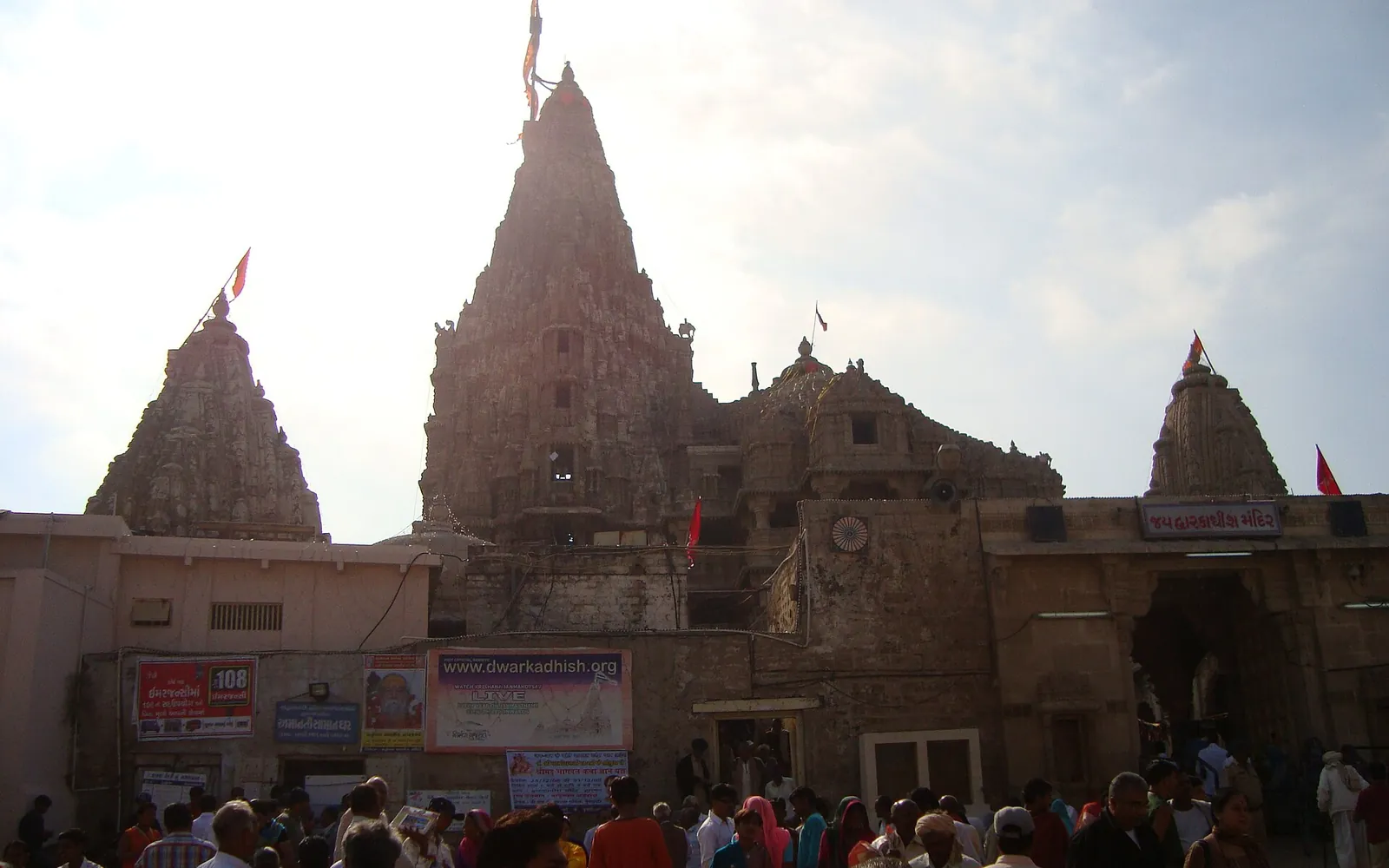
Why Three Days Changes the Character of the Yatra
The difference between two days and three days at Dwarka is not simply one extra day of sightseeing. It is the difference between a pilgrimage that is managed and one that breathes. With two days, you are always tracking the clock, catching the 7 AM ferry, making the noon Rajbhog, ensuring you are back for Sandhya Aarti. Every hour has a destination. With three days, the same sites are covered but with space between them: time to sit at Gomti Ghat without purpose, to revisit the Dwarkadhish sanctum a third time just because you want to, to sleep through a morning if the body needs it and still have the whole day ahead.
Spiritually, repeated darshan deepens the experience. A pilgrim who visits the Dwarkadhish sanctum once comes away with an impression. One who visits three, four, or five times over three days, at dawn, at noon, at dusk, comes away with something that has settled into the bones. The deity of Dwarkadhish appears differently at each aarti: in the pre-dawn dark of Mangla, in the full ornamental splendor of Shringar, in the lamp-lit gravity of Rajbhog, in the warm glow of Sandhya. Each is a distinct vision. Three days gives you all of them repeatedly.
The third day's addition of Shivrajpur Beach is not frivolous, it is the natural complement to the intense temple focus of the first two days. Dwarka sits on the Arabian Sea and the coast here is beautiful and undervisited. Shivrajpur's Blue Flag certification means the beach is clean, maintained, and safe. Spending two hours on the shore, watching the same sea that surrounds Bet Dwarka and laps at Bhadkeshwar Mahadev, connects the coastal geography of the pilgrimage in a way that only physical presence can achieve. The ocean is not separate from the sacred landscape of Dwarka; it is integral to it.
Day 1: Dwarka City, The Complete Temple Circuit
The day begins at Gomti Ghat. With three days ahead, there is no urgency, soak in the pre-dawn atmosphere at the ghat fully. Witness the sky lighten over the water, the priests beginning their morning rituals, the first pilgrims arriving for their sacred bath. If you plan to bathe in the Gomti, do so now. The water is cool in winter mornings and the experience of bathing in the sacred river before Mangla Aarti is the traditional opening of the Dwarka pilgrimage.
Walk to Dwarkadhish Temple from the ghat (5 minutes). Dwarkadhish has no paid VIP darshan ticket, general darshan has always been free and every pilgrim joins the same single queue, the counter for depositing belongings opens at 5:30 AM. Deposit mobile phones and leather items at entry. Enter through Swarga Dwar. The inner court is dim and fragrant, gathering devotees before the Mangla doors open.
Over three days, you will attend Mangla Aarti multiple times. This first one sets the tone. Allow yourself to be fully present, no photographs, no rushing, no narrating the experience to yourself. Simply be in the moment as the lamps are waved, the bells ring, and the fragrance of flowers and camphor fills the chamber. The Panchamrit prasad is distributed free to all present. Stay for the full aarti (approximately 30 minutes).
Shringar Aarti adorns the deity in full regalia. With three days ahead, you will see the Shringar on subsequent mornings too, each day the ornamental dress changes, offering a slightly different vision. Complete main darshan in the general queue, the same free queue every pilgrim uses. Explore the inner courtyard fully, the 72-column hall, the carvings, the subsidiary shrines to Devaki, Balrama, and other deities. Exit through Moksha Dwar.
With three days, there is no need to eat quickly and rush. Have a full Gujarati breakfast near Swarga Dwar, thepla, sev tameta, poha, or a full breakfast thali. Many small restaurants in the temple area serve fresh breakfast from 7:30 AM. Sit, eat slowly, talk with fellow pilgrims. This unhurried pace is the gift of a three-day visit.
Auto to Rukmini Devi Temple, open 8:30 AM-12:30 PM and 5 PM-8:30 PM. Spend 45-60 minutes here. The temple's exterior features intricate sculptural panels, unlike the Dwarkadhish Temple which is more severe in its grandeur, Rukmini Devi is delicate and detailed. The legend carved in the temple's history, of Rukmini separated from Krishna due to a sage's curse, residing apart from the main city, gives this temple an atmosphere of quiet longing that is distinct from the celebratory energy of Dwarkadhish.
Check tide timing in advance. At low tide, walk the rocky path to this Shiva temple set on an outcrop in the sea. With three days available, if the tide is not right on Day 1, you can return on Day 3 morning when the tide may be more favorable. However, plan to attempt it on Day 1 so you have Day 3 as backup. The combination of the Arabian Sea, the ancient Shiva shrine on exposed rock, and the walk itself makes this one of the most spiritually and atmospherically distinctive stops in Dwarka. Allow 1 hour.
Back at Dwarkadhish by 11:45 AM. Join the queue for Rajbhog darshan at noon. The Rajbhog crowd is usually lighter than morning, a good second darshan of the day. The temple closes at 1 PM after Rajbhog. With three days, missing Rajbhog on one day is less catastrophic than on a one-day visit, but aim to attend it on Day 1 to set the pattern.
Lunch at Trust Bhojnalaya or a nearby restaurant. Rest through the hottest part of the day. In the afternoon, explore the Dwarka bazaar at a leisurely pace, conch shell items, rudraksha malas, saffron, local handicrafts. The bazaar lanes near the temple have a centuries-old market character worth absorbing slowly. This is also a good time for a visit to the Dwarka Archaeological Museum if you want historical context for the city's ancient significance.
ISKCON Dwarka opens at 4:30 PM. The complex is beautifully maintained with a large temple hall, gardens, and a prasadam dining hall (dinner 7:30-9 PM). Attend the Sandhya Aarti at ISKCON at 7 PM for a different spiritual register, the Vaishnava kirtan tradition of ISKCON, with its call-and-response chanting and energetic bhakti, contrasts interestingly with the more classical Pustimarg tradition of Dwarkadhish. Both are valid expressions of Krishna devotion. Prasad dinner at ISKCON after the Sandhya Aarti is well-regarded.
Walk the Sudama Setu suspension bridge in the late afternoon golden light. The view of the Dwarkadhish Temple across the Gomti Creek from the bridge is the best panoramic view of the temple available from any public vantage point. Walk to the other bank and return. Then spend 15-20 minutes sitting by Gomti Ghat watching the evening settle over the water. On Day 1 with three days ahead, this evening sitting at the ghat is more restful than purposeful, let it be.
Return to Dwarkadhish for the Sandhya Aarti at sunset. The flag-change ceremony and evening aarti is the visual climax of the day. Stay in the courtyard through the aarti and for a few minutes afterward, when the lamps are still lit and the crowd slowly disperses. The atmosphere in the minutes after a major aarti, the smell of incense and camphor, the fading bell sounds, the devoted faces, is its own form of darshan.
Dinner at temple bazaar restaurants or ISKCON prasadam hall (if you stayed for ISKCON Sandhya Aarti). Before sleep, arrange the next day's cab or auto for the Nageshwar-Bet Dwarka circuit. Negotiate the full-day rate. Ask hotel staff for tide timing for Bhadkeshwar, you may use Day 3's morning for a return visit if today's timing was unfavorable.
Shayan Aarti at 9 PM, the quietest and most intimate aarti of the day. The deity is put to rest for the night. With three days available and good sleep a priority, feel free to attend or skip based on energy levels. If you do attend, you will have the company of only a handful of devoted pilgrims, a very different experience from the morning and evening aartis.
Day 2: Nageshwar Jyotirlinga and Bet Dwarka
Second Mangla Aarti. The familiarity from Day 1 allows a deeper presence. After aarti, have breakfast quickly and be ready to depart by 7-7:15 AM. Your pre-arranged cab or auto should be at the hotel by 7 AM.
Drive north on the Okha highway. Flat Saurashtra landscape, salt flats, and occasional glimpses of the sea accompany the 35-40 minute drive to Nageshwar. The giant seated Shiva statue at Nageshwar becomes visible from the road as you approach, one of the largest Shiva statues in India, it serves as a beacon for pilgrims from a distance.
Nageshwar is open from 5 AM with no afternoon break (closes 9 PM). Morning from 6-8 AM is the Rudrabhishek window, if you booked this the previous evening at the temple counter, arrive by 7:45 AM. For general darshan, join the queue and complete darshan by 9 AM. Then spend time at the Shiva Murti statue in the outer compound, circumambulate it, observe it from different angles. The statue is immense and the detail in the stone carving is worth close examination. Allow 1.5 hours total at Nageshwar.
Continue north from Nageshwar to Okha. Arrive at Okha Jetty by 10-10:15 AM. Your driver stays at Okha while you take the ferry. Confirm with the driver where to meet on return, either at the jetty parking or at a specific landmark in Okha.
Government ferry ticket: ₹40-50 one way. Departs every 30-45 minutes. Consider crossing by road over Sudarshan Setu one way and taking the boat the other, which gives you both perspectives of the channel. The 3.5 km sea crossing takes 20-30 minutes by ferry. Watch the island approach from the bow of the boat.
The main Bet Dwarka temple is open 6 AM-12:30 PM (summer) in the morning session, arriving at 10:45 AM gives you comfortable darshan time. After the main temple, explore the secondary shrines on the island. The island has a different quality from the mainland, quieter, more insular, with the sea on all sides. Walk to the island's edges if time and the terrain allow. Local vendors sell conch items, fresh coconuts, and prasad. Allow 1.5-2 hours on the island.
Board the return ferry (₹40-50) by 12:15 PM, before the island temple closes at 12:30 PM. The return crossing takes 20-30 minutes. Rejoin your driver at Okha. Light refreshment at Okha, a tea stall near the jetty offers chai and snacks.
Return journey from Okha to Dwarka. Back at Dwarka by 1:30-2 PM. Lunch at hotel or restaurant. Rest through the afternoon. The Day 2 excursion is complete, you have now visited a Jyotirlinga and an island temple in a single well-structured day without feeling rushed.
With afternoon rest behind you, return to Dwarkadhish for Uthapan at 5 PM. This is your third or fourth darshan of the deity over two days, each time the experience is slightly different. Spend time in the outer halls and observe the other pilgrims around you, the diversity of people coming to this one place from across India is itself a form of contemplation.
Second Sandhya Aarti. The dhwaja changes again at sunset. By now the sounds, the smells, the faces of the priests, and the rhythm of the aarti are familiar, and familiarity here is not a diminishment. It is deepening. Dinner after the aarti, early rest for Day 3.
Day 3: Shivrajpur Beach and Final Darshan
The third Mangla Aarti is different from the first two. The place is completely familiar. The path from hotel to Gomti Ghat to temple is known by instinct now. You know which side of the inner chamber allows the best view of the aarti, which priest carries which lamp. This settled familiarity is the gift of staying three days. Attend the Mangla Aarti with the knowledge that this is the last one of this trip, and with the understanding that Dwarka will still be here, unchanged, when you return.
Shringar Aarti and a final morning darshan at Dwarkadhish. On this last morning, take your time inside the sanctum. If there is a specific prayer or intention you came to Dwarka with, offer it clearly and completely. Exit through Moksha Dwar, the name means the gate of liberation, which is a fitting exit for the last Dwarkadhish darshan of the visit.
If Bhadkeshwar Mahadev's tide was unfavorable on Day 1, this is the backup morning. Check the tide timing, if low tide falls between 9-11 AM, go to Bhadkeshwar before Shivrajpur. If the tide is not right, skip it and proceed directly to Shivrajpur after breakfast. Bhadkeshwar should not be forced at an unfavorable tide, it is genuinely inaccessible and unsafe when the tide is in.
Hire an auto (₹150-250 one way) or cab to Shivrajpur Beach. Shivrajpur is 12 km south of Dwarka on the coast. The beach holds India's Blue Flag certification, one of the most rigorous eco-certifications for beaches globally, covering water quality, environmental management, safety equipment, lifeguards, and facilities. The sand at Shivrajpur is clean and pale, the water a striking turquoise-green. This coastline faces the Arabian Sea and is far less crowded than beaches near major cities. Spend 2-3 hours here, walking the shoreline, sitting by the water, or simply watching the sea that you have been surrounded by for three days in a religious context now spread before you in its natural form.
Return to Dwarka by noon-12:30 PM. Final Rajbhog darshan at Dwarkadhish at noon, a last chance before the temple closes at 1 PM. This final Rajbhog darshan on Day 3, after the beach visit, has a particular completeness: you have been on the sea (Bet Dwarka ferry), by the sea (Bhadkeshwar on the rocks, Shivrajpur on the shore), and now back in the sanctum of the sea-city's main temple. The geography of the sacred and the natural have interlaced.
Lunch at the Trust Bhojnalaya or your favourite restaurant of the trip. Pack your bags. Do your final round of the temple bazaar, buy items you held off on earlier, extra prasad for family, flowers for the journey. The Dwarka bazaar does a brisk trade in the afternoons with pilgrims about to depart. Return any rented items, settle hotel bills. Be ready to head toward the station or your onward transport by late afternoon.
If your departure allows, attend the final Uthapan darshan at 5 PM. This is the last darshan of the visit. Do not try to make it emotional or ceremonially significant, simply go, stand before the deity, and let the visit close naturally. The pilgrimage continues in memory long after the physical departure.
If your train or onward transport departs late evening, stay for the Sandhya Aarti at sunset. This final aarti closes the three-day circuit: you arrived for Mangla Aarti on Day 1 and you leave after Sandhya Aarti on Day 3. The sacred day of Dwarka, from dawn to dusk, has been witnessed in its full cycle, multiple times. That is a complete Dwarka darshan.
Shivrajpur Beach: What to Know Before You Go
Shivrajpur Beach, 12 km south of Dwarka on the Saurashtra coast, received the Blue Flag certification, awarded by the Foundation for Environmental Education (FEE), making it one of the cleanest and best-managed beaches in India. The certification requires meeting 33 strict criteria across water quality, environmental education, environmental management, safety and services, and site conditions. This means clean facilities, maintained lifeguard stations, waste management, and enforced no-litter policies.
The beach is best visited in the morning (10 AM-12:30 PM window when you will visit on Day 3) when the light is good and the heat manageable. From October to March, temperatures at the beach are pleasant, 20-27°C, with a sea breeze that makes the coast comfortable even at midday. April through June is hotter (35-40°C at the coast) but still bearable with early morning timing. Monsoon months (June-September) bring rough seas and are not recommended for beach visits.
Bring the following for the Shivrajpur visit: water (1 litre per person), sunscreen, a change of clothes if you plan to wade in the water, a dry bag for valuables, and a light snack. The beach has some facilities (basic changing rooms, a few vendors) but is not highly commercialized. This is not a tourist beach with carnival rides and stalls, it is a clean, quiet coastal strip. That simplicity is the point. After two intense days of pilgrimage, the plain presence of the sea and the sky and the sand is restorative.
Three-Day Budget and Transport Summary
| Item | Approx Cost | Notes |
|---|---|---|
| General Darshan | Free | No paid VIP or priority-queue option exists, all pilgrims use one queue |
| Accommodation (2 nights) | ₹600-4,000 total | Dharamshalas ₹300/night; hotels ₹800-2,000/night |
| Auto fares Day 1 (total) | ₹300-500 per person | Rukmini Devi, Bhadkeshwar, ISKCON, back |
| Day 2 cab package | ₹800-1,500 for cab | Dwarka-Nageshwar-Okha-Dwarka (split among group) |
| Ferry (Okha to Bet Dwarka return) | ₹80-100 per person | ₹40-50 each way, government ferry |
| Auto to Shivrajpur (Day 3) | ₹300-500 return | 12 km each way |
| Meals (3 days, vegetarian) | ₹500-1,200 per person | Trust Bhojnalaya free; restaurants ₹100-250 per meal |
| Total per person (budget) | ₹2,500-5,000 | Excluding train/flight to/from Dwarka |
The three-day Dwarka budget is among the most economical of any major pilgrimage in India. The accommodation near the temple is affordable, meals at the Trust Bhojnalaya are free or nearly so, and the temple entry itself has no admission charge, general darshan is entirely free and there is no official paid VIP darshan to budget for. The main expense is transport for the Day 2 excursion. For groups of 4 or more, the cab cost on Day 2 splits to ₹200-375 per person, making the entire three-day visit comfortably achievable for ₹2,500-3,500 per person all-in, excluding the journey to Dwarka itself.
Frequently Asked Questions
Also Read
Is One Day Enough
One day covers Dwarkadhish Temple, Gomti Ghat, Bhadkeshwar Mahadev and Sudama Setu in Dwarka city.
Read Full Guide5 Day Dwarka Somnath Itinerary
Dwarka and Somnath 5-day plan: Days 1-2 Dwarka city, Day 3 Bet Dwarka and Nageshwar, Day 4 drive to Somnath via Porbandar, Day 5 Somnath temple.
Read Full GuideDwarka 2-Day Itinerary
The core two-day plan covering Dwarka city temples and the Bet Dwarka and Nageshwar excursion.
Read MoreBest Time to Visit Dwarka
Month-by-month weather guide, when to come, when to avoid, and which months suit which type of pilgrim.
Read MoreHotels in Dwarka
Accommodation options near Dwarkadhish Temple, from dharamshalas to mid-range hotels and what to expect.
Read More