Is One Day Enough for Dwarka? What You Can See and What You Will Definitely Miss
One day is enough for Dwarka city, Dwarkadhish Temple from Mangla Aarti to Sandhya Aarti, Gomti Ghat, Bhadkeshwar Mahadev, and Sudama Setu all fit comfortably. But one day is not enough for the complete yatra. Bet Dwarka island is a full separate day. Nageshwar Jyotirlinga is a half-day. Here is the honest breakdown.
What 1 Day in Dwarka Actually Covers: The Full Hour-by-Hour Plan
A single full day starting at 5:30 AM is genuinely enough to experience the spiritual heart of Dwarka city. The day is built around four fixed anchors: Mangla Aarti at 6 AM, Rajbhog darshan at noon, Uthapan at 5 PM, and Sandhya Aarti at sunset. Everything else, Bhadkeshwar, Rukmini Devi, Sudama Setu, fits into the windows between these fixed events. This is a full day. You will not have idle time; you will be on your feet from 5:30 AM to 7:30 PM. But you will have covered the city's essential sacred circuit completely.
The single most important lever for a one-day visit is timing, not money. Dwarkadhish Temple has no official paid VIP or priority-queue scheme; every pilgrim, including elderly and disabled visitors, uses the same single general darshan queue, and general darshan has always been free. In peak season (October to February) and on weekends, that general queue can stretch to 2-4 hours, but arriving for the 6:00 AM Mangla Aarti keeps the wait to roughly 30-45 minutes, since the queue is shortest between 6:00 and 7:00 AM and on weekday mornings. Those 1.5 to 3.5 hours saved by simply being early, rather than by paying anyone, are what allow the rest of the day's plan to hold together.
Arrive at Gomti Ghat for a ritual bath (snan) in the Gomti Creek, or simply sit on the steps and absorb the early morning atmosphere. The ghat is modest and intimate, this is not a large river ghat, but the stillness of the water at dawn and the sound of conch shells starting up from the direction of the temple make it the right way to begin. Even 10-15 minutes here before rushing to the temple sets the right tone for the day.
There is no separate VIP or paid entry at Dwarkadhish, only the single general darshan queue that every pilgrim joins, so the way to keep your wait short is to simply arrive early. Remove leather items, belts, leather wallets, and deposit your mobile phone at the phone deposit counter near the gate. Phones are not permitted inside the main temple. Swarga Dwar (north gate) is used for entry; Moksha Dwar (south gate) for exit. Be at the temple by 5:45 AM to be positioned for the 6:00 AM Mangla Aarti, this is when the queue is shortest all day. Be wary of anyone near the temple or online offering a paid "VIP darshan pass", they are not affiliated with the temple trust and should not be paid.
Mangla Aarti is the awakening of the deity, the sanctum doors open and the deity is greeted with lamps, incense, and bells in the cool darkness of dawn. This is the most spiritually charged moment of the entire day at Dwarkadhish Temple. The atmosphere, dim light, sound of conch shells echoing off ancient stone walls, the scent of camphor and flowers, is unlike anything else in the day. Pilgrims who have been to Dwarka multiple times consistently name Mangla Aarti as the moment they remember most. Missing it on a one-day visit is the one thing you will regret. Do not miss it.
Shringar Aarti at 7 AM is when the deity is dressed in full ceremonial finery, ornamental clothes, jewels, garlands. After Shringar, general darshan opens fully. If you arrived for Mangla Aarti, your wait is roughly 30-45 minutes rather than the 2+ hours the queue can reach later in the morning. Take your time in the inner sanctum and the 12th-century courtyard, note the 72-column assembly hall, the towering flag mast (dhwaja stambha), and the intricate carvings. Exit via Moksha Dwar. This main darshan window closes by 1 PM for the afternoon Rajbhog, so the morning is when crowds are building steadily.
Rukmini Devi Temple is 2.5 km from Dwarkadhish (auto ₹50-70, 5-7 minutes). It is open from 8:30 AM to 12:30 PM in the morning session. The temple is quieter and more intimate than Dwarkadhish, beautiful sculptural work, the legend of Rukmini's separation from Krishna built into the stones. Budget 30-40 minutes including travel. However: if there is any sign of a long queue at Dwarkadhish and you have not completed your Mangla darshan yet, skip Rukmini Devi for this trip. Getting back for Rajbhog (12 PM) takes priority over the satellite temple visit.
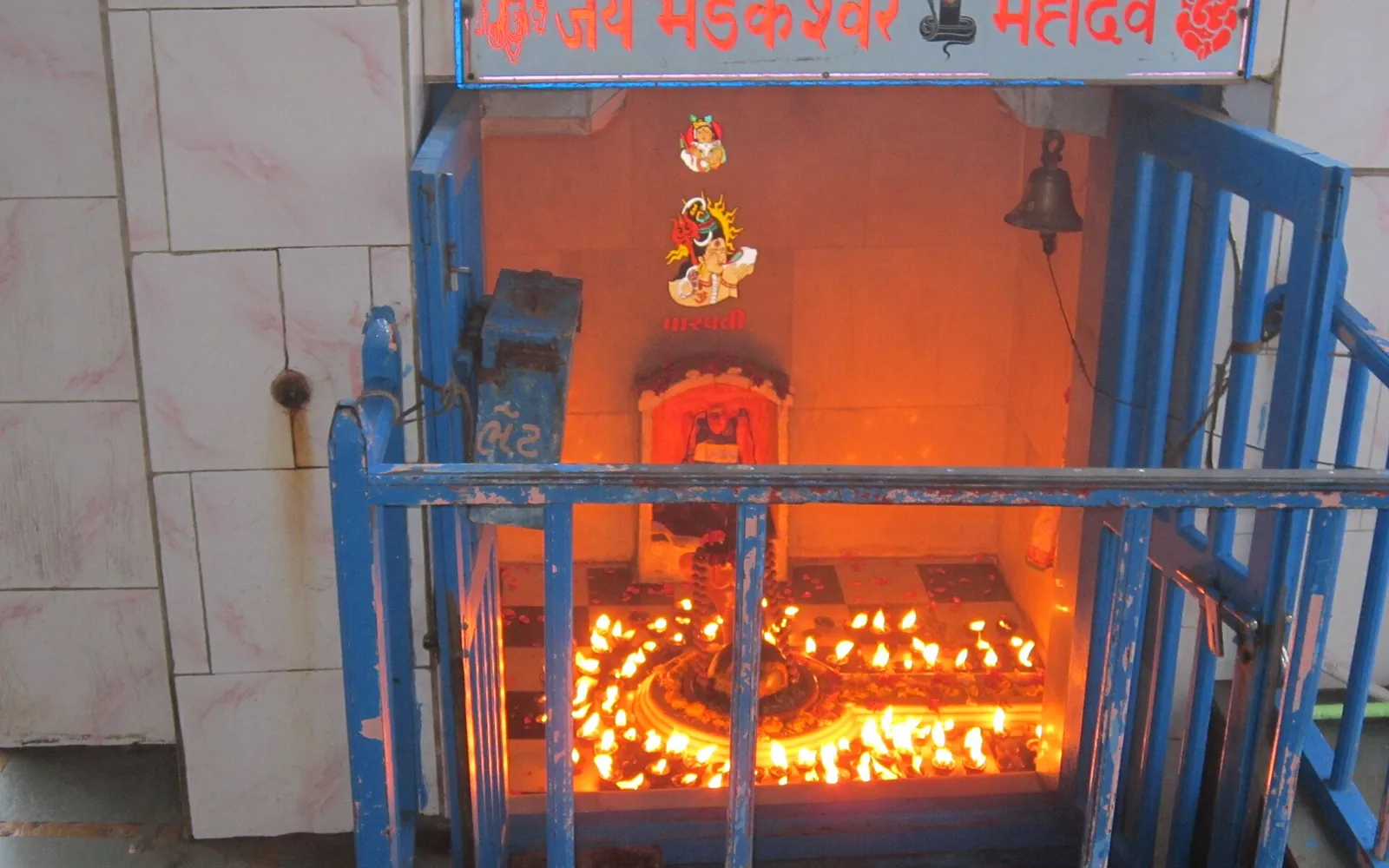
Bhadkeshwar Mahadev is a Shiva temple on a rocky outcrop in the Arabian Sea, reachable by a narrow rock path that is only exposed at low tide. Check the day's tide schedule before planning this stop, ask your hotel, any auto driver, or search "tide chart Dwarka" online. At low tide, walk the 200-300 metre path to the temple barefoot (the rocks are uneven, go slowly), offer prayers, and return before the tide turns. The dramatic seascape here is the most visually striking site in the Dwarka city circuit. Allow 45-60 minutes total. If it is high tide, skip this and spend the extra time at Dwarkadhish before Rajbhog.
Be back inside Dwarkadhish Temple by 11:30 AM. Rajbhog, the midday ritual offering of food to the deity, happens at 12 PM. This is a significant ritual observance and the second major darshan window of the day. The crowd at Rajbhog time is typically lighter than the early morning rush, many pilgrims who came for Mangla Aarti have already left. The mood inside the temple at this hour, with the noonday light and the quieter crowd, is often more contemplative. The temple closes firmly at 1 PM after Rajbhog and does not reopen until 5 PM.
The Trust Bhojnalaya inside or adjacent to the temple complex serves a simple Gujarati thali, free or for a ₹20 donation. This is the most authentic and economical meal in Dwarka. Alternatively, restaurants near Swarga Dwar serve full vegetarian thalis (₹100-200). Take a proper lunch break, you have been on your feet since 5:30 AM and the afternoon still holds Sudama Setu and two evening visits. Dwarka is entirely vegetarian; alcohol is not available anywhere in the city.
Sudama Setu is a pedestrian suspension bridge across the Gomti Creek, a few minutes' walk from Gomti Ghat. Cross it in the afternoon when the light is angling lower and the temple spires reflect in the water. The bridge offers the best full-frame view of the Dwarkadhish Temple shikhara (spire) from a distance, this is the photograph pilgrims take home. Walk it twice, once each way. No entry charge. The gentle sway of the bridge, the creek below, the distant temple, it is 20-30 minutes well spent. This is also the window to walk the Gomti waterfront and browse the bazaar stalls if you want to pick up conch shells, rudraksha, or prasad items for family.
Be at the temple gate by 4:45 PM to join the Uthapan queue. Uthapan is the ceremonial "waking" of the deity after the afternoon rest, the temple reopens at 5 PM. This is typically the least crowded darshan window of the day. The sanctum at 5 PM, with golden afternoon light filtering in and a smaller crowd than the morning, often produces the most personal, unhurried experience of the entire visit. Stay inside the temple court after Uthapan to wait for the Sandhya Aarti.
The Sandhya Aarti at Dwarkadhish happens at sunset, roughly 6 to 7 PM depending on the season. The flag on the dhwaja stambha (the tall flag mast in the temple court) is ceremonially replaced at this exact moment. Watch from the temple court if you can get positioned close enough; otherwise the outer courtyard also offers a view. The Gomti Ghat itself holds a smaller concurrent aarti at sunset that mirrors the temple ceremony. After the Sandhya Aarti, your one-day Dwarka circuit is complete. You have attended the full arc from awakening (Mangla) to closing (Sandhya) of the daily sacred cycle.
What Gets Missed with 1 Day: The Honest List
The one-day plan above is a genuinely complete Dwarka city experience. But Dwarka the pilgrimage site extends beyond the city. These are the places that simply do not fit in a single day and what is lost by skipping them.
Why Bet Dwarka Genuinely Needs a Separate Full Day
This is the question asked most often by pilgrims planning a one-day Dwarka visit: can Bet Dwarka be squeezed in as a morning or afternoon side trip? The answer is no, and the mathematics of the journey make this clear.
Start with the morning at Dwarkadhish. Mangla Aarti is at 6 AM. If you want to attend Mangla Aarti, and on a pilgrimage to Dwarka, you should, you will not leave the Dwarkadhish Temple area before 8 to 8:30 AM at the earliest, even if you joined the general queue early. In peak season the realistic departure time after morning darshan is closer to 9 to 9:30 AM.
From Dwarka to Okha (the ferry point for Bet Dwarka) is 36 km. On the main road, with normal traffic, this is 45 to 50 minutes. Arrive at Okha at roughly 10 to 10:30 AM. Government ferries run every 30-45 minutes; the crossing takes 20-30 minutes. You land at Bet Dwarka by 11 AM.
Bet Dwarka is an island with the main Dwarkadhish temple and several subsidiary shrines. Darshan at the main temple takes 1 to 2 hours depending on the crowd, peak season queues here can be long. You finish at Bet Dwarka by 1 PM at best, 2 PM more realistically in season. Return ferry: 30 minutes. Drive back to Dwarka: 45 minutes. You are back in Dwarka city by 2 to 3 PM. That is 4 to 5 hours of Dwarka city time eliminated, which means you would have missed either the morning Mangla Aarti (the most important part of the Dwarkadhish visit) or the afternoon circuit entirely.
The fundamental conflict is that Dwarkadhish and Bet Dwarka both deserve unhurried time. Splitting attention between both in a single day means rushing both. The standard recommendation across pilgrimage planners, priests at the temple, and local guides is identical: one day for Dwarka city, a second day for Bet Dwarka. This is not padding the itinerary, it is an honest assessment of the travel time and the devotional experience both sites deserve.
If You Truly Have Only 1 Day: What to Prioritise and What to Skip
If one day is your hard constraint, an overnight train arriving at 4-5 AM and a departure train at 8-9 PM, for instance, this is the optimized sequence that maximizes spiritual value within the time available. The choices below are based on what cannot be replaced and what can be deferred or skipped without loss to the core pilgrimage experience.
Non-negotiable. This is the defining spiritual moment of the Dwarka visit. Arriving after Mangla Aarti means the most important experience of the day is missed. If there is only one thing you do in Dwarka, let it be this. Be at the temple gate by 5:45 AM and join the general darshan queue early, it is the only queue and it is shortest at this hour.
The ghat is the ritual entry point of the Dwarka pilgrimage, a bath here before Mangla Aarti, or at minimum sitting on the steps at dawn, is part of the traditional yatra protocol. The evening Sandhya Aarti at the ghat is also significant. Both visits are 10-15 minutes and require no travel, Gomti Ghat is a 5-minute walk from Dwarkadhish.
The midday offering is a second major darshan window, lighter crowd, a different quality of stillness in the temple, and the ritual offering of the midday meal to the deity. Be back from any satellite temple visits by 11:30 AM to join the Rajbhog queue before the temple closes at 1 PM.
The Sandhya Aarti at sunset, with the flag change on the dhwaja stambha, is the day's closing ritual. Along with Mangla Aarti, this is one of the two moments that bracket the sacred day at Dwarkadhish. Attending both means you have witnessed the full arc of the daily devotional cycle. This is the proper way to close a Dwarka visit.
The sea temple is 2 km from Dwarkadhish (auto ₹40-60). Allow 45-60 minutes. The visual drama of the temple on its rocky island with the Arabian Sea around it is the most distinctive sight in the Dwarka area. Include it if the tide is favorable. Skip it if tide timings require going at 7-8 AM (conflicts with darshan) or if the queue situation at Dwarkadhish is running long.
Take the auto (₹50-70, 5-7 min) after breakfast if there is time between Shringar Aarti darshan and the Bhadkeshwar visit. If the Dwarkadhish darshan has run long due to queues and it is already 9:30 AM, skip Rukmini Devi and go directly to Bhadkeshwar. The priority order is: Dwarkadhish (morning) → Bhadkeshwar → Rajbhog → Sudama Setu → Uthapan → Sandhya Aarti.
The suspension bridge over Gomti Creek offers the best panoramic view of the Dwarkadhish Temple spire. Walk it in the 1-5 PM window when the main temple is closed. It is free, takes 20-30 minutes, and requires no auto travel, it is a short walk from Gomti Ghat. This is the one activity perfectly suited to the afternoon lull in the itinerary.
ISKCON is 3 km away and adds meaningful time to the day. If you are already at Uthapan darshan by 5 PM and Sandhya Aarti at 6-7 PM, there is no room for ISKCON. Nageshwar, Bet Dwarka, and Shivrajpur Beach are simply physically impossible on a single day alongside the Dwarkadhish circuit. Accept this with equanimity and save them for a return visit or a second day.
Why 2 Days Is the Minimum for a Proper Char Dham Yatra at Dwarka
Dwarka is one of the Char Dhams of Hindu pilgrimage, one of the four sacred corner sites of India. Within the Dwarka pilgrimage specifically, the full circuit includes both the Dwarkadhish Temple in the main city and the Bet Dwarka (Beyt Dwarka) island temple, the island where Krishna is believed to have actually lived. Both sites are considered essential parts of the Dwarka yatra in traditional pilgrimage practice.
A pilgrim who visits Dwarkadhish but skips Bet Dwarka has completed the temple visit but not the full Dwarka pilgrimage in the theological sense. This is the reason priests, temple guides, and pilgrimage organizers uniformly tell visitors: two days minimum. Not because Dwarka city cannot be seen in one day, it can, but because a proper yatra includes the island.
Two days allows this without compromise: Day 1 covers Dwarka city fully at a pace that includes all aartis, all satellite temples, and the ghat rituals. Day 2 departs early for Okha, takes the morning ferry to Bet Dwarka, completes darshan on the island, returns via Nageshwar Jyotirlinga (17 km from Dwarka, 11th of the 12 sacred Jyotirlingas), and arrives back in Dwarka in time for the evening Sandhya Aarti if returning that day, or departs from Okha if catching a train or bus from there.
Three days, the comfortable duration, adds Shivrajpur Beach, allows a relaxed pace at Bet Dwarka without time pressure, includes ISKCON Dwarka properly, and lets you attend Shayan Aarti (9 PM) without rushing to a departure. The third day at Dwarka is often the day pilgrims find most peaceful, the main obligations fulfilled, the remaining time is devotional leisure.
Frequently Asked Questions
Also Read
2 Day Dwarka Itinerary
Dwarka 2-day plan: Day 1 covers the city temples including Dwarkadhish, Rukmini Devi and Bhadkeshwar.
Read Full Guide1 Day Dwarka Itinerary
Dwarka 1-day itinerary from 5:30 AM: Gomti Ghat, Mangla Aarti, Rukmini Devi, Bhadkeshwar, Rajbhog darshan, Sudama Setu, and Sandhya Aarti at sunset.
Read Full Guide3 Day Dwarka Itinerary
Dwarka 3-day itinerary: city temples on Day 1, Nageshwar and Bet Dwarka on Day 2, then Shivrajpur Blue Flag Beach and leisure time on Day 3.
Read Full GuideDwarka Darshan Itinerary
Day-by-day itinerary for 1, 2 and 3-day Dwarka visits, exact timings, distances, auto fares, and the right sequence for each day.
Read MoreBet Dwarka Complete Guide
Ferry timings from Okha, how to reach Bet Dwarka, darshan timings, and what to expect on the island, everything for Day 2 of your Dwarka yatra.
Read MoreHow to Reach Dwarka
Train, bus, and flight options to reach Dwarka, with schedules, fares, and the fastest route from major cities.
Read More