Mul Dwarka: The Village Tradition Calls the Original Dwarka
Mul Dwarka, also spelled Mool Dwarka, is a small coastal pilgrim village near Kodinar in Gujarat's Gir Somnath district, held by devotional tradition to be the place where Lord Krishna first set foot on the Saurashtra coast after leaving Mathura, before he went on to establish his full royal capital at what is now the city of Dwarka. "Mul" means root or origin, and for pilgrims willing to travel beyond the one famous temple town, Mul Dwarka offers a quieter, deeply layered glimpse into the wider sacred geography that the name "Dwarka" actually spans.
Useful References
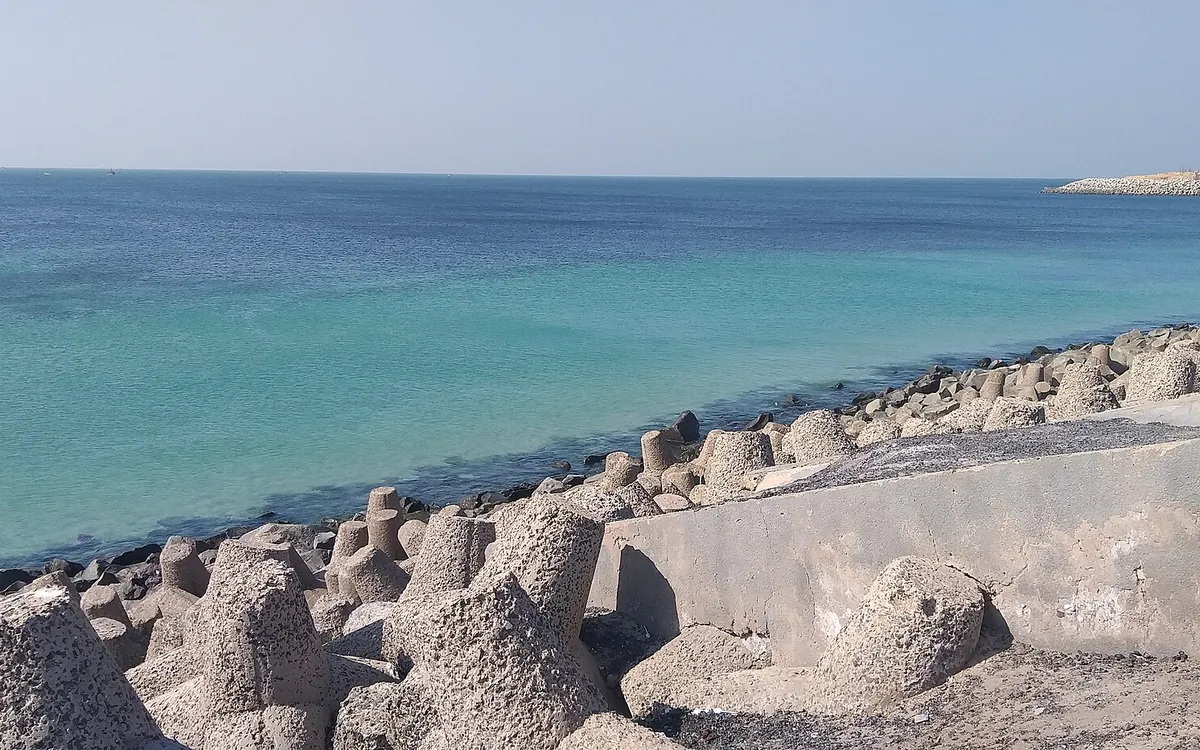
The Tradition: Krishna's First Settlement Before Dwarka
Most pilgrims arrive in Dwarka city knowing it as the one place, the towering Jagat Mandir at the meeting point of the Gomti River and the Arabian Sea, the seat from which Lord Krishna ruled the Yadava kingdom. Far fewer know that Gujarat's devotional geography preserves a second, older layer beneath that famous story: a small village on the coast near Kodinar, roughly 270 km south of present-day Dwarka, that local and pilgrim tradition remembers as the place Krishna reached first.
According to this tradition, when Krishna left Mathura with the Yadava clan and travelled toward the Saurashtra coast in search of a new, secure homeland, he did not arrive directly at the site of today's Dwarka city. He is believed to have paused and settled, at least for a time, at this coastal spot near Kodinar, establishing an early foothold before circumstances or divine will led him further along the coast to found the grander, permanent capital that the world now knows as Dwarka. The village that grew around this earlier settlement carries the name Mul Dwarka, or Mool Dwarka, "mul" and "mool" both meaning root, source, or origin in Sanskrit-derived Gujarati usage. The name itself is the clearest statement of the belief: this, tradition says, is where the story of Dwarka actually begins.
It is worth being clear about what kind of claim this is. Like many foundational stories connected to Krishna's life, his birthplace at Mathura, his childhood at Vrindavan and Gokul, the location of Kurukshetra, the identification of Mul Dwarka as Krishna's first settlement rests on continuous devotional memory and local tradition carried across generations, not on a settled archaeological or historical record that pinpoints the event. That does not diminish its significance for the pilgrims who hold it sacred. Faith traditions the world over are built on exactly this kind of transmitted memory, and for devout Vaishnavas the pull of standing at a place their tradition names as the "root" of Dwarka is real and meaningful regardless of what can or cannot be independently verified about events some five thousand years in the past.
Where Mul Dwarka Is and How to Reach It
Mul Dwarka sits on the Saurashtra coastline in Gir Somnath district, about 7 km from Kodinar town. Kodinar itself is a modest but well-connected town on the state highway network of southern Saurashtra, making Mul Dwarka reachable by a short local drive, auto-rickshaw, or taxi once you have reached Kodinar. From present-day Dwarka city, the road distance to Mul Dwarka runs approximately 260 to 270 km, which in practical terms means a full day of driving, this is not a same-day side trip from Dwarka the way Bet Dwarka or Nageshwar are, but rather a separate leg of a longer Gujarat pilgrimage itinerary.
The single most useful planning fact for pilgrims is this: the distance from Dwarka to Mul Dwarka is roughly comparable to the distance from Dwarka to Gir National Park (Sasan Gir), since both lie in the same general southern direction along the Saurashtra coast. Pilgrims who are already planning a Gir National Park safari as part of their broader Gujarat trip, a common pairing, since Gir is one of the state's premier wildlife destinations and draws many of the same travelers who come for Dwarka's temples, will find that Mul Dwarka sits conveniently along or near that same southward leg of the journey. Rather than treating Mul Dwarka as an entirely separate expedition, it fits naturally as an add-on stop for anyone already routing toward Gir, Somnath, or the Kodinar-Una coastal belt of Gir Somnath district.
For pilgrims travelling by train, Veraval and Una are the more prominent railheads in the area, with Kodinar itself having local rail and bus connectivity as well. Private taxi remains the most practical way to actually reach the village of Mul Dwarka from Kodinar, since public transport frequency to the smaller coastal village is limited. Travelers combining a Dwarka pilgrimage with a Gir safari and a Somnath temple visit, a popular southern-Saurashtra circuit, can build in a half-day detour to Mul Dwarka without significantly disrupting the rest of the itinerary, since Kodinar lies on or close to the common road corridor linking Somnath, Gir, and the wider Junagadh-Amreli region.
What Archaeology Has Found: The Diva Dandi Structure
Separate from the devotional tradition of Krishna's first settlement, Mul Dwarka has attracted genuine attention from marine archaeologists studying the submerged and coastal remains along this stretch of the Saurashtra shoreline. Explorations near the village have documented artifacts and structural remains in the shallow coastal waters, most notably a circular limestone structure known locally as "Diva Dandi." Some researchers who have studied the structure have proposed that it may have functioned as a lighthouse or navigational marker from the medieval period, guiding maritime traffic along this historically active stretch of the Gujarat coast.
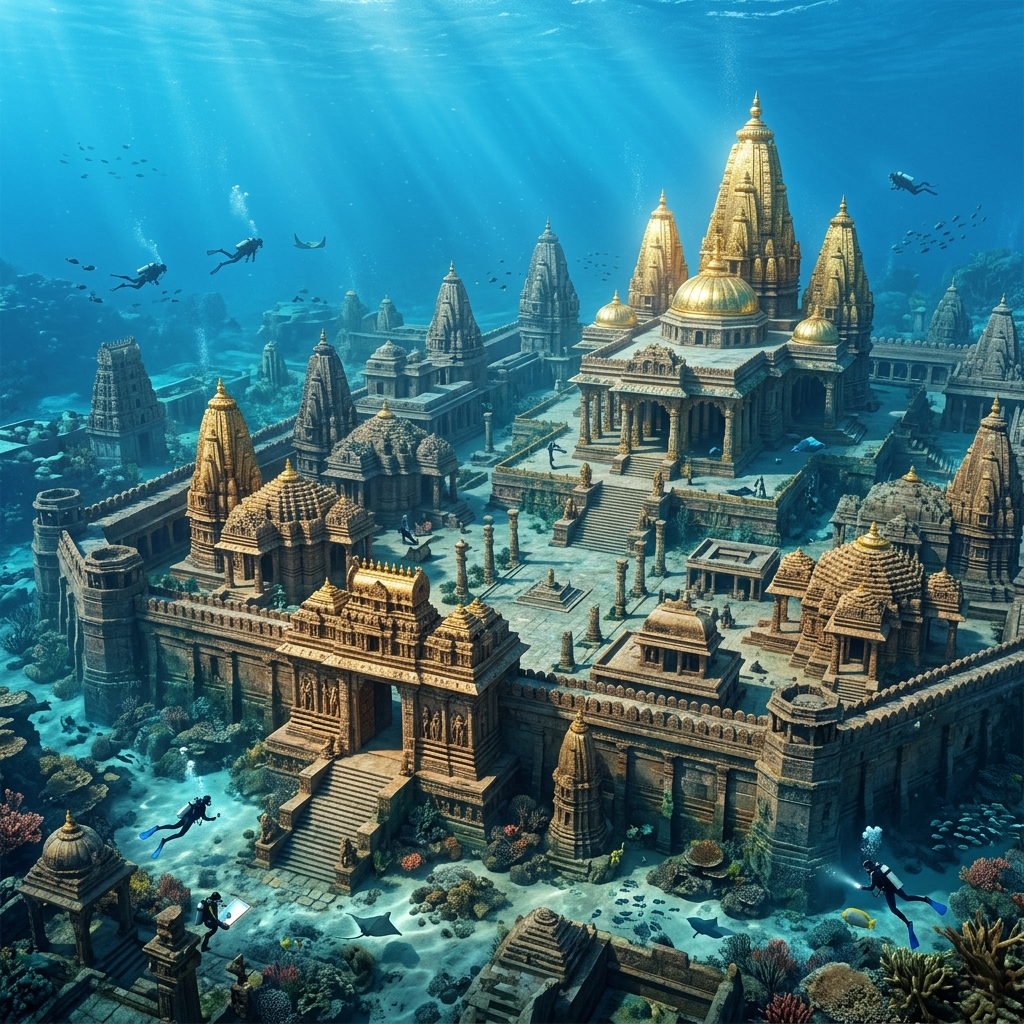
The dating evidence associated with these structures is important to state plainly: the surviving remains at Mul Dwarka, including the Diva Dandi structure, are generally dated to around the 10th century AD. This is a genuinely documented archaeological finding, but it sits at a very different point on the timeline than the devotional tradition of Krishna's era, which Hindu belief places thousands of years earlier. In other words, while the devotional tradition holds Mul Dwarka to be the site of Krishna's original settlement, the physical structures that survive and can be examined today are, by archaeological dating, artifacts of a much later period, most plausibly a medieval-era temple, maritime marker, or coastal structure built at or near a location that local communities already regarded as sacred, rather than physical remnants of the Krishna-era settlement itself.
This distinction is not a contradiction to be smoothed over, and it is worth stating honestly rather than blurring the two claims together. Many of India's most sacred sites carry exactly this layered character: a devotional tradition rooted in scripture and oral memory, and a physical, archaeological record that reflects later construction on the same ground, often precisely because earlier generations already held the spot to be sacred and built there in turn. Understanding Mul Dwarka this way, as a site where an ancient belief and a documented medieval archaeological presence coexist without one having to prove the other, is, if anything, a more honest and ultimately more interesting way to approach the place than insisting the ruins themselves are proof of the Krishna-era story.
The Temples of Mul Dwarka Today
Present-day Mul Dwarka is a functioning pilgrim village with a cluster of ancient Krishna temples that, in miniature, mirror the temple types found in the main Dwarka city. The principal shrines include a Dwarkadhish temple, dedicated to Krishna in his form as Lord and King of Dwarka, the same central identity venerated at the great Jagat Mandir, alongside a Trikamrai shrine, Trikamrai being another name and form of Krishna widely used across Gujarat's Vaishnav temple tradition, and a Rukmini temple honouring Krishna's principal queen, echoing the Rukmini Devi Temple that stands near Dwarka city itself.
What distinguishes a visit to Mul Dwarka from a visit to Dwarka city is scale and atmosphere rather than theological content. The same divine relationships, Krishna as king, Krishna as Trikamrai, Rukmini as queen, are venerated at both places, but Mul Dwarka receives only a small fraction of the pilgrim traffic that flows through present-day Dwarka every day. There are no large queues, no crowd-management barricades, no multi-hour waits. A pilgrim who reaches this coastal village finds small, well-kept temples, a handful of local priests, and a slow, unhurried rhythm of worship that the main Dwarka temples, however magnificent, can no longer offer at their present scale.
For devotees who take their Krishna pilgrimage seriously, who want to understand "Dwarka" not as a single city to check off an itinerary but as a layered concept spanning multiple sacred points across the Saurashtra coast, a visit to Mul Dwarka rewards exactly that deeper curiosity. Standing before the Dwarkadhish shrine in this quiet village, having just read or heard the tradition that names this spot the root of the entire Dwarka story, adds a dimension to the pilgrimage that the crowded, commercially developed main temple town, for all its grandeur, cannot replicate. It is a stop best suited to pilgrims with time, patience, and a genuine interest in the fuller geography of Krishna's presence on the Gujarat coast, rather than to first-time visitors on a tight single-city schedule.
Frequently Asked Questions
Also Read
Panch Dwaraka
The five sacred Dwaraka sites of Gujarat's Krishna pilgrimage circuit, Mukhya Dwarka, Bet Dwarka, Madhavpur, Okha Madhav and Shankhodhara, and how to complete the full yatra.
See the Panch Dwaraka GuideDwarka History
The layered historical and mythological story of Dwarka, from Krishna's legendary kingdom to the archaeological explorations that continue to study the region's ancient past.
Read Dwarka's HistoryDwarka Underwater City
The submerged remains explored off the Dwarka coast, what marine archaeology has found beneath the Arabian Sea and how it relates to the legend of Krishna's Dwaravati.
Read the Underwater City Story