Mundeshwari Temple, Kaimur: History, Timings & Visitor Guide
The Mundeshwari Devi Temple (IAST: Muṇḍeśvarī) is a Hindu temple, located at Ramgarh Village, 608 feet (185 m) on the Mundeshwari Hills of Kaimur plateau near Son River, in the Bhojpuri region of Indian state of Bihar. It is an Archaeological Survey of India (ASI) protected monument since 1915.

About Mundeshwari Temple
The Mundeshwari Devi Temple (IAST: Muṇḍeśvarī) is a Hindu temple, located at Ramgarh Village, 608 feet (185 m) on the Mundeshwari Hills of Kaimur plateau near Son River, in the Bhojpuri region of Indian state of Bihar. It is an Archaeological Survey of India (ASI) protected monument since 1915.
It is an ancient temple which is believed to be dedicated to the worship of the goddess Durga and god Shiva, and is claimed as the oldest functional Hindu temple in the world. The findings also established that here was a religious and educational center spread over the hillock and Mandaleshwar (Shiva) temple was the main shrine. The Mandaleshwari (Durga) was on the southern side. The temple was damaged and the idol of Mandaleshwari (degenerated Mundeshwari and later connected with the mythical demon Mund) was kept in the eastern chamber of the main temple.
The ASI and Bihar State Religious Trust Board have claimed the temple as dating to 108 CE making it the oldest Hindu temple in the world. However, although Mundeshwari is likely to have been an important ancient site of pilgrimage with prior religious establishments, it is argued by historians of Hindu temple architecture that the existing architectural elements and sculptures are not older than the 6th-7th century, and the present octagonal shrine may have been built or rebuilt as recently as the 16th-17th century, although incorporating elements from earlier temples that existed at the hill.
Mundeshwari Temple: Key Facts
- TempleMundeshwari Temple
- LocationKaimur, Bihar
- StateBihar
- Entry FeeFree (general darshan)
- Best Time to VisitOctober to March
- Nearest Railway StationMuthani railway station, ~20 km
- Nearest AirportVaranasi (VNS), ~88 km
- GPS24.98340, 83.56469
Mundeshwari Temple Timings 2026
Mundeshwari Temple is open every day, usually from early morning to late evening with a break in the afternoon. Darshan and aarti timings change with the season and on festival days.
- MorningOpens early morning (around 5 to 6 AM)
- AfternoonShort break around midday at many temples
- EveningEvening aarti around sunset, closes by about 8 to 9 PM
Ask the temple office on arrival for the day's aarti schedule.
Dress Code & Temple Rules
- DressModest, traditional clothes covering shoulders and knees
- FootwearRemove before entering; use the shoe stand
- PhotographyNot allowed inside the sanctum
- Not AllowedLeather items, tobacco, alcohol, non-veg food
- QueueFollow queue lines and staff instructions on festival days
How to Reach Mundeshwari Temple
- LocationKaimur, Bihar
- By AirVaranasi (VNS), about 88 km
- By AirGaya (GAY), about 142 km
- By TrainMuthani railway station, about 20 km
- Major StationDildarnagar railway station, about 50 km
- By RoadTaxis, autos and state buses from the railway station and nearby cities
Distance from Nearby Cities
| From | Road Distance (approx.) | Travel Time (approx.) |
|---|---|---|
| Varanasi | 114 km | 3 hr |
| Gaya | 185 km | 4 hr |
| Patna | 218 km | 5 hr |
| Prayagraj | 248 km | 6 hr |
| Gorakhpur | 254 km | 6 hr |
Best Time to Visit
October to March. Winter is pleasant for darshan and sightseeing. May–June can be very hot and July–September brings monsoon rain. Weekday mornings are the least crowded; expect long queues on weekends, holidays and festivals.
History of Mundeshwari Temple
An inscription was found "in debris around the temple", which mentioned year 30 (of an unknown era) and a local ruler Mahārāja Udayasena (otherwise unknown), and the form of the letters indicated a post-Gupta date. If the era being used was the regnalHarsha, it would yield a date of 636 CE. However, Neuss argues from the palaeography of the inscription that it was most likely written c. 570-590 CE. The inscription mentions the existence of some religious establishments which were existing there by this time.
Among the earlier remains a possibly fifth-century lingam is "on the pathway leading up the hill." The surviving "inscriptions, sculptures, and architectural fragments" indicate that Mundeshwari "was an important temple site from the sixth century CE (if not before), continuing on through the late seventh–early eighth century." Mundeshwari temple with its chaturmukha lingam has possibly been mentioned in the Skanda Purana.
Stylistically, existing architectural elements and sculptures are mainly dateable to the 7th century. It has been claimed that the unique architectural features indicate an early date for the temple. However, it is argued by Buckee—a historian of Hindu temple architecture—that the present octagonal shrine was most likely built "in the sixteenth–seventeenth century, incorporating doorways and moldings salvaged from the ruins of the seventh century temples that once graced the hilltop". The temple's appearance may have been altered further by the ASI "during the reconstructive work they undertook at the start of the twentieth century."
Legend & Significance
Rituals and worship have been performed here without a break, hence Mundeshwari is considered one of the most ancient Hindu temples in India. The temple is visited by a large number of pilgrims each year, particularly during the Ramnavami, Shivratri festivals. A big annual fair (mela) is held nearby during the Navaratra visited by thousands.
Architecture of Mundeshwari Temple
The temple, built of stone, is on an octagonal plan, which is rare. It is the earliest specimen of the Nagara style of temple architecture in Bihar. There are doors or windows on four sides and small niches for the reception of statues in the remaining four walls. The temple shikhara or tower has been destroyed. However, a roof has been built, as part of renovation work. The interior walls have niches and bold mouldings which are carved with vase and foliage designs. At the entrance to the temple, the door jambs are seen with carved images of Dvarapalas, Ganga, Yamuna and many other murtis. The main deities in the sanctum sanctorum of the temple are of the Devi Mundeshwari and Chaturmukh (four-faced) Shiva linga. There are also two stone vessels of unusual design. Even though the Shiva linga is installed in the centre of the sanctum, the main presiding deity is Devi Mundeshwari deified inside a niche, which is seen with ten hands holding symbols riding a buffalo, attributed to Mahishasuramardini. The temple also has murtis of other popular gods such as Ganesha, Surya and Vishnu. A substantial part of this stone structure has been damaged, and many stone fragments are seen strewn around the temple. However, under the jurisdiction of ASI, it has been the subject of archaeological study for quite some time.
Frequently Asked Questions
Temples Near Mundeshwari Temple

Sankat Mochan Hanuman Temple
The Sankat Mochan Hanuman Temple is a Hindu temple in Varanasi, Uttar Pradesh, India dedicated to the Hindu deity Hanuman, in his form as sankat…
Read Full Guide
New Vishwanath Temple
Shri Vishwanath Mandir also known as Vishwanath Mandir, Vishwanath Temple, New Vishwanath Temple and Birla Temple is another prominent Hindu temple…
Read Full Guide
Tulsi Manas Mandir
Tulsi Manas Mandir (Hindi: तुलसी मानस मंदिर) is one of the most famous temples in the holy city of…
Read Full Guide
Durga Mandir, Varanasi
Durga Mandir (Hindi: दुर्गा मंदिर), also known as Durga Kund Mandir and Durga Temple, is one of the most famous temples in the holy city of…
Read Full Guide
Ratneshwar Mahadev temple
Ratneshwar Mahadev Mandir (also known as Matri-rin Mahadev, or Leaning temple of Varanasi) is one of the most photographed Hindu temples in the holy…
Read Full Guide
Nepali Mandir
Shri Samrajeswar Pashupatinath Mahadev Mandir, also known as the Nepali Mandir, Kanthwala Mandir, and Mini Khajuraho, is one of the oldest and most…
Read Full GuideShop Puja & Temple Accessories
Handpicked pooja items and temple accessories for your home mandir, delivered anywhere in India.
Dwarkadhish Photo Frame for Home Mandir
View details
Brass Panchmukhi Diya for Aarti
View details
Tulsi Mala 108 Beads with Japa Bag
View details

Brass Puja Bell Ghanti for Mandir
View details
Pure Brass Lord Krishna Idol
View details
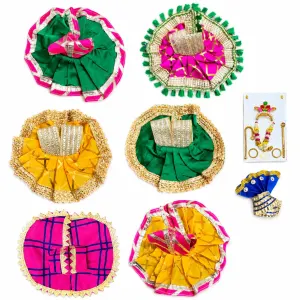
Laddu Gopal Poshak Dress Set with Mukut
View details

Original Shankh for Puja and Home Mandir
View details
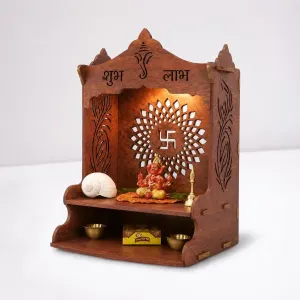
Wooden Home Mandir Temple for Pooja Room
View details