Masroor Temples, Kangra: History, Timings & Visitor Guide
The Masrur Temples, also referred to as Masroor Temples or Rock-cut Temples at Masrur, is an early 8th-century complex of rock-cut Hindu temples in the Kangra Valley of Beas River in Himachal Pradesh, India. The temples face northeast, towards the Dhauladhar range of the Himalayas.

About Masroor Temples
The Masrur Temples, also referred to as Masroor Temples or Rock-cut Temples at Masrur, is an early 8th-century complex of rock-cut Hindu temples in the Kangra Valley of Beas River in Himachal Pradesh, India. The temples face northeast, towards the Dhauladhar range of the Himalayas. They are a version of North Indian Nagara architecture style, dedicated to Shiva, Vishnu, Devi and Saura traditions of Hinduism, with its surviving iconography likely inspired by a henotheistic framework.
Though a major temple complex in the surviving form, the archaeological studies suggest that the artists and architects had a far more ambitious plan and the complex remains incomplete. Much of the Masrur's temple's sculpture and reliefs have been lost. They were also quite damaged, most likely from earthquakes.
The temples were carved out of monolithic rock with a shikhara, and provided with a sacred pool of water as recommended by Hindu texts on temple architecture. The temple has three entrances on its northeast, southeast and northwest side, two of which are incomplete. Evidence suggests that a fourth entrance was planned and started but left mostly incomplete, something acknowledged by the early 20th-century colonial era archaeology teams but ignored leading to misidentification and erroneous reports. The entire complex is symmetrically laid out on a square grid, where the main temple is surrounded by smaller temples in a mandala pattern. The main sanctum of the temples complex has a square plan, as do other shrines and the mandapa. The temples complex features reliefs of major Vedic and Puranic gods and goddesses, and its friezes narrate legends from the Hindu texts.
The temple complex was first reported by Henry Shuttleworth in 1913 bringing it to the attention of archaeologists. They were independently surveyed by Harold Hargreaves of the Archaeological Survey of India in 1915. According to Michael Meister, an art historian and a professor specializing in Indian temple architecture, the Masrur temples are a surviving example of a temple mountain-style Hindu architecture which embodies the earth and mountains around it.
Masroor Temples: Key Facts
- TempleMasroor Temples
- LocationKangra, Himachal Pradesh
- StateHimachal Pradesh
- Entry FeeFree (general darshan)
- Best Time to VisitMay to June and September to October
- Nearest Railway StationNagrota Suriyan railway station, ~5 km
- Nearest AirportKangra (DHM), ~16 km
- GPS32.07250, 76.13722
Masroor Temples Timings 2026
Masroor Temples is open every day, usually from early morning to late evening with a break in the afternoon. Darshan and aarti timings change with the season and on festival days.
- MorningOpens early morning (around 5 to 6 AM)
- AfternoonShort break around midday at many temples
- EveningEvening aarti around sunset, closes by about 8 to 9 PM
Ask the temple office on arrival for the day's aarti schedule.
Dress Code & Temple Rules
- DressModest, traditional clothes covering shoulders and knees
- FootwearRemove before entering; use the shoe stand
- PhotographyNot allowed inside the sanctum
- Not AllowedLeather items, tobacco, alcohol, non-veg food
- QueueFollow queue lines and staff instructions on festival days
How to Reach Masroor Temples
- LocationKangra, Himachal Pradesh
- By AirKangra (DHM), about 16 km
- By AirKullu (KUU), about 98 km
- By TrainNagrota Suriyan railway station, about 5 km
- Major StationJalandhar City Junction railway station, about 97 km
- By RoadTaxis, autos and state buses from the railway station and nearby cities
Distance from Nearby Cities
| From | Road Distance (approx.) | Travel Time (approx.) |
|---|---|---|
| Kangra | 20 km | 1 hr |
| Kullu | 128 km | 3 hr |
| Amritsar | 172 km | 4 hr |
| Jammu | 182 km | 4 hr |
| Shimla | 183 km | 4 hr |
Best Time to Visit
May to June and September to October. Mountain roads are open and weather is pleasant. Many high-altitude shrines close in winter and the monsoon (July–August) brings landslides, so check the opening dates before you plan. Weekday mornings are the least crowded; expect long queues on weekends, holidays and festivals.
History of Masroor Temples
The period between 12th and 19th century was largely of religious wars and geo-political instability across the Indian subcontinent, and the literature of this era do not mention Masrur temples or present any scholarly studies on any Hindu, Jain or Buddhist temples for that matter, rather they mention iconoclasm and temple destruction. After the 12th century, first northwestern Indian subcontinent, then India, in general, witnessed a series of plunder raids and attacks of Turko-Afghan sultans led Muslim armies seeking wealth, geopolitical power and the spread of Islam. Successive Muslim dynasties controlled the Delhi Sultanate as waves of wars, rebellions, secessions, and brutal counter-conquests gripped Indian regions including those in and around Kashmir. The Mughal Empire replaced the Delhi Sultanate in early 16th-century. The Mughal dynasty ruled much of the Indian subcontinent through early 18th-century, and parts of it nominally through the 19th century. The Kangra valley region with Masrur in the Himalayas was ruled by smaller jagirdars and feudatory Hill Rajas who paid tribute to the Mughal administration for many centuries. The arrival of the colonial era marked another seismic shift in the region's politics. By the late 19th century, British India officials had begun archeological surveys, documented sites and charted out site plans. The first known visits to study the Masrur temples occurred in 1887.
A British empire officer Henry Shuttleworth visited and photographed the temples in 1913, calling it a "Vaishnava temple" and claiming in his report that he was the first European to visit them. He wrote a paper on the temples, which was published by the journal The Indian Antiquary. He shared his findings with Harold Hargreaves, then an officer of the Northern Circle of the Archaeology Survey of India. Hargreaves knew more about Hindu theology, noticed the Shiva linga in the sanctum and he corrected Shuttleworth's report. Hargreaves wrote up his tour and published his photographs and observations in 1915 as a part of the ASI Annual Report Volume 20. Hargreaves acknowledged the discovery that a draftsman in his office had already toured, measured and created temples plans and sections in 1887, and that some other ASI workers and Europeans had visited the temple in 1875 and after 1887. The Hargreaves report described the site as many temples, listed iconography at these temples from different Hindu traditions, mentioned his speculations on links with Mahabalipuram monuments and Gandhara art, and other theories. The Hargreaves text became the introduction to Masrur temples for guides by reporters with little to no background knowledge of Indian temple traditions or Hindu theology. According to Meister, these early 20th century writings became a source of the temple's misidentification and misrepresentations that followed.
The temple complex was carved out of the natural sandstone rock. In some places, the rock is naturally very hard, which would have been difficult to carve, but is also the reason why the intricate carvings on it have preserved for over 1,000 years. In other places the stone was soft or of medium quality. In some cases, the artists carved with a bit softer stone and this has eroded over time from natural causes. In other cases, the stone's hardness was so low that the artists cut out the stone and substituted it with better stone blocks. Then they added their friezes or sculptures. The substituted blocks have better resisted the effect of nature and time.
Architecture of Masroor Temples
All spires in the Masrur temple are of Nagara style, an architecture that was developed and refined in central India in the centuries before the 8th century. More specifically, these are what Indian texts called the latina sub-style, from lata. These are curvilinear spires composed of a rhythmic series of superimposed shrinking horizontal square slabs with offsets, each offset called lata or grape vine-like, in principle reflecting natural growth on a mountain in stone.
The superstructure towers embed styles that are found in Indian temples from the 7th and 8th-century such as in the Mahua Hindu temple and the Alampur Navabrahma Temples, but these are no longer found in temples that can be firmly dated after the 8th century. This supports dating the Masrur temple to about the mid-8th century. The spires show differences, but all spires that are symmetrically position in the temple mandala show the same design. The stairway spire is based on four turned squares, and features eight rotating lata spines that alternate with eight right-angled projections.
Frequently Asked Questions
Temples Near Masroor Temples

Baijnath Temple, Himachal Pradesh
Baijnath Temple (Devanagari: बैजनाथ मंदिर) is a Nagara style Hindu temple situated in a small town of Baijnath located in Kangra District, Himachal…
Read Full Guide
Hidimba Devi Temple, Dhungri Manali
Hidimba Devi Temple, locally known as Dhungari Temple, also known variously as the Hadimba Temple, is a Hindu Temple, located in Manāli, a hill…
Read Full Guide
Durgiana Temple
Durgiana Temple or Shri Durgiana Mandir is a Hindu temple situated in the city of Amritsar in Punjab, India. Though a Hindu temple, its architecture…
Read Full GuideShop Puja & Temple Accessories
Handpicked pooja items and temple accessories for your home mandir, delivered anywhere in India.
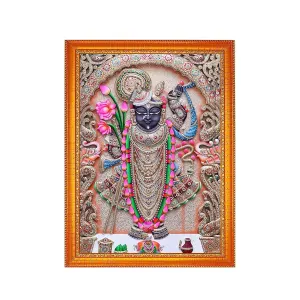
Dwarkadhish Photo Frame for Home Mandir
View details
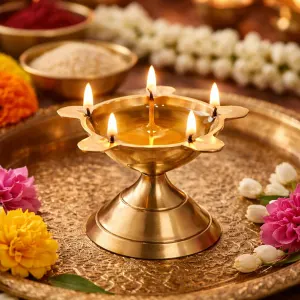
Brass Panchmukhi Diya for Aarti
View details

Tulsi Mala 108 Beads with Japa Bag
View details
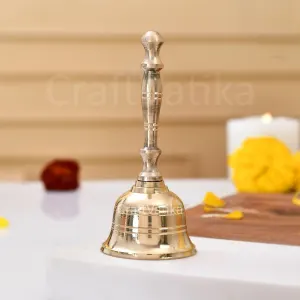
Brass Puja Bell Ghanti for Mandir
View details
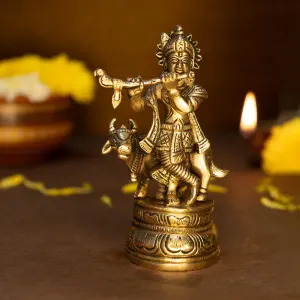
Pure Brass Lord Krishna Idol
View details
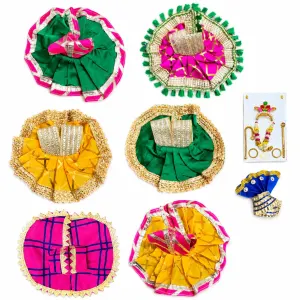
Laddu Gopal Poshak Dress Set with Mukut
View details

Original Shankh for Puja and Home Mandir
View details
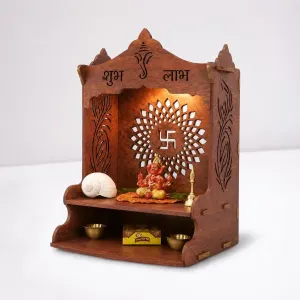
Wooden Home Mandir Temple for Pooja Room
View details