Kaitabheshvara Temple, Kubatur, Shimoga: History, Timings & Visitor Guide
The Kaitabheshvara temple (also spelt Kaitabhesvara or Kaitabheshwara, known also as Kotisvara) is located in the town of Kubatur (also spelt Kubattur or Kuppattur, and called Kuntalanagara or Kotipura in ancient inscriptions), near Anavatti in the Shimoga district of Karnataka state,…

About Kaitabheshvara Temple, Kubatur
The Kaitabheshvara temple (also spelt Kaitabhesvara or Kaitabheshwara, known also as Kotisvara) is located in the town of Kubatur (also spelt Kubattur or Kuppattur, and called Kuntalanagara or Kotipura in ancient inscriptions), near Anavatti in the Shimoga district of Karnataka state, India. The temple was constructed during the reign of Hoysala King Vinayaditya around 1100 AD. The Hoysala ruling family was during this time a powerful feudatory of the imperial Western Chalukya Empire ruled by King Vikramaditya VI. According to the Archaeological Survey of India, the architectural signature of the temple is mainly "Chalukyan". Art historian Adam Hardy classifies the style involved in the construction of the temple as "Later Chalukya, non mainstream, far end of spectrum". The building material used is soapstone The temple is protected as a monument of national importance by the Archaeological Survey of India.
Kaitabheshvara Temple, Kubatur: Key Facts
- TempleKaitabheshvara Temple, Kubatur
- LocationShimoga, Karnataka
- StateKarnataka
- Entry FeeFree (general darshan)
- Best Time to VisitOctober to February
- Nearest Railway StationHaveri railway station, ~37 km
- Nearest AirportHubballi (HBX), ~88 km
- GPS14.57567, 75.14739
Kaitabheshvara Temple, Kubatur Timings 2026
Kaitabheshvara Temple, Kubatur is open every day, usually from early morning to late evening with a break in the afternoon. Darshan and aarti timings change with the season and on festival days.
- MorningOpens early morning (around 5 to 6 AM)
- AfternoonShort break around midday at many temples
- EveningEvening aarti around sunset, closes by about 8 to 9 PM
Ask the temple office on arrival for the day's aarti schedule.
Dress Code & Temple Rules
- DressModest, traditional clothes covering shoulders and knees
- FootwearRemove before entering; use the shoe stand
- PhotographyNot allowed inside the sanctum
- Not AllowedLeather items, tobacco, alcohol, non-veg food
- QueueFollow queue lines and staff instructions on festival days
How to Reach Kaitabheshvara Temple, Kubatur
- LocationShimoga, Karnataka
- By AirHubballi (HBX), about 88 km
- By AirShivamogga (RQY), about 95 km
- By TrainHaveri railway station, about 37 km
- Major StationShree Siddharoodha Swamiji - Hubballi Junction railway station, about 86 km
- By RoadTaxis, autos and state buses from the railway station and nearby cities
Distance from Nearby Cities
| From | Road Distance (approx.) | Travel Time (approx.) |
|---|---|---|
| Hubballi | 114 km | 3 hr |
| Shivamogga | 123 km | 3 hr |
| Belagavi | 200 km | 4 hr |
| Goa | 218 km | 5 hr |
| Mangaluru | 236 km | 5 hr |
Best Time to Visit
October to February. The weather is cooler and drier. April–May is very hot, and the monsoon brings heavy rain to the coast. Weekday mornings are the least crowded; expect long queues on weekends, holidays and festivals.
History of Kaitabheshvara Temple, Kubatur
The temple has a single square shaped shrine (garbhagriha) with an east–west orientation, a vestibule that connects the sanctum (cella or vimana) to the main large open hall (mukhamantapa) that has a staggered square plan and can be entered from five sides; two lateral and one each in the north, south, and east. The walls of the shrine and vestibule stand on a base (adisthana) that is composed of five moldings. The superstructure over the sanctum is four-tiered (chatustala arpita). It is crowned by a large domed roof that looks like a "helmet" (amalaka) and whose shape follows the shape of the shrine (square in this case). The "helmet" is the largest sculptural piece in the temple, it is beautifully carved and well decorated. Atop the dome is a beautiful water-pot like stone structure (kalasha) that forms the pinnacle of the tower. In case of those temples where the original pinnacle is lost, a metallic structure is normally used as a replacement. The tower over the vestibule (sukanasi or "nose"), which is actually a protrusion of the main tower, faces east. The open mantapa is large and its ceiling is supported by massive lathe-turned circular pillars. The relief work in the central panel of the hall ceiling is particularly noteworthy and the overall preservation of the temple is good.
The sculptural motifs and friezes, the decorative articulation, the shape of superstructure (shikhara) and the design of pillars in this temple are those commonly found in other Western Chalukyan temples. On the outer walls of the shrine and vestibule are pilasters of two types; full length pilasters that reach up to the heavy though inconspicuous eaves, and half length pilasters that support miniature decorative towers (Aedicula) of various kinds (such as latina and bhumija). The sculptures of Mahishamardini ( a form of the Hindu goddess Durga, Bhairava ( a form of the god Shiva), and Ganesha can be found on the main tower. The base of the outerwall of the open hall (mukhamandapa) has decorative motifs, pilasters surmounted by miniature decorative pyramidal shaped turrets with gargoyle faced (kirtimukha) scrolls. The seating area in the hall (kakshasana) is treated with floral decorations. The pillars of the mandapa are characteristically circular, polished and lathe-turned, with those pillars that are mounted on a platform (jagati) being fluted and shorter in height. The ceilings are ornate and the typical Hoysala style parapet over the eaves has sculptural representations of Ugra Narasimha, Varaha (the boar, an incarnation of the god Vishnu), Garuda (the eagle) and Keshava (a form of the god Krishna). The doorjamb at the entrance to the vestibule and sanctum are typically ornate and Hoysala in character, with the lintel displaying a sculpture of "Gajalakshmi" (the Hindu goddess Lakshmi with elephants on either side).
Frequently Asked Questions
Temples Near Kaitabheshvara Temple, Kubatur

Siddhesvara Temple
The Siddhesvara Temple (also spelt Siddheshvara or Siddheshwara and locally called Purada Siddeshwara ) is located in Haveri in Haveri district…
Read Full Guide
Mahabaleshwar Temple
The Mahabaleshwar Temple, Gokarna is a 4th-century-CE Hindu temple in Gokarna, Uttara Kannada district, Karnataka state, India, built in the…
Read Full Guide
Kasivisvesvara Temple, Lakkundi
The Kasivisvesvara temple (Kannada: ಕಾಶಿವಿಶ್ವೇಶ್ವರ ದೇವಸ್ಥಾನ), also referred to as the Kavatalesvara, Kashivishveshvara or Kashi Vishvanatha temple…
Read Full Guide
Kamala Narayana Temple, Degaon
Kamala Narayana Temple is at Degaon in Belgaum District, Karnataka, India. The temple was built by the Kadamba dynasty.
Read Full Guide
Amrutesvara Temple
The Amruteshvara temple also spelt "Amrutesvara" or "Amruteshwara", is located in the village of Amruthapura, 67 km north of Chikmagalur town in the…
Read Full Guide
Mahadeva Temple, Itagi
The Mahadeva Temple is located in the town of Itagi in Yelburga Taluk, in the Koppal District of Karnataka state, India. It is about 7 km (4 mi)…
Read Full GuideShop Puja & Temple Accessories
Handpicked pooja items and temple accessories for your home mandir, delivered anywhere in India.
Dwarkadhish Photo Frame for Home Mandir
View details
Brass Panchmukhi Diya for Aarti
View details
Tulsi Mala 108 Beads with Japa Bag
View details
Brass Puja Bell Ghanti for Mandir
View details
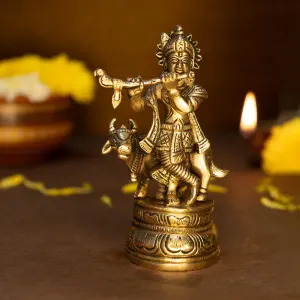
Pure Brass Lord Krishna Idol
View details
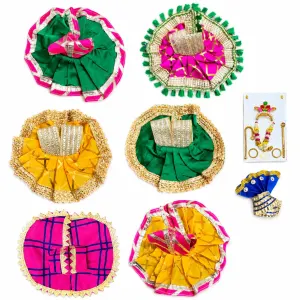
Laddu Gopal Poshak Dress Set with Mukut
View details
Original Shankh for Puja and Home Mandir
View details
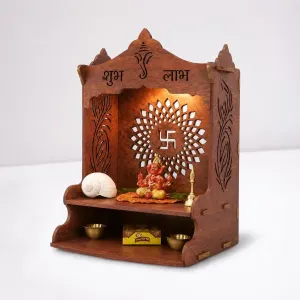
Wooden Home Mandir Temple for Pooja Room
View details