Sabarimala temple complex, Pathanamthitta: History, Timings & Visitor Guide
The Sabarimala Sree Dharma Sastha Temple (Malayalam: ശബരിമല ശ്രീ ധർമ്മ ശാസ്താ ക്ഷേത്രം) (Malayalam pronunciation: [ʃabəɾimala]) is a Hindu temple dedicated to Lord Sree Dharma Sastha where the deity is worshipped as Lord Ayyappan, the son of the deities Shiva and Mohini (female avatar of the god Vishnu), and is…

About Sabarimala temple complex
The Sabarimala Sree Dharma Sastha Temple (Malayalam: ശബരിമല ശ്രീ ധർമ്മ ശാസ്താ ക്ഷേത്രം) (Malayalam pronunciation: [ʃabəɾimala]) is a Hindu temple dedicated to Lord Sree Dharma Sastha where the deity is worshipped as Lord Ayyappan, the son of the deities Shiva and Mohini (female avatar of the god Vishnu), and is situated atop the Sabarimala hill in Pathanamthitta district of Kerala, India. The temple is surrounded by 18 hills in the Periyar Tiger Reserve. It is one of the largest annual pilgrimage sites in the world, with an estimate of over 10 to 15 million devotees visiting every year.
The temple is open for worship only during the days of Mandala Pooja (approximately 15 November to 26 December), Makaravilakku or Makara Sankranti (14 January), Maha Thirumal Sankranti (14 April), and the first five days of each Malayalam month. The Sabarimala Temple serves as a prime example of the amalgamation of several religious traditions within the Indian context.
Sabarimala temple complex: Key Facts
- TempleSabarimala temple complex
- LocationPathanamthitta, Kerala
- StateKerala
- Entry FeeFree (general darshan)
- Best Time to VisitOctober to February
- Nearest Railway StationBhagavathipuram railway station, ~48 km
- Nearest AirportThiruvananthapuram (TRV), ~108 km
- GPS9.43750, 77.08050
Sabarimala temple complex Timings 2026
Sabarimala temple complex is open every day, usually from early morning to late evening with a break in the afternoon. Darshan and aarti timings change with the season and on festival days.
- MorningOpens early morning (around 5 to 6 AM)
- AfternoonShort break around midday at many temples
- EveningEvening aarti around sunset, closes by about 8 to 9 PM
Check the exact timings on the official website before your visit.
Dress Code & Temple Rules
- DressModest, traditional clothes covering shoulders and knees
- FootwearRemove before entering; use the shoe stand
- PhotographyNot allowed inside the sanctum
- Not AllowedLeather items, tobacco, alcohol, non-veg food
- QueueFollow queue lines and staff instructions on festival days
How to Reach Sabarimala temple complex
- LocationPathanamthitta, Kerala
- By AirThiruvananthapuram (TRV), about 108 km
- By AirKochi (COK), about 109 km
- By TrainBhagavathipuram railway station, about 48 km
- Major StationKollam Junction railway station, about 81 km
- By RoadTaxis, autos and state buses from the railway station and nearby cities
Distance from Nearby Cities
| From | Road Distance (approx.) | Travel Time (approx.) |
|---|---|---|
| Thiruvananthapuram | 140 km | 3 hr |
| Kochi | 141 km | 3 hr |
| Madurai | 155 km | 3 hr |
| Tuticorin | 170 km | 4 hr |
| Coimbatore | 230 km | 5 hr |
Best Time to Visit
October to February. The weather is cooler and drier. April–May is very hot, and the monsoon brings heavy rain to the coast. Weekday mornings are the least crowded; expect long queues on weekends, holidays and festivals.
History of Sabarimala temple complex
The Sabarimala temple does not have any ancient or medieval references. Nevertheless, there are extant late medieval references pertaining to the temple.
The Pandalam royal family drafted a mortgage document in 1793. It states that the royal family is pledging the revenue returns, which encompass the income generated by the Sabarimala Temple, to the Tranvancore state. The earliest surviving written records referencing the Sabarimala temple date back to the 1818, when Lieutenant B. S. Ward provided a description of the temple and noted that approximately 10,000–15,000 devotees attended the five‑day annual festival in January, indicating that the shrine was already an established place of worship by that time. In 1863, Ward and Conner published an article that provided a description of Sabarimala and its vicinity.
In the year 1902, the ruler of Travancore issued a directive for the restoration of the Sabarimala temple, which had suffered damage as a result of a fire incident. Kochummen Muthalali of Polachirackal family, a Mavelikkara resident of Christian faith was awarded the reconstruction contract and carried out the reconstruction. A later reference appears in the Travancore State Manual, compiled by V. Nagam Aiya and published in 1906, which similarly records that over 10,000 pilgrims visited Sabarimala during the annual Mandala Pooja season. In 1929, Diwan Bahadur L. A. Krishna Iyer in his article On some aspects of the worship of Sasta mentions 40,000 pilgrims attended the temple during Makaravilakku.
Legend & Significance
Sage Suta told his followers the story of how Ayyappa was born, according to Bhutnathopakhyanam, a text for Ayyappan followers. After Goddess Durga killed the demon Mahishasura, his sister Mahishi arrived to take revenge on the devas (gods). After Mahishi performed a severe tapasya, Brahma was pleased with her and gave Mahishi a boon that made her invincible, with the condition that only a human born of Vishnu and Shiva could kill her. Knowing that Vishnu and Shiva would never bring forth a child, Mahishi became arrogant and seized the earth and heavens, brutally killing all who worshipped a god. The gods were afraid and helpless, so they sought assistance from Vishnu. The union of Shiva and Vishnu, who took the avatar of Mohini, produced a son named Manikandan (the one who has a bell tied to his neck).
Manikandan was abandoned on the banks of the Pampa River in southern India. The emperor Rajashekhara of the Panthalam dynasty, who was childless, found this child. In the meantime, the queen delivered a baby. The prime minister disliked Manikandan and devised a scheme to eliminate him. He asked the queen to lie about her sickness, claiming that she could only be treated by consuming tiger's milk. Twelve-year-old Manikandan ventured into the wilderness in search of tiger's milk for his adoptive mother. On his journey through the forest, he killed Mahishi. The gods were pleased at Mahishi's death. Indra, Agni, Varuna, Vayu and Kubera appeared before Ayyappan and told him that they would help him. The gods transformed into tigers, which Manikandan used to return to the kingdom. As soon as Rajashekhara saw Manikandan accompanied by tigers, Rajashekhara found out the truth behind the prime minister and proceeded to punish him, but Manikandan stopped him from doing so, stating that he had hastened the divine mission of killing Mahishi. Rajashekhara then bowed before Manikandan, who said that he needed a temple to live in. Manikandan asked his father and the citizens to accompany him. Manikandan shot an arrow into the sky. The arrow eventually landed at the summit of the Sabarimala hill, and Manikandan asked the king to build only 18 steps from the ground to the summit and then ascended to heaven.
Architecture of Sabarimala temple complex
The Sannidhanam (main temple) is built on a plateau about 40 feet high. The temple consists of a sanctum sanctorum with a gold-plated roof and four golden finials at the top, two mandapams, and the balikalpura, which houses the altar.
The Pathinettaampadi, the 18 sacred steps are the main stairway to the temple. As per the custom followed, no pilgrim without "Irumudikkettu" can ascend the 18 sacred steps. In 1985, the 18 steps were covered by Panchaloha. The temples of Ayyappan's trusted lieutenants, Valiyakadutta Swami is located at the left of Pathinettampadi and the Karuppu Swami & Karuppai Amma is located at the right of the Pathinettaampadi. The northern gate is open for those who do not carry an "Irumudikkettu", as observed in the 1991 Kerala High Court judgement.
Frequently Asked Questions
Temples Near Sabarimala temple complex

Mangala Devi Temple
Mangaladevi Kannagi Temple is a Hindu temple located at Mangaladevi, near the present-day border of Theni District (of Tamil Nadu) and Idukki…
Read Full Guide
Aranmula Parthasarathy Temple
The Aranmula Parthasarathy Temple is a Hindu temple located in Aranmula, a village in Pathanamthitta District, Kerala, South India, on the southern…
Read Full Guide
Kaviyoor Mahadeva Temple, Kerala
Kaviyoor Mahadevar Temple is one of the important Siva temples in Kerala, located in Kaviyoor, Tiruvalla Pathanamthitta District, Kerala, India. It…
Read Full Guide
Thrichittatt Maha Vishnu Temple
The Thrichittatt Mahavishnu Temple (also called Thiruchenkundrur and Imayavarappan temple) is a Hindu temple dedicated to Vishnu, located in…
Read Full Guide
Puliyur Mahavishnu Temple
The Thripuliyoor Mahavishnu Temple (also called Mayapiran temple) is a Hindu temple dedicated to Vishnu and located in Puliyoor, Alappuzha District…
Read Full Guide
Sreevallabha Temple, Thiruvalla
The Sreevallabha Temple is an orthodox Hindu temple dedicated to Sreevallabha (Vallabha meaning consort of Sree or Lakshmi), a form of Vishnu. It is…
Read Full GuideShop Puja & Temple Accessories
Handpicked pooja items and temple accessories for your home mandir, delivered anywhere in India.
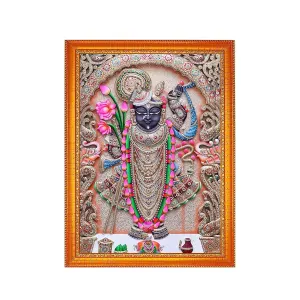
Dwarkadhish Photo Frame for Home Mandir
View details
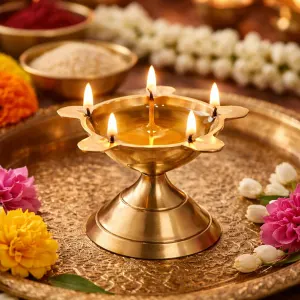
Brass Panchmukhi Diya for Aarti
View details
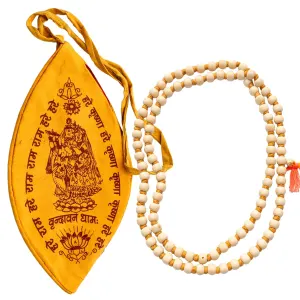
Tulsi Mala 108 Beads with Japa Bag
View details
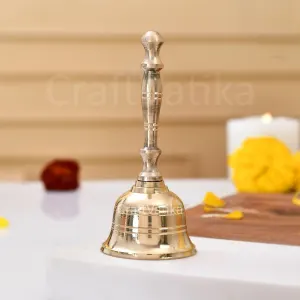
Brass Puja Bell Ghanti for Mandir
View details
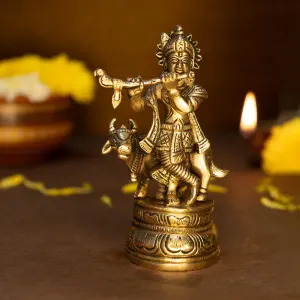
Pure Brass Lord Krishna Idol
View details
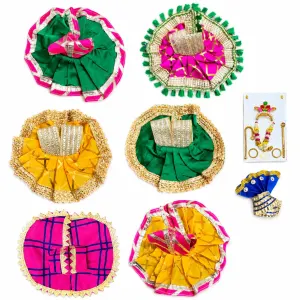
Laddu Gopal Poshak Dress Set with Mukut
View details
Original Shankh for Puja and Home Mandir
View details
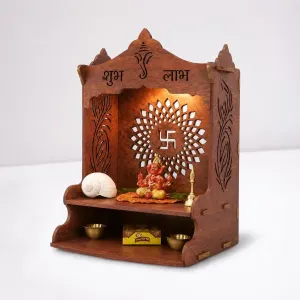
Wooden Home Mandir Temple for Pooja Room
View details