అరుణాచలం దేవాలయం, Tiruvannamalai: History, Timings & Visitor Guide
The Arunachalesvara Temple or Annamalaiyar Temple, is a Hindu temple dedicated to Shiva and Parvati, located at the foothills of the Arunachala hill in Tiruvannamalai, Tamil Nadu, India. It is regarded as one of the significant temples in the Tamil Shaivite tradition.

About అరుణాచలం దేవాలయం
The Arunachalesvara Temple or Annamalaiyar Temple, is a Hindu temple dedicated to Shiva and Parvati, located at the foothills of the Arunachala hill in Tiruvannamalai, Tamil Nadu, India. It is regarded as one of the significant temples in the Tamil Shaivite tradition. It is one of the Pancha Bhuta Sthalams and is associated with the element of fire (Agni) among the five natural elements. The presiding deity of the temple is Annamalaiyar (meaning "the mountain that cannot be reached"), who is worshipped as the embodiment of the hill itself, and is represented by a lingam known as the Agni Lingam, symbolizing the element of fire. Parvathi, revered as Unnamulai ammai, is represented by the yoni, with her idol referred to as the Agni Yoni.
The temple is classified as one of the Paadal Petra Sthalams, one of the 276 sacred Saivite temples glorified in medieval Tamil Shaiva literature. It is celebrated in canonical Tamil devotional works such as the Tevaram composed by the Nayanars in 7th century CE, Tiruvempavai by Manikkavacakar in 9th century CE, and Tiruppukal by Arunagirinathar in the 14th century CE.
The present structure was built during the Chola Empire in the 9th century CE, while later expansions were done during the Vijayanagara rule (13th to 15th century CE). The temple complex covers 10 hectares, and is one of the largest in India. It has four large gopurams (ornamental gateway towers), with the east tower being the tallest at 66 m (217 ft) with 11 stories. The temple has numerous shrines, dedicated to various Hindu gods, and houses several large halls, the notable of which is the thousand-pillared hall built during the Vijayanagara rule. The temple is maintained and administered by the Hindu Religious and Charitable Endowments Department of the Government of Tamil Nadu.
The temple has six daily rituals, performed between 5:30 a.m. and 10:00 p.m., and twelve yearly festivals. During the Karthigai Deepam festival, celebrated during the purnima day in the Tamil month of Karthigai, and a large beacon is lit atop the Arunachala hill. The beacon, which can be seen from miles around, symbolizes the jyotirlinga form of Shiva, which extended as a pillar of fire. The event attracts million of pilgrims, who often circumambulate the hill called girivalam.
అరుణాచలం దేవాలయం: Key Facts
- Templeఅరుణాచలం దేవాలయం
- LocationTiruvannamalai, Tamil Nadu
- StateTamil Nadu
- Entry FeeFree (general darshan)
- Best Time to VisitOctober to February
- Nearest Railway StationTiruvannamalai Town railway station, ~1 km
- Nearest AirportPuducherry (PNY), ~86 km
- GPS12.23160, 79.06720
అరుణాచలం దేవాలయం Timings 2026
అరుణాచలం దేవాలయం is open every day, usually from early morning to late evening with a break in the afternoon. Darshan and aarti timings change with the season and on festival days.
- MorningOpens early morning (around 5 to 6 AM)
- AfternoonShort break around midday at many temples
- EveningEvening aarti around sunset, closes by about 8 to 9 PM
Check the exact timings on the official website before your visit.
Dress Code & Temple Rules
- DressModest, traditional clothes covering shoulders and knees
- FootwearRemove before entering; use the shoe stand
- PhotographyNot allowed inside the sanctum
- Not AllowedLeather items, tobacco, alcohol, non-veg food
- QueueFollow queue lines and staff instructions on festival days
How to Reach అరుణాచలం దేవాలయం
- LocationTiruvannamalai, Tamil Nadu
- By AirPuducherry (PNY), about 86 km
- By AirSalem (SXV), about 120 km
- By TrainTiruvannamalai Town railway station, about 1 km
- Major StationViluppuram Junction railway station, about 57 km
- By RoadTaxis, autos and state buses from the railway station and nearby cities
Distance from Nearby Cities
| From | Road Distance (approx.) | Travel Time (approx.) |
|---|---|---|
| Puducherry | 112 km | 2 hr |
| Salem | 156 km | 3 hr |
| Chennai | 190 km | 4 hr |
| Tirupati | 213 km | 5 hr |
| Tiruchirappalli | 218 km | 5 hr |
Best Time to Visit
October to February. The weather is cooler and drier. April–May is very hot, and the monsoon brings heavy rain to the coast. Weekday mornings are the least crowded; expect long queues on weekends, holidays and festivals.
History of అరుణాచలం దేవాలయం
The deities are described in the Shaiva text of Tevaram from the 7th century CE. Sekkilhar, the author of the Periya Puranam, wrote that Appar and Sambandar worshipped Annamalaiyar in the temple. The present masonry of the temple dates back to the 9th century to the reign of the Cholas. Inscriptions found in the temple record gifts such as land, and cows given to the temple by various Chola kings. Further inscriptions from the temple indicate that before the 9th century CE, the region was under the reign of the Pallava Kings, who ruled from Kanchipuram. The Hoysalas made the region around the temple as their capital in 1328 CE.
The temple was located at a strategic location in the Vijayanagara Empire, connecting important pilgrimage centers and military routes. Inscriptions describe the expansion of the temple, and the town developing around the Annamalaiyar temple during the period. There are 48 inscriptions from the Sangama Dynasty (1336–1485 CE), two inscriptions from the Saluva Dynasty, and 55 inscriptions from the Tuluva Dynasty (1491–1570 CE) of the Vijayanagara Empire, describing various gifts to the temple by their respective rulers. Inscriptions from the period of Krishnadevaraya (1509–1529 CE), indicates patronage to the temple. Most of the Vijayanagara inscriptions are written in Tamil, with some in Kannada and Sanskrit.
The expansion of the temple and construction of the large gopuram at the eastern entrance began during the reign of Krishnadevaraya, and completed during the period of Sevappa Nayaka (1532–80 CE). The inscriptions indicate that the tower was built at the behest of Sivanesa and his brother Lokanatha in 1572 CE. The Tanjavuri Andhra Raja Charitamu mentions that Krishnadevaraya built the tower and the outer precincts of the temple. Nayak period texts such as Raghunathabhyudayam and Sangitha Sudha describe the towers. During the reign of Krishnadevaraya, the thousand pillared hall and a tank were constructed within the temple premises.
Legend & Significance
According to the Shiva Purana, Brahma (god of creation) and Vishnu (god of preservation) had an argument over their supremacy. To settle the debate, Shiva took the form of jyotirlinga, a huge column of fire or light, stretching across the three worlds. Vishnu took the form of a boar and descended to locate the bottom of the column, while Brahma assumed the form of a swan to locate its top. Vishnu failed in his search and returned, honest about the outcome of his quest. Brahma chanced upon a thalampu flower in the midst of his ascent. Upon enquiry, he learned that the flower had been descending from the column for several years. He bade the flower to lie to Vishnu that he had seen the top of the column. The dishonesty of Brahma angered Shiva, causing him to curse Brahma that he would not be worshipped. He also declared that Vishnu would be eternally worshipped for his honesty. Shiva took the form of fire at the Arunachala hill in Tiruvannamalai, and later took the form of a lingam at the base of the hill.
According to Hindu mythology, Parvati once blindfolded Shiva, which led to the entire Earth being plunged in darkness. Shiva opened his third eye to shine light on the Earth. Realising her mistake, Parvati prayed for Shiva's forgiveness. Shiva directed her to go to Tiruvannamali and perform tapas at the ashram of sage Gautama. When Mahisasura disturbed her, she took the form of Durga, and killed the asura. Later, Shiva accepted her on the purnima day of the Tamil month of Karthigai. The Karthika Deepam festival is celebrated to commemorate the manifestation of Shiva as jyotirlinga, and his re-acceptance of Parvati.
Festivals & Rituals at అరుణాచలం దేవాలయం
The temple priests perform pujas (rituals) six times on a daily basis. These include the Kaalaippani at 5:30 a.m., Kaalai Vazhipaadu at 8:00 a.m., Nadunchama Vazhipaadu at 10:00 a.m., Maalaipani at 6:00 p.m., Irandaam Kaalai Pani at 8:00 p.m. and Iravuppani at 10:00 p.m. Each ritual comprises four steps: Thirumanchanam (sacred bath), Alangaaram (decoration), Neivedhiyam (food offering) and Theepaarathanai (waving of lamps) for both Annamalaiyar and Unnamulai Amman. The worship is held amidst music with nagaswaram (pipe instrument) and tavil (percussion instrument), religious instructions in the Vedas read by priests and prostration by worshippers in front of the temple mast. Special pujas are performed on Mondays (Soma varam) and Fridays (Sukra varam), and on Pradosha, Amavasya, Purnima, Chaturthi, and Kiruthigai.
The temple celebrates various Hindu festivals throughout the year. Four prime festivals, the Thiruvizha, are celebrated yearly. The most important of these lasts ten days during the Tamil month of Karthigai (November–December), concluding with the celebration of Karthika Deepam. During the Deepam festival, A lamp is lit in a huge cauldron, containing tons of Nei (Ghee), at the top of the Annamalai hill. On the occasion, the image of Annamalaiyar is taken on a wooden chariot around the mountain. Inscriptions indicate that the festival was celebrated as early as the Chola period (from 850 CE to 1280 CE) and was expanded to ten days in the 20th century.
Every full moon, thousands of pilgrims circumambulate the Annamalai hill barefoot. The circumambulation covers a distance of 14 km (8.7 mi), and is referred as girivalam. According to Hindu legend, the circumambulation is considered as an atonement for one's sins, fulfils wishes and helps achieve freedom from the cycle of birth and rebirth. Various offerings are made in the temple tanks, shrines, pillared halls, springs and caves around the hill. On Chitra Pournami, five wooden temple cars are used for taking the gods on a procession.
Frequently Asked Questions
Temples Near అరుణాచలం దేవాలయం

Atulya Nadheswarar Temple
Atulya Nadheswarar Temple (Tamil: அதுல்யநாதேஸ்வரர் கோயில்) is a Hindu temple dedicated to the deity Shiva, located in Arakandanallur in Thirukoilur…
Read Full Guide
Ulagalantha Perumal Temple, Tirukoyilur
Ulagalantha Perumal Temple or Trivikrama Temple is a Hindu temple dedicated to Vishnu located in Tirukkoyilur, Tamil Nadu,…
Read Full Guide
Yathothkari Perumal Temple
Tiruvekkaa Temple or Yathothkari Perumal Temple (locally called Sonnavannam Seitha Perumall) is a Hindu temple located in Kanchipuram in the South…
Read Full Guide
Ulagalantha Perumal Temple, Kanchipuram
Ulagalandha Perumal Temple is a temple dedicated to Vishnu located in Kanchipuram, Tamil Nadu, India. Constructed in the Dravidian style of…
Read Full Guide
Pandava Thoothar Perumal Temple
Pandavatutar Perumal Temple or Thirupadagam located in Kanchipuram in the South Indian state of Tamil Nadu, is dedicated to the Hindu god Krishna…
Read Full Guide
Pavalavannam Temple
Tirupavalavannam or Pavalavanam temple located in Kanchipuram in the South Indian state of Tamil Nadu, is dedicated to the Hindu god…
Read Full GuideShop Puja & Temple Accessories
Handpicked pooja items and temple accessories for your home mandir, delivered anywhere in India.
Dwarkadhish Photo Frame for Home Mandir
View details
Brass Panchmukhi Diya for Aarti
View details
Tulsi Mala 108 Beads with Japa Bag
View details

Brass Puja Bell Ghanti for Mandir
View details
Pure Brass Lord Krishna Idol
View details
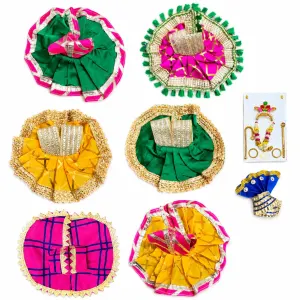
Laddu Gopal Poshak Dress Set with Mukut
View details

Original Shankh for Puja and Home Mandir
View details
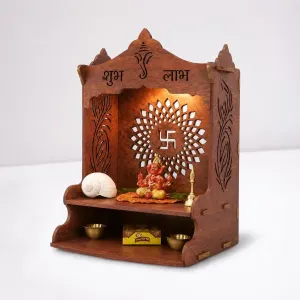
Wooden Home Mandir Temple for Pooja Room
View details