Mahishasuramardini Mandapa, Chengalpattu: History, Timings & Visitor Guide
Mahishasuramardhini Mandapa (Cave Temple; also known as Yampuri) is an example of Indian rock-cut architecture dating from the late 7th century, of the Pallava dynasty. It is a rock-cut cave temple located on a hill, near a lighthouse, along with other caves in Mamallapuram.
About Mahishasuramardini Mandapa
Mahishasuramardhini Mandapa (Cave Temple; also known as Yampuri) is an example of Indian rock-cut architecture dating from the late 7th century, of the Pallava dynasty. It is a rock-cut cave temple located on a hill, near a lighthouse, along with other caves in Mamallapuram. Mamallapuram, also popularly known as Mahabalipuram, is a small village to the south of Chennai, in the state of Tamil Nadu, India. The temple is part of the Group of Monuments at Mahabalipuram, a UNESCO World Heritage Site inscribed in 1984. This Cave Temple has many interesting architectural features of which three exquisitely carved reliefs on the cave walls of three sanctums are prominent. One is of Vishnu reclining on the seven hooded serpent, Adishesha, another of Durga, the main deity of the cave temple Durga slaying the buffalo headed demon Mahishasura, and the third sanctum has a sculpture of Shiva.
Mahishasuramardini Mandapa: Key Facts
- TempleMahishasuramardini Mandapa
- LocationChengalpattu, Tamil Nadu
- StateTamil Nadu
- Entry FeeFree (general darshan)
- Best Time to VisitOctober to February
- Nearest Railway StationTirumani railway station, ~23 km
- Nearest AirportChennai (MAA), ~42 km
- GPS12.61670, 80.19170
Mahishasuramardini Mandapa Timings 2026
Mahishasuramardini Mandapa is open every day, usually from early morning to late evening with a break in the afternoon. Darshan and aarti timings change with the season and on festival days.
- MorningOpens early morning (around 5 to 6 AM)
- AfternoonShort break around midday at many temples
- EveningEvening aarti around sunset, closes by about 8 to 9 PM
Ask the temple office on arrival for the day's aarti schedule.
Dress Code & Temple Rules
- DressModest, traditional clothes covering shoulders and knees
- FootwearRemove before entering; use the shoe stand
- PhotographyNot allowed inside the sanctum
- Not AllowedLeather items, tobacco, alcohol, non-veg food
- QueueFollow queue lines and staff instructions on festival days
How to Reach Mahishasuramardini Mandapa
- LocationChengalpattu, Tamil Nadu
- By AirChennai (MAA), about 42 km
- By AirPuducherry (PNY), about 83 km
- By TrainTirumani railway station, about 23 km
- Major StationTambaram railway station, about 35 km
- By RoadTaxis, autos and state buses from the railway station and nearby cities
Distance from Nearby Cities
| From | Road Distance (approx.) | Travel Time (approx.) |
|---|---|---|
| Chennai | 54 km | 1 hr |
| Puducherry | 108 km | 2 hr |
| Tirupati | 173 km | 4 hr |
| Salem | 324 km | 7 hr |
| Tiruchirappalli | 340 km | 8 hr |
Best Time to Visit
October to February. The weather is cooler and drier. April–May is very hot, and the monsoon brings heavy rain to the coast. Weekday mornings are the least crowded; expect long queues on weekends, holidays and festivals.
History of Mahishasuramardini Mandapa
The cave is dated to the period of king Narasimhavarman Mahamalla (630–668 AD) of the Pallava dynasty, after whom the town is also named. The cave architecture is also said to be a continuation of the great religious themes that were carved in Western India. The cave reflects a transitional style of architecture in its columns mounted on seated lions and frescoes carved on the walls inside the cave which evolved during the rule of Pallava kings Mahendra Varman I and Rajasimha or Narasimhavarman I known as Mamalla. This style was continued by Mamalla's son Parameshvaravarman I. Historical research has also confirmed that Mahabalipuram town came to be established only after it was named after Mamalla and the caves and rathas are all attributed to his reign during the year 650 AD.
Architecture of Mahishasuramardini Mandapa
The mandapa is one of the most important caves in Mahabalipuram. It is dedicated to the goddess Mahishasuramardini, who is considered an incarnation of the goddess Durga. The mandapa is carved into the granite rock face of a hill. The verandah cut at the cave entrance, long and calumniated, has a composition of three chambers; the central chamber entrance depicts guardians (dwarapalas) on the flanks. The back wall of the central chamber features a carving of a Somaskanda panel; this panel is carved with images of Shiva and his consort Parvathi in their regal dress, each wearing a crown known as kirita-mukuta and other ornamentation, with their son Skanda seated between them. This panel also shows the carving of Nandi (bull), Shiva's mount (Vahana). Chandeshvara Nayanar, an ardent devotee of Shiva, is carved to the left of the carved images of the trinity gods Shiva, Brahma, and Vishnu, who are shown standing behind the main image of Shiva and Parvathi. The carving of the trinity gods gives the impression that they are pleased with the seated couple of Shiva, his consort and their son. In the individual depiction, Brahma is carved with four heads and four hands, with the upper hands holding a water vessel and akshamala; the lower right hand is shown raised in an appreciative gesture to Shiva, while the left hand is in a kataka mudra. Vishnu's carving is also depicted with four hands; chakra and shankha are held in his upper hands, with the lower left hand showing a gesture of appreciation to Shiva, and the lower right hand held up in a kataka mudra. The image of Surya (Sun) is carved on the top part of the panel, between Brahma and Vishnu. A separate Brahma panel carving appears on the back wall of the left chamber, while the right chamber is repeated with a panel of Shiva that, according to the opinion of archaeologists, wasoriginally meant to host a panel of Vishnu. Another interpretation mooted for the dominance of Shiva panels in this cave is that the religious leaning of the Kings who ruled at that time changed from Vaishnavism to Shavisim. Additionally, the Somaskanda panel in this cave is of a different architectural composition than similar panels carved in Dharmaraja Ratha, the Shore Temple, and the Atiranachanda Cave. Archeologists suggest the panel here was created during the reign of Rajasimha.
On the southern face of the cave, there is a panel of Maha Vishnu in an Anantasayana mudra, (a reclining posture), lying on the bed of a serpent. He is shown with two hands, one is patting the coil of the Thousand-headed serpent known as Adisesha to pacify him, which forms a cover over Vishnu's head and the other hand with Lotus. Madhu-Kaitabha, the two demons, are carved near Vishnu's feet in an attacking mode, armed with a Gada (mace). The demons are in a position of retreat, as Adisesha hisses at them with flames emerging from its hoods attack the demons. Vishnu who is unconcerned, is patting Adisesha to pacify him. Also shown in the panel are the two ganas (dwarfs). The Dwarfs are Vishnu's ayudhapurushas (his personified weapons); the male gana is known as Shanka, and the female gana is Vishnu's gada. The other scene in the panel, is at its lower end, where three figures; his chakra (discus) in ayudha-purusha form, Khadga (Vishnu's sword) on the right and the female figure is Bhudevi. This carving explains the legend mentioned in the Bhagavata Purana, It states that during the creation, the asuras Madhu and Kaitabha stole the Vedas from Brahma, and deposited them deep inside the waters of the primeval ocean. Vishnu was the only god who could save the Vedas so they wanted to attack him, Sesha gets enraged and hisses flames at them emerging from its hoods and attacks the demons. Maha Vishnu Pacifies Sesha and takes the Hayagriva Avatharam. He killed the demons and retrieved the Vedas to Brahma. This led to Vishnu being offered the epithets Madhusudana - the killer of Madhu, and Kaitabhajit - the victor of Kaitabha. The bodies of Madhu and Kaitabha disintegrated into 2 times 6 — which is twelve pieces (two heads, two torsos, four arms and four legs). These are considered to represent the twelve seismic plates of the Earth.
Frequently Asked Questions
Temples Near Mahishasuramardini Mandapa

Shore Temple
The Shore Temple (c. 725 AD) is a complex of temples and shrines that overlooks the shore of the Bay of Bengal. It is located in Mahabalipuram…
Read Full Guide
Tiger Cave
The Yali Mandabam (Tiger Cave) is a rock-cut Hindu temple complex located in the hamlet of Saluvankuppam near Mahabalipuram in Tamil Nadu, India. It…
Read Full Guide
Varaha Cave Temple
Varaha Cave Temple (i.e., Varaha Mandapa or the Adivaraha Cave) is a rock-cut cave temple located at Mamallapuram, on the Coromandel Coast of the…
Read Full Guide
ISKCON Temple Chennai
ISKCON Temple Chennai, also known as the Sri Sri Radha Krishna Mandir, is a Gaudiya Vaishnavism temple in Chennai, India. The temple is dedicated to…
Read Full Guide
Marundeeswarar Temple
Marundeeswarar Temple is a temple dedicated to Hindu deity Shiva, located in Thiruvanmiyur, Chennai adjacent to the beach of Bay of…
Read Full Guide
Kapaleeshwarar Temple
The Kapaleeshwarar Temple is a Hindu temple dedicated to the god Shiva. It is located in Mylapore, Chennai in the Indian state of Tamil Nadu.
Read Full GuideShop Puja & Temple Accessories
Handpicked pooja items and temple accessories for your home mandir, delivered anywhere in India.
Dwarkadhish Photo Frame for Home Mandir
View details
Brass Panchmukhi Diya for Aarti
View details
Tulsi Mala 108 Beads with Japa Bag
View details
Brass Puja Bell Ghanti for Mandir
View details
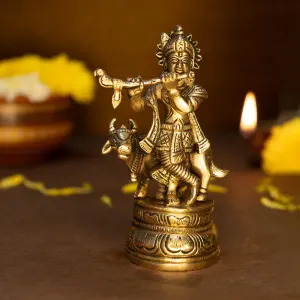
Pure Brass Lord Krishna Idol
View details
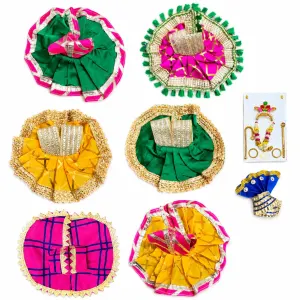
Laddu Gopal Poshak Dress Set with Mukut
View details
Original Shankh for Puja and Home Mandir
View details
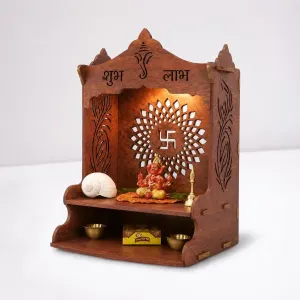
Wooden Home Mandir Temple for Pooja Room
View details