Kedarnath Temple: History, Timings & Visitor Guide
Kēdāranātha Temple (Sanskrit: केदारनाथ मन्दिर, IAST: Kēdāranātha Mandira, lit. 'temple of the God of the field') is a Hindu temple, one of the twelve jyotirlinga of Śiva. The temple is located on the Garhwal Himalayan range

About Kedarnath Temple
Kēdāranātha Temple (Sanskrit: केदारनाथ मन्दिर, IAST: Kēdāranātha Mandira, lit. 'temple of the God of the field') is a Hindu temple, one of the twelve jyotirlinga of Śiva. The temple is located on the Garhwal Himalayan range
near the Mandākinī River, in the state of Uttarakhand, India. Due to extreme weather conditions, the temple is open to the general public only between the months of April (Akṣaya Tritiya) and November (Kārtika Pūrṇimā, the autumn full moon). During the winters, the vigraha (deity) of the temple is carried down to Ukhimath to be worshiped for the next six months. Kēdāranātha is seen as a homogeneous form of Śiva, the 'Lord of Kēdārakhaṇḍa', the historical name of the region.
The temple is not directly accessible by road and has to be reached by a 17 kilometres (11 mi) uphill trek from Gaurikuṇḍa. According to Hindu legends, the temple was initially built by the Pāṇḍavas, and is one of the twelve Jyotirlingas, the holiest Hindu shrines of Śiva. The Pāṇḍava were supposed to have pleased Śiva by doing penance in Kēdāranātha. The temple is one of the four major sites in India's Chota Char Dham pilgrimage of Northern Himalayas and is the first of the Pañca Kēdāra pilgrimage sites. This temple is the highest among the 12 Jyotirlingas. It is one of the 275 paadal petra sthalams expounded in the Tēvaram. This temple is sung of by Tirugnāṇasambandar, Appar, Sundarar and Sekkizhar in their Tēvaram texts.
Kēdāranātha was the worst affected area during the 2013 flash floods in North India. The temple complex, surrounding areas, and Kēdāranātha town suffered extensive damage, but the temple structure did not suffer any major damage. A large rock among the debris acted as a barrier, protecting the temple from the flood.
Kedarnath Temple: Key Facts
- TempleKedarnath Temple
- LocationUttarakhand
- StateUttarakhand
- Entry FeeFree (general darshan)
- Best Time to VisitMay to June and September to October
- Nearest Railway StationRishikesh railway station, ~102 km
- Nearest AirportDehradun (DED), ~104 km
- GPS30.73334, 79.06666
Kedarnath Temple Timings 2026
Kedarnath Temple is open every day, usually from early morning to late evening with a break in the afternoon. Darshan and aarti timings change with the season and on festival days.
- MorningOpens early morning (around 5 to 6 AM)
- AfternoonShort break around midday at many temples
- EveningEvening aarti around sunset, closes by about 8 to 9 PM
Ask the temple office on arrival for the day's aarti schedule.
Dress Code & Temple Rules
- DressModest, traditional clothes covering shoulders and knees
- FootwearRemove before entering; use the shoe stand
- PhotographyNot allowed inside the sanctum
- Not AllowedLeather items, tobacco, alcohol, non-veg food
- QueueFollow queue lines and staff instructions on festival days
How to Reach Kedarnath Temple
- LocationUttarakhand
- By AirDehradun (DED), about 104 km
- By AirPantnagar (PGH), about 193 km
- By TrainRishikesh railway station, about 102 km
- Major StationDehradun railway station, about 109 km
- By RoadTaxis, autos and state buses from the railway station and nearby cities
Distance from Nearby Cities
| From | Road Distance (approx.) | Travel Time (approx.) |
|---|---|---|
| Dehradun | 136 km | 3 hr |
| Pantnagar | 251 km | 6 hr |
| Shimla | 253 km | 6 hr |
| Chandigarh | 283 km | 6 hr |
| Kullu | 288 km | 6 hr |
Best Time to Visit
May to June and September to October. Mountain roads are open and weather is pleasant. Many high-altitude shrines close in winter and the monsoon (July–August) brings landslides, so check the opening dates before you plan. Weekday mornings are the least crowded; expect long queues on weekends, holidays and festivals.
History of Kedarnath Temple
It is not certain who built the original Kedarnath temple and when. The name "Kedarnath" means "the lord of the field": it derives from the Sanskrit words kedara ("field") and natha ("lord"). The text Kashi Kedara Mahatmya states that it is so called because "the crop of liberation" grows here.
Kedarnath is situated in the Garhwal Himalayas in the Indian state of Uttarakhand, at an elevation of approximately 3,583 meters (11,755 feet) above sea level.
The Kedarnath Temple is dedicated to the Hindu deity Shiva, who is worshipped locally under the name Kedarnath. The presiding image of Kedarnath in the form of three-sided lingam with a pedestal 3.6 m (12 ft) in circumference and 3.6 m (12 ft) in height. The name is derived from Sanskrit, with "Kedarnath" (also rendered as Kedaranatha or Kedareshvara) meaning "Lord of the Marshy Ground". The site is regarded as a dham, a term denoting a particularly sacred abode of a deity. The presence of Shiva at Kedarnath is believed to be svayambhu (self-manifested), indicating that the deity's form is naturally occurring rather than sculpted by human hands. Bhukund Bhairavnath is the guardian deity, kul-devta, associated with the Kedarnath Temple. His open-air shrine is situated on a ridge overlooking the main temple complex.
Legend & Significance
The Mahabharata, which gives the account of the Pandavas and the Kurukshetra War, does not mention a place called Kedarnath. However, a folk legend associates Kedarnath with the Pandavas, the protagonists of the Hindu epic. According to the legend, the Pandavas sought to atone for the sins committed during the Kurukshetra War. They handed over the reins of their kingdom to their relatives and left in search of Shiva to seek his blessings. However, Shiva wished to avoid them and assumed the form of a bull (Nandi). Bhima, the second of the five Pandava brothers, later saw the bull grazing near Guptakashi, a name meaning "hidden Kashi" that is derived from the hiding act of Shiva. Bhima immediately recognized the bull as Shiva and seized the bull by its tail and hind legs. Shiva in the form of the bull, then disappeared into the ground and later reappeared in parts: with the hump raising in Kedarnath, the arms appearing in Tungnath, the face showing up at Rudranath, the nabhi (navel) and stomach surfacing in Madhyamaheshwar and the hair appearing in Kalpeshwar. The Pandavas, pleased by this manifestation in five different forms, built temples at each site to venerate Shiva. These five shrines are collectively known as Panch Kedar.
After constructing the Panch Kedar temples, the Pandavas meditated at Kedarnath in pursuit of salvation and performed a yagna (fire sacrifice). They then ascended to heaven along the celestial path known as the Mahapanth, also called Swargarohini. The Panch Kedar Temples are constructed in the North-Indian Himalayan Temple architecture with the temples at Kedarnath, Tungnath and Madhyamaheshwar sharing similar designs.
Architecture of Kedarnath Temple
There is a small pillared hall in front of the temple, that has images of Parvati and of the five Pandava princes. There are four temples around Kedarnath itself, namely- Tungnath, Rudranath, Madhyamaheshwar, and Kalpeshwar which form the Panch Kedar pilgrimage sites. The first hall inside Kedarnath Temple contains statues of the five Pandava brothers, Krishna, Nandi, the vehicle of Shiva and Virabhadra, one of the guards of Shiva. Statues of Draupadi and other deities are also installed in the main hall. An unusual feature of the temple is the head of a man carved in the triangular stone lingam. Such a head is seen carved in another temple nearby constructed on the site where the marriage of Shiva and Parvati was held. Behind the temple is the samādhi mandir of Adi Sankara.
Festivals & Rituals at Kedarnath Temple
The head priest (Raval) of the Kedarnath temple belongs to the Veerashaiva community from Karnataka. However, unlike in Badrinath temple, the Raval of Kedarnath temple does not perform the pujas. The pujas are carried out by Raval's assistants on his instructions. The Raval moves with the deity to Ukhimath during the winter season. There are five main priests for the temple, and they become head priests for one year by rotation. The present (2013) Raval of Kedarnath temple is Shri Vageesha Lingacharya from Davanagere district, Karnataka. Surrounding Kedarnath, there are many symbols of the Pandavas. Raja Pandu died at Pandukeshwar. The locals here perform a dance called "Pandav Lila". The mountain top where the Pandavas went to Swarga, is known as "Swargarohini", which is located off Badrinath. When Yudhishtira, the eldest of the Pandavas, was leaving for the heaven (Swarg), one of his fingers fell on the earth. At that place, Yudhishtira installed a Shiva Linga, which is the size of the thumb. To gain Mashisharupa, Lord Shiva and Bheema fought with maces. Bheema was struck with remorse. He started to massage Shiva's body with ghee. In memory of this event, even today, this triangular Shiva lingam is massaged with ghee.
Frequently Asked Questions
Temples Near Kedarnath Temple

Gauri Kund
Gauri Kund is a Hindu pilgrimage site and base camp for trek to Kedarnath Temple, in Uttarakhand, India. It is situated at an altitude of 6502 feet…
Read Full Guide
Madhyamaheshwar
Madhyamaheshwar (Sanskrit: मध्यमहेश्वर) or Madmaheshwar is a Hindu temple dedicated to Shiva, located in Gaundar, a village in Rudraprayag district…
Read Full Guide
Rudranath
Rudranath Temple (Sanskrit: रुद्रनाथ) is a Hindu temple dedicated to Shiva, located in the Garhwal Himalayan mountains in Uttarakhand, India.…
Read Full Guide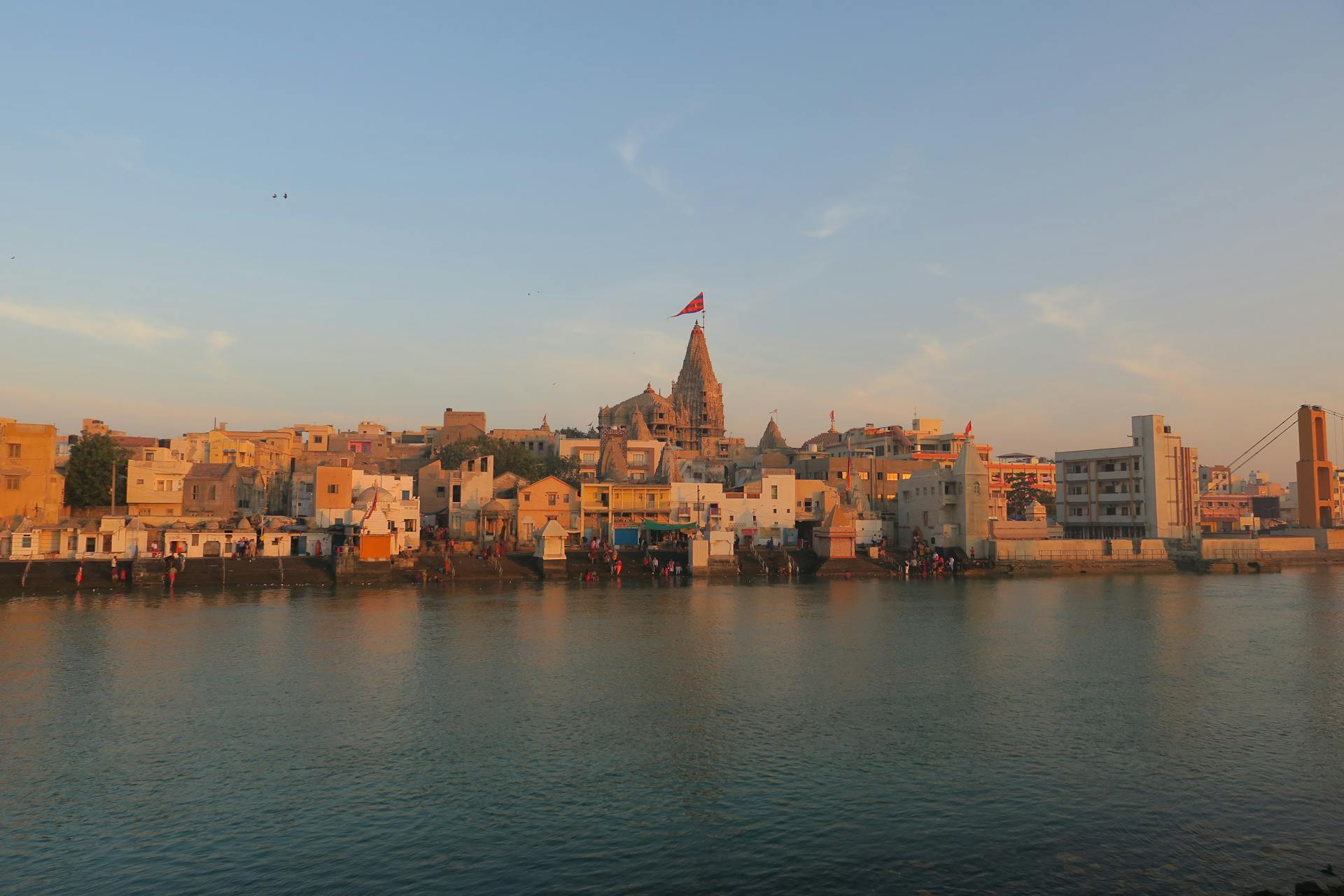
Badrinath Temple
Badarinath Temple, also known as Badarinarayana Temple, is a Hindu temple dedicated to Vishnu. It is located in the town of Badrinath in Chamoli…
Read Full Guide
Kalpeshwar
Kalpeshwar (Sanskrit: कल्पेश्वर) is a Hindu temple dedicated to Shiva located at an elevation of 2,200 m (7,217.8 ft) in the Urgam valley in the…
Read Full Guide
Gopinath Mandir
Gopinath Temple is an ancient Hindu temple dedicated to Shiva in Gopeshwar, Chamoli District, Uttarakhand, India. It is situated in Gopeshwar…
Read Full GuideShop Puja & Temple Accessories
Handpicked pooja items and temple accessories for your home mandir, delivered anywhere in India.
Dwarkadhish Photo Frame for Home Mandir
View details
Brass Panchmukhi Diya for Aarti
View details
Tulsi Mala 108 Beads with Japa Bag
View details

Brass Puja Bell Ghanti for Mandir
View details
Pure Brass Lord Krishna Idol
View details

Laddu Gopal Poshak Dress Set with Mukut
View details

Original Shankh for Puja and Home Mandir
View details
Wooden Home Mandir Temple for Pooja Room
View details